Acacetin is a chemical compound classified under phenylpropanoids and is one of the aromatic polyketides. It plays a significant role in life science research, particularly in biochemical and pharmacological studies. This compound is valued for its structural complexity and its use as a building block in the synthesis of other bioactive compounds. In laboratory settings, acacetin is essential for investigating the biological activities of various substances, including their antioxidant, antitumor, and anti-inflammatory properties. Its versatility makes it a key component in both chemical and biochemical experiments.
Acacetin is preferred due to its chemical stability under specific conditions, although it is sensitive to light and oxidation. It exhibits good solubility in organic solvents such as ethyl acetate and acetone, which enhances its usability in various experimental protocols. These properties make it a reliable choice for researchers requiring precise and reproducible results. Its solubility and chemical behavior allow it to be incorporated into a wide range of experimental designs, supporting both fundamental and applied research.
In Indonesian laboratories, acacetin is commonly used in studies related to natural and synthetic compounds with potential pharmacological applications. It is a vital component in research focused on drug development and the understanding of biological mechanisms. Its presence in these studies underscores its importance in advancing scientific knowledge and innovation in the field of life sciences.
TCI brochures (PDF)
- Traditional Medicine/Crude Medicine Research Reagents 2024-09-11 · p. 2
- Plant Research Reagents 2026-02-24 · p. 9
- Phytochemicals 2025-12-17 · p. 10
- Reagents for Biological Research 2025-03-11 · p. 53
- Antioxidant Activity Testing - Acacetin is used to assess the antioxidant properties of natural and synthetic compounds, supporting research into free radical scavenging mechanisms.
- Anti-inflammatory Research - It serves as a tool for investigating the anti-inflammatory effects of various compounds, aiding in the development of therapeutic agents.
- Tumor Cell Studies - Acacetin is employed in experiments to evaluate the potential of compounds to inhibit tumor cell growth and proliferation.
- Biochemical Synthesis - Its structural complexity makes it a valuable reagent in the synthesis of bioactive molecules with pharmaceutical applications.
- Natural Product Analysis - It is used in the characterization of plant-derived compounds, contributing to the discovery of new bioactive substances.
| Brand | TCI |
|---|---|
| CAS number | 480-44-4 |
| Molecular formula | — |
| Purity | — |
| Category | Life Science > Biochemicals and Reagents > Phenylpropanoids, Aromatic Polyketides |
| Pack sizes | Available in various quantities as per standard laboratory requirements |
| Physical form | Solid |
| Storage | Store in a cool, dark place away from light and oxidizing agents |
Acacetin should be stored in a cool, dark environment to maintain its chemical stability and prevent degradation. It is recommended to use airtight containers made of glass or polyethylene to minimize exposure to light and moisture. Due to its sensitivity to oxidation, it is important to avoid contact with air and potential oxidizing agents. In laboratory settings, proper labeling and safe handling procedures should be followed to ensure the integrity of the compound and the safety of personnel. Regular monitoring of storage conditions is advised to maintain the quality and effectiveness of the material for research purposes.
—
Produk Terkait
-
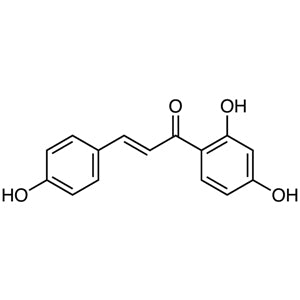
Isoliquiritigenin TCI I0822
Regular price From Rp 1.087.800,00Regular priceRp 775.950,00Sale price From Rp 1.087.800,00 -
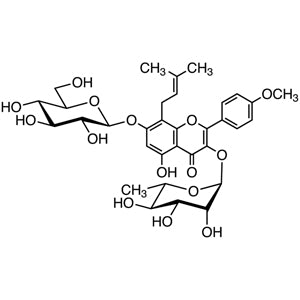
Icariin TCI I0862
Regular price From Rp 1.881.600,00Regular priceRp 1.331.400,00Sale price From Rp 1.881.600,00 -
Xanthohumol TCI X0068
Regular price Rp 13.302.450,00Regular priceRp 9.317.700,00Sale price Rp 13.302.450,00 -
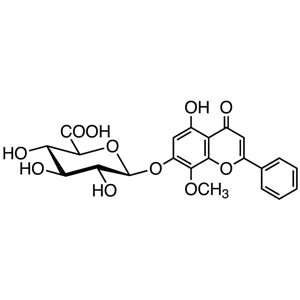
Wogonoside TCI W0012
Regular price From Rp 5.724.600,00Regular priceRp 4.018.350,00Sale price From Rp 5.724.600,00 -
Wogonin TCI W0010
Regular price From Rp 4.240.950,00Regular priceRp 2.980.950,00Sale price From Rp 4.240.950,00 -
PotengriffiosideA TCI T4196
Regular price Rp 7.897.050,00Regular priceRp 5.537.700,00Sale price Rp 7.897.050,00 -
Tectochrysin TCI T4185
Regular price Rp 4.876.200,00Regular priceRp 3.425.100,00Sale price Rp 4.876.200,00 -
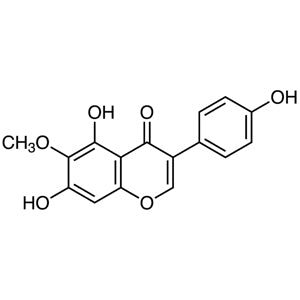
Tectorigenin TCI T3729
Regular price From Rp 4.771.200,00Regular priceRp 3.351.600,00Sale price From Rp 4.771.200,00