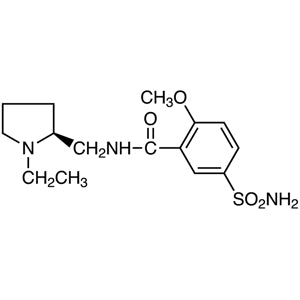
Aprepitant, with CAS number 170729-80-3, is a chemical compound widely used in pharmacological and biochemical research. It belongs to the category of pharmaceutical research reagents, essential for experimental studies in life science laboratories. This compound plays a crucial role in investigating the mechanisms of drug action and the development of new therapeutic approaches. Aprepitant functions as an antagonist of the neurokinin type 1 (NK1) receptor, which is involved in the processes of nausea and vomiting. Its significance in laboratory settings lies in its ability to support clinical trials and experimental studies related to the pharmacological effects on the nervous system.
Aprepitant is preferred due to its chemical stability and consistent performance in laboratory conditions. It maintains its integrity under specific storage conditions, ensuring reliable results in experiments. The compound's specificity and reproducibility make it a trusted choice for high-accuracy research. Its ability to clearly define biological responses in experimental models further enhances its value in pharmacological and neuropharmacological studies. These properties make it an essential tool for researchers aiming to understand complex biological processes and develop innovative treatments.
In Indonesian laboratories, Aprepitant is commonly used in health and pharmaceutical research. It is frequently employed in studies related to the treatment of nausea, neurological disorders, and the development of new drugs. Its application spans various research fields, contributing to advancements in medical science and drug discovery. The compound's reliability and effectiveness make it a popular choice among researchers in Indonesia.
TCI brochures (PDF)
- Pharmaceutical Ingredients for Research and Experimental Use 2026-03-09 · p. 25
- Pharmacological research for studying drug mechanisms and receptor interactions.
- Neuropharmacological studies to explore the effects of NK1 receptor antagonists on the central nervous system.
- Development of antiemetic therapies for clinical and experimental applications.
- Investigation of neurological disorders through targeted biochemical assays.
- Support for preclinical trials in drug discovery and formulation development.
| Brand | TCI |
|---|---|
| CAS number | 170729-80-3 |
| Molecular formula | — |
| Purity | — |
| Category | Life Science > Biochemicals and Reagents > Pharmaceutical Research Reagents |
| Pack sizes | Available in various quantities as per standard laboratory requirements |
| Physical form | Solid powder |
| Storage | Store in a cool, dry place away from light and moisture |
Aprepitant should be stored in a cool, dry environment, away from direct light and moisture to maintain its chemical stability. It is recommended to use airtight containers to prevent exposure to humidity and contaminants. Proper labeling of storage containers is essential for safe handling and traceability. In laboratory settings, it is important to use appropriate personal protective equipment (PPE) such as gloves and safety goggles when handling the compound. The substance should be kept in a well-ventilated area to minimize inhalation risks. Regular monitoring of storage conditions ensures the compound remains effective for research purposes.
—
Product Categories
- Biochemicals and ReagentsPharmaceutical Research Reagents (for Experimental Use)Neurotransmitter Agent Ingredients (for Research and Experimental Use)
- Pharmaceutical Development and Drug Discovery ResearchPharmaceutical Research Reagents (for Experimental Use)Neurotransmitter Agent Ingredients (for Research and Experimental Use)
Produk Terkait
-
(S)-(-)-Sulpiride TCI I0821
Regular price Rp 2.252.250,00Regular priceRp 1.590.750,00Sale price Rp 2.252.250,00 -
IpratropiumBromideMonohydrate TCI I0907
Regular price Rp 2.677.500,00Regular priceRp 1.887.900,00Sale price Rp 2.677.500,00 -
Zotepine TCI Z0054
Regular price Rp 6.756.750,00Regular priceRp 4.740.750,00Sale price Rp 6.756.750,00 -
AcetylcholineChloride TCI A0084
Regular price From Rp 1.405.950,00Regular priceRp 998.550,00Sale price From Rp 1.405.950,00 -
ZiprasidoneHydrochlorideMonohydrate TCI Z0032
Regular price From Rp 1.008.000,00Regular priceRp 720.300,00Sale price From Rp 1.008.000,00 -
Zolmitriptan TCI Z0024
Regular price From Rp 1.776.600,00Regular priceRp 1.257.900,00Sale price From Rp 1.776.600,00