Salvianolic Acid B is a naturally occurring phenolic compound derived from the roots of *Salvia miltiorrhiza*, commonly known as *Danshen* in traditional Chinese medicine. This compound plays a significant role in life science research, particularly in biochemical and pharmacological studies. Its presence in natural sources makes it a valuable reagent for investigating the biochemical pathways and therapeutic potential of plant-derived compounds. Salvianolic Acid B is widely used in laboratories to explore its biological activities and molecular interactions in various experimental models.
Salvianolic Acid B is prized for its strong antioxidant properties and chemical stability. It is soluble in organic solvents such as ethyl acetate and ethanol, which facilitates its use in analytical techniques like chromatography and spectroscopy. Its resistance to extreme environmental conditions ensures consistent performance during long-term storage and repeated use. These properties make it a reliable and versatile compound for researchers working in both basic and applied scientific fields.
In Indonesian laboratories, Salvianolic Acid B is commonly utilized in pharmacological and biomedical research. It supports studies on inflammation, oxidative stress, and cellular metabolism. Its application extends to health-related research, where it is used to evaluate the efficacy of natural compounds in disease prevention and treatment. The compound’s availability and compatibility with standard laboratory procedures make it a preferred choice for scientific investigations in Indonesia.
TCI brochures (PDF)
- Phytochemicals 2025-12-17 · p. 8
- Pharmacological research utilizes Salvianolic Acid B to study its antioxidant and anti-inflammatory effects on cellular and tissue models.
- Biochemical experiments benefit from its solubility in organic solvents, enabling efficient extraction and analysis in chromatographic techniques.
- Biomedical studies incorporate it to investigate the role of phenolic compounds in metabolic regulation and immune response modulation.
- Health-related research employs it to evaluate the therapeutic potential of natural compounds in disease prevention and treatment.
- Analytical chemistry applications take advantage of its chemical stability for consistent results in spectroscopic and chromatographic analyses.
| Brand | TCI |
|---|---|
| CAS number | 121521-90-2 |
| Molecular formula | — |
| Purity | — |
| Category | Life Science > Biochemicals and Reagents > Crude Medicine Ingredients for Research and Experimental Use |
| Pack sizes | — |
| Physical form | — |
| Storage | Store in a cool, dry place away from direct light |
Salvianolic Acid B should be stored in a cool, dry environment, away from direct sunlight and moisture. It is recommended to keep it in a sealed container to prevent exposure to air and humidity, which may affect its stability. When handling the compound, it is advisable to use appropriate personal protective equipment, such as gloves and safety goggles, to ensure safety. The compound is generally non-hazardous under normal laboratory conditions, but care should be taken to avoid contamination and maintain its integrity during storage and use. Proper labeling of containers is essential for safe handling and identification.
—
Product Categories
- Biochemicals and ReagentsCrude Medicine Ingredients for Research and Experimental Use
- Cell BiologyBioactive Small MoleculesAntioxidant and Free Radical Scavengers [Bioactive Small Molecules]
- Cell BiologyNutrition ResearchPhytochemicals
- Pharmaceutical Development and Drug Discovery ResearchCrude Medicine Ingredients for Research and Experimental Use
Produk Terkait
-
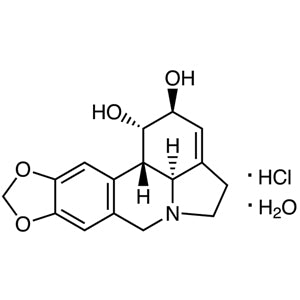
LycorineHydrochlorideMonohydrate TCI L0319
Regular price From Rp 4.186.350,00Regular priceRp 2.943.150,00Sale price From Rp 4.186.350,00 -
BaohuosideI TCI B6443
Regular price Rp 7.764.750,00Regular priceRp 5.445.300,00Sale price Rp 7.764.750,00 -
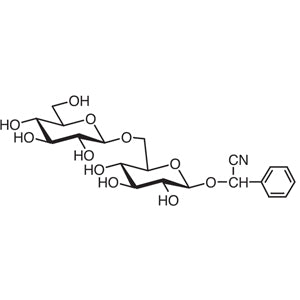
Amygdalin TCI A0443
Regular price From Rp 530.250,00Regular priceRp 386.400,00Sale price From Rp 530.250,00 -
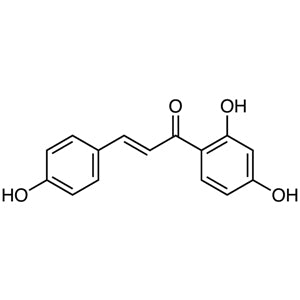
Isoliquiritigenin TCI I0822
Regular price From Rp 1.087.800,00Regular priceRp 775.950,00Sale price From Rp 1.087.800,00 -
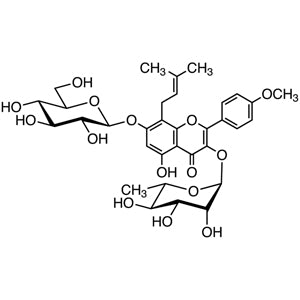
Icariin TCI I0862
Regular price From Rp 1.881.600,00Regular priceRp 1.331.400,00Sale price From Rp 1.881.600,00 -
Arbutin TCI A0522
Regular price From Rp 505.050,00Regular priceRp 368.550,00Sale price From Rp 505.050,00 -
Zerumbone TCI Z0060
Regular price Rp 8.374.800,00Regular priceRp 5.871.600,00Sale price Rp 8.374.800,00 -
Eugenol TCI A0232
Regular price From Rp 557.550,00Regular priceRp 405.300,00Sale price From Rp 557.550,00