Ammonium Metavanadate (TCI A3718), with CAS number 7803-55-6, is a chemical compound widely used in laboratory settings for its catalytic and reductive properties. This inorganic compound plays a crucial role in various chemical reactions, particularly in catalysis and inorganic chemistry. It is commonly employed in oxidation and reduction processes, making it a valuable reagent for synthetic applications. Its versatility in different reaction conditions allows it to act as both an oxidizing and reducing agent, depending on the experimental setup. This adaptability makes it a key component in the development of new chemical compounds and materials.
The compound’s unique chemical properties, including its high reactivity and solubility in water, make it a preferred choice for researchers. Its stability under controlled conditions ensures consistent performance, which is essential for reliable experimental results. The ability to dissolve easily in aqueous solutions simplifies its use in laboratory protocols, reducing the complexity of preparation and handling. These characteristics contribute to its popularity among scientists and laboratories seeking high-quality reagents for a wide range of applications.
In Indonesian laboratories, Ammonium Metavanadate is extensively used in research related to inorganic chemistry, catalysis, and the synthesis of complex compounds. Its role in scientific investigations is vital, supporting both academic and industrial research. The compound is particularly favored for its purity and consistent quality, which are essential for producing accurate and reproducible results. Its presence in Indonesian laboratories underscores its importance in advancing chemical research and development.
TCI brochures (PDF)
- Transition Metal Catalysts 2026-04-10 · p. 5
- Inorganic chemistry research benefits from Ammonium Metavanadate due to its reactivity and ability to participate in redox reactions, making it ideal for synthesizing complex inorganic compounds.
- Catalytic processes in oxidation and reduction reactions rely on this compound for its efficiency in promoting chemical transformations under controlled conditions.
- Organic synthesis experiments use Ammonium Metavanadate as a versatile reagent that can act as both an oxidizing and reducing agent depending on the reaction environment.
- Analytical chemistry applications benefit from its solubility and stability, allowing it to be used in solution-based experiments and spectroscopic analyses.
- Environmental studies incorporate this compound to investigate its behavior in aqueous systems and its potential role in chemical remediation processes.
| Brand | TCI |
|---|---|
| CAS number | 7803-55-6 |
| Molecular formula | — |
| Purity | — |
| Category | Chemistry > Catalysis and Inorganic Chemistry > Transition Elements |
| Pack sizes | Available in various quantities suitable for laboratory use |
| Physical form | Solid powder |
| Storage | Store in a cool, dry place away from moisture and direct sunlight |
Ammonium Metavanadate should be stored in a cool, dry environment to maintain its chemical integrity and prevent degradation. It is recommended to use airtight containers to protect it from moisture and humidity, which can affect its stability. The compound should be kept away from direct sunlight and sources of heat to avoid any potential reactions. In laboratory settings, it is important to handle the material with appropriate personal protective equipment, such as gloves and safety goggles, to ensure safety during handling. Proper labeling of storage containers is essential to prevent accidental exposure and ensure safe access. Regular inspection of storage conditions is advised to maintain optimal handling and safety standards.
—
Produk Terkait
-
PotassiumMetavanadate TCI P3205
Regular price From Rp 1.167.600,00Regular priceRp 815.850,00Sale price From Rp 1.167.600,00 -
Vanadium(IV)Oxide TCI V0177
Regular price From Rp 1.803.900,00Regular priceRp 1.261.050,00Sale price From Rp 1.803.900,00 -
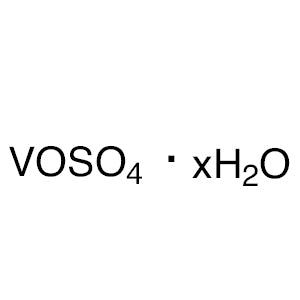
Vanadium(IV)OxideSulfateHydrate TCI V0171
Regular price From Rp 743.400,00Regular priceRp 519.750,00Sale price From Rp 743.400,00 -
Vanadium(III)Oxide TCI V0170
Regular price From Rp 1.167.600,00Regular priceRp 815.850,00Sale price From Rp 1.167.600,00 -
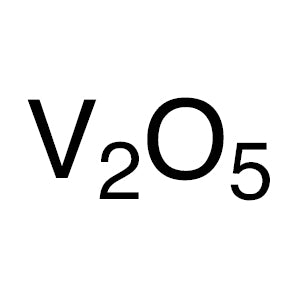
Vanadium(V)Oxide TCI V0169
Regular price From Rp 477.750,00Regular priceRp 333.900,00Sale price From Rp 477.750,00 -
Bis(2,4-pentanedionato)vanadium(IV)Oxide TCI V0016
Regular price Rp 2.199.750,00Regular priceRp 1.538.250,00Sale price Rp 2.199.750,00 -
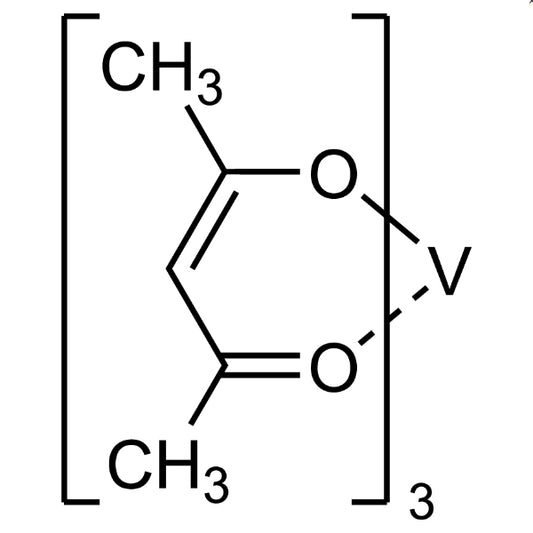
Vanadium(III)Acetylacetonate TCI T4380
Regular price From Rp 1.220.100,00Regular priceRp 852.600,00Sale price From Rp 1.220.100,00