Benzenesulfonanilide (TCI B0029), with CAS number 1678-25-7, is a chemical compound widely used in organic synthesis as a building block in laboratory settings. It is a key intermediate in the development of complex organic molecules, particularly in reactions involving nucleophilic and substitution mechanisms. Its molecular structure combines sulfonamide and anilide groups, making it a versatile reagent in synthetic chemistry. This compound is commonly employed in academic and industrial research for its ability to participate in various chemical transformations.
The compound's chemical stability under controlled conditions makes it a preferred choice for laboratory applications. However, it remains sensitive to excessive heat and moisture, requiring careful handling and storage. Its complex molecular structure contributes to high reactivity, enabling the formation of a wide range of functional compounds. This reactivity, combined with its structural versatility, makes it a valuable reagent in the synthesis of pharmaceuticals, specialty chemicals, and functional materials.
In Indonesian laboratories, Benzenesulfonanilide is extensively used in organic chemistry research, particularly in higher education institutions and research organizations. Its role in the development of new compounds with applications in pharmaceuticals, materials science, and other fields underscores its importance in both academic and industrial research. As a fundamental building block, it supports the advancement of chemical innovation in Indonesia.
- Organic synthesis is a key application where Benzenesulfonanilide is used to create complex molecules due to its reactivity and structural versatility.
- Pharmaceutical research benefits from this compound as it is a building block in the synthesis of various drug compounds and active pharmaceutical ingredients.
- Industrial chemical production utilizes Benzenesulfonanilide for the development of specialty chemicals and functional materials.
- Academic research in chemistry relies on this compound for teaching and experimental purposes in undergraduate and graduate studies.
- Material science applications leverage its chemical properties to design new materials with specific functional characteristics.
| Brand | TCI |
|---|---|
| CAS number | 1678-25-7 |
| Molecular formula | — |
| Purity | — |
| Category | Chemistry > Building Blocks > Non-Heterocyclic Building Blocks |
| Pack sizes | Available in various quantities as per supplier specifications |
| Physical form | Solid, typically in crystalline form |
| Storage | Store in a cool, dry place away from heat and moisture |
Benzenesulfonanilide should be stored in a cool, dry environment to maintain its chemical stability. It is recommended to keep it in airtight containers to prevent exposure to moisture and air. Due to its sensitivity to heat, it should be stored away from direct sunlight and heat sources. In laboratory settings, it is important to handle the compound with appropriate personal protective equipment to ensure safety. Regular monitoring of storage conditions is advised to maintain the integrity of the material. Proper labeling and storage practices help prevent contamination and ensure safe handling in laboratory environments.
—
Produk Terkait
-
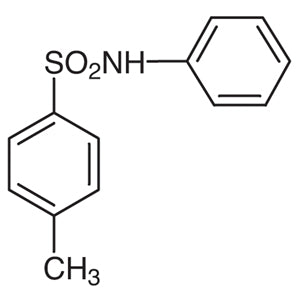
p-Toluenesulfonanilide TCI T0282
Regular price From Rp 1.538.250,00Regular priceRp 1.090.950,00Sale price From Rp 1.538.250,00 -
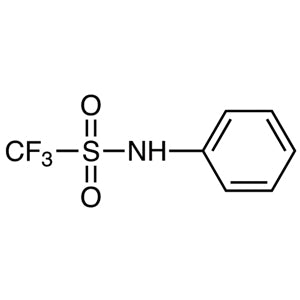
Trifluoromethanesulfonanilide TCI T2985
Regular price From Rp 2.093.700,00Regular priceRp 1.479.450,00Sale price From Rp 2.093.700,00