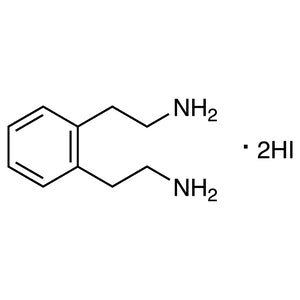
Biurea (TCI B0512, CAS 110-21-4) is a chemical compound widely used in laboratory experiments across various scientific disciplines. As a fundamental building block in chemistry, it plays a crucial role in organic synthesis, particularly in reactions involving nitrogen reactivity. Its versatility makes it an essential component for researchers aiming to develop complex molecules with specific structural characteristics. Biurea is also valued for its ability to participate in both qualitative and quantitative analyses, supporting a wide range of experimental techniques in the laboratory.
One of the key attributes that make biurea a preferred choice is its stable chemical properties and reactivity with a variety of reagents. Its molecular structure is simple yet highly adaptable, allowing it to serve as a starting material for the synthesis of numerous compounds. Additionally, biurea has a high melting point, which ensures its stability under high-temperature conditions commonly encountered in laboratory settings. These characteristics contribute to its reliability and effectiveness in diverse chemical applications.
In Indonesian laboratories, biurea is extensively used in chemical research, particularly in organic synthesis and analytical chemistry. Its availability and reliability make it a popular choice among researchers and laboratory professionals. The compound’s role in creating intermediates and its utility in both qualitative and quantitative analysis further solidify its importance in the scientific community.
- Organic synthesis is a primary application for biurea, as it serves as a versatile building block for creating complex organic molecules.
- Qualitative analysis benefits from biurea’s reactivity, enabling the identification of nitrogen-containing compounds in unknown samples.
- Quantitative analysis relies on biurea’s predictable chemical behavior, allowing for accurate measurements in analytical procedures.
- Intermediate compound production utilizes biurea’s structural flexibility to synthesize more complex chemical entities.
- High-temperature experiments take advantage of biurea’s high melting point, ensuring stability during thermal processes.
| Brand | TCI |
|---|---|
| CAS number | 110-21-4 |
| Molecular formula | — |
| Purity | — |
| Category | Chemistry > Building Blocks > Non-Heterocyclic Building Blocks |
| Pack sizes | Available in various quantities as per standard laboratory supply |
| Physical form | Solid |
| Storage | Store in a cool, dry place away from direct sunlight |
Biurea should be stored in a cool, dry environment to maintain its chemical stability and prevent degradation. It is recommended to keep it in airtight containers to minimize exposure to moisture and air, which could affect its reactivity. Laboratory personnel should handle biurea with care, using appropriate personal protective equipment such as gloves and safety goggles to ensure safety. Since biurea is a chemical compound, it should be stored away from incompatible substances to avoid any potential reactions. Proper labeling of storage containers is essential for safe handling and easy identification. Regular monitoring of storage conditions ensures the compound remains in optimal condition for use in laboratory experiments.
—
Produk Terkait
-
TCI B5774 5,10-Bis(4,4,5,5-tetramethyl-1,3,2-dioxaborolan-2-yl)naphtho[1,2-c:5,6-c']bis([1,2,5]oxadiazole)
Regular price Rp 10.307.850,00Regular priceRp 7.224.000,00Sale price Rp 10.307.850,00 -
Dihydroiodide TCI B6569
Regular price From Rp 1.988.700,00Regular priceRp 1.405.950,00Sale price From Rp 1.988.700,00