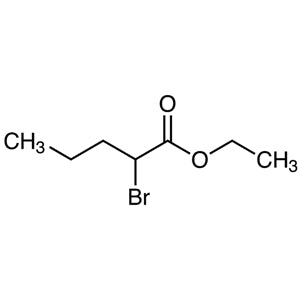
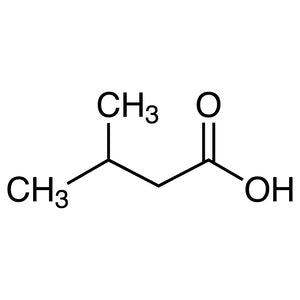
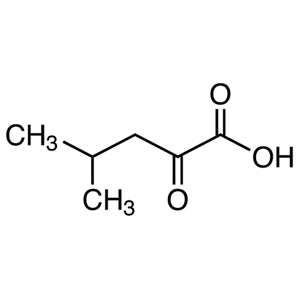
2-Bromovaleric Acid (TCI B0667), with CAS number 584-93-0, is a versatile chemical compound widely used in organic laboratory reactions. It serves as a fundamental building block in the synthesis of complex molecules, particularly in substitution and haloform reactions. This compound is essential for chemists seeking to introduce bromo groups into carbon chains, enabling the creation of a wide range of organic and heterocyclic compounds. Its reactivity and chemical versatility make it a key reagent in both academic and industrial research settings.
As an alkyl bromide, 2-Bromovaleric Acid exhibits high reactivity, which makes it a preferred choice for synthetic pathways requiring bromine substitution. Its solubility in organic solvents such as ethylamine and acetone facilitates efficient processing and purification in laboratory settings. The compound’s stable chemical and physical properties ensure consistent performance across various experimental conditions. These characteristics make it a reliable and essential material for laboratory use.
In Indonesian laboratories, 2-Bromovaleric Acid is commonly used in pure and applied chemical research, including drug synthesis, industrial chemical production, and material science studies. It is frequently found in chemistry, pharmacy, and materials technology laboratories, particularly in higher education institutions and research organizations. Its role in advancing scientific research is well recognized in the local scientific community.
- Organic synthesis applications benefit from 2-Bromovaleric Acid due to its reactivity and utility in substitution reactions, enabling the creation of complex molecular structures.
- Drug development research utilizes this compound for bromine substitution in carbon chains, a critical step in synthesizing pharmaceutical compounds.
- Industrial chemical production relies on this reagent for the synthesis of brominated organic compounds used in various manufacturing processes.
- Material science experiments incorporate 2-Bromovaleric Acid in the creation of heterocyclic compounds, which are essential in advanced material formulations.
- Academic research in chemistry and pharmacy uses this compound as a fundamental building block for teaching and experimental studies.
| Brand | TCI |
|---|---|
| CAS number | 584-93-0 |
| Molecular formula | — |
| Purity | — |
| Category | Chemistry > Building Blocks > Non-Heterocyclic Building Blocks |
| Pack sizes | — |
| Physical form | — |
| Storage | Store in a cool, dry place away from light and incompatible materials |
2-Bromovaleric Acid should be stored in a cool, dry environment, away from direct sunlight and sources of heat. It is recommended to keep the compound in a sealed container to prevent exposure to air and moisture. Due to its reactivity, it should be stored separately from strong oxidizing agents and incompatible substances. Laboratory personnel should handle the material with appropriate personal protective equipment, including gloves and safety goggles, to ensure safety during use and storage. Proper ventilation is essential when working with this compound to minimize inhalation risks. Regular inspection of storage conditions and containers is advised to maintain the integrity and safety of the material.
—
Produk Terkait
-
5-BromovalericAcid TCI B1169
Regular price Rp 1.087.800,00Regular priceRp 775.950,00Sale price Rp 1.087.800,00 -
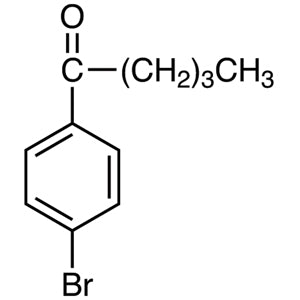
4'-Bromovalerophenone TCI B4733
Regular price From Rp 530.250,00Regular priceRp 386.400,00Sale price From Rp 530.250,00 -
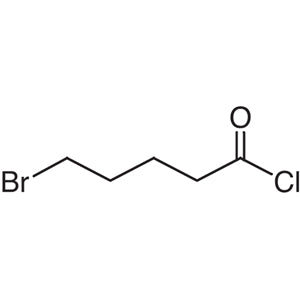
5-BromovalerylChloride TCI B2059
Regular price From Rp 1.618.050,00Regular priceRp 1.146.600,00Sale price From Rp 1.618.050,00 -
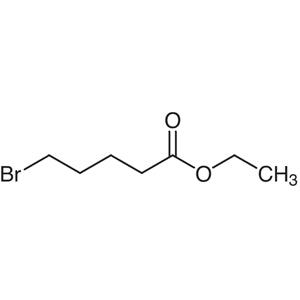
Ethyl5-Bromovalerate TCI B1557
Regular price Rp 2.041.200,00Regular priceRp 1.442.700,00Sale price Rp 2.041.200,00 -
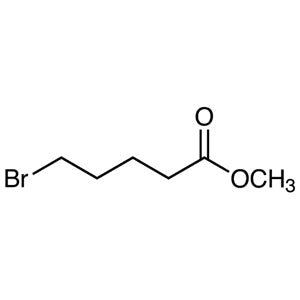
Methyl5-Bromovalerate TCI M2265
Regular price From Rp 1.033.200,00Regular priceRp 738.150,00Sale price From Rp 1.033.200,00 -
Ethyl2-Bromovalerate TCI E0970
Regular price From Rp 1.140.300,00Regular priceRp 812.700,00Sale price From Rp 1.140.300,00 -
IsovalericAcid TCI M0182
Regular price Rp 505.050,00Regular priceRp 352.800,00Sale price Rp 505.050,00 -
4-Methyl-2-oxovalericAcid TCI K0025
Regular price Rp 4.929.750,00Regular priceRp 3.462.900,00Sale price Rp 4.929.750,00