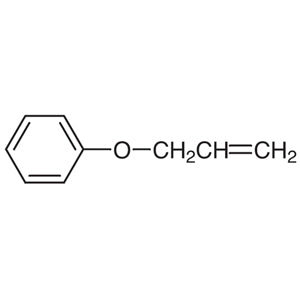
Butyl Phenyl Ether (BPE), with the CAS number 1126-79-0, is a chemical compound widely used as a building block in various laboratory applications. It serves as a versatile intermediate in organic synthesis, particularly in the development of pharmaceuticals and industrial chemicals. Its molecular structure, consisting of a phenyl group and a butyl group, provides a stable yet reactive foundation for further chemical transformations. Due to its chemical inertness, it is a reliable component in synthetic pathways where stability is crucial.
The non-polar nature of BPE makes it highly soluble in organic solvents such as ethyl acetate and chloroform, facilitating efficient separation and purification processes in laboratory settings. This solubility profile is essential for chromatographic techniques and reaction workups. Additionally, BPE is odorless, which minimizes interference in analytical procedures and visual observations. Its non-toxic and non-hazardous properties ensure safe handling, making it suitable for laboratories that prioritize environmental and occupational safety.
In Indonesian laboratories, BPE is commonly used in both academic and industrial research. It plays a key role in the synthesis of organic compounds, supporting advancements in pharmaceutical development and chemical manufacturing. Its availability and reliability make it a preferred choice for researchers and chemists working in various sectors, including academia and industry.
- Organic synthesis is a primary application where BPE serves as a key intermediate due to its stable structure and reactivity.
- Pharmaceutical research benefits from BPE's role in the synthesis of complex organic molecules, supporting drug development efforts.
- Industrial chemical production utilizes BPE for the creation of various chemical compounds used in manufacturing processes.
- Analytical chemistry applications leverage BPE's solubility and inertness for chromatographic separations and reaction workups.
- Environmental studies may incorporate BPE in the analysis of organic pollutants and chemical interactions in natural systems.
| Brand | TCI |
|---|---|
| CAS number | 1126-79-0 |
| Molecular formula | — |
| Purity | — |
| Category | Chemistry > Building Blocks > Non-Heterocyclic Building Blocks |
| Pack sizes | Available in various quantities as per standard laboratory supply |
| Physical form | Liquid |
| Storage | Store in a cool, dry place away from direct sunlight and incompatible materials |
Butyl Phenyl Ether should be stored in a cool, dry environment, away from direct sunlight and sources of heat. It is recommended to keep it in a tightly sealed container to prevent evaporation and contamination. Due to its non-polar nature, it is advisable to use glass or high-density polyethylene containers for safe handling. In laboratory settings, it is important to ensure proper ventilation to avoid any potential buildup of vapors. While it is considered non-toxic and non-hazardous, standard safety protocols should still be followed to maintain a safe working environment. Regular monitoring of storage conditions ensures the integrity and usability of the compound over time.
—
Produk Terkait
-
AmylEther TCI A0451
Regular price From Rp 1.749.300,00Regular priceRp 1.223.250,00Sale price From Rp 1.749.300,00 -
AllylPhenylEther TCI A0234
Regular price From Rp 1.140.300,00Regular priceRp 796.950,00Sale price From Rp 1.140.300,00 -
AllylGlycidylEther TCI A0221
Regular price From Rp 477.750,00Regular priceRp 333.900,00Sale price From Rp 477.750,00 -
VanillylButylEther TCI V0161
Regular price From Rp 928.200,00Regular priceRp 664.650,00Sale price From Rp 928.200,00 -
o-Tolyl3,5-XylylEther TCI T2213
Regular price From Rp 3.683.400,00Regular priceRp 2.575.650,00Sale price From Rp 3.683.400,00 -
TetraethyleneGlycolMonobenzylEther TCI T1997
Regular price From Rp 3.365.250,00Regular priceRp 2.368.800,00Sale price From Rp 3.365.250,00 -
TriethyleneGlycolMonobenzylEther TCI T1996
Regular price From Rp 3.578.400,00Regular priceRp 2.517.900,00Sale price From Rp 3.578.400,00 -
TriethyleneGlycolMonoisopropylEther TCI T1373
Regular price Rp 4.531.800,00Regular priceRp 3.184.650,00Sale price Rp 4.531.800,00