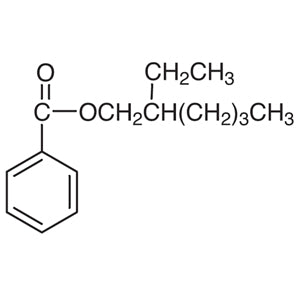
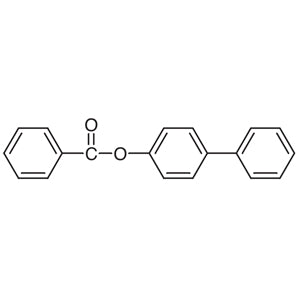
Amil Benzoate (TCI B1095, CAS 2049-96-9) is an organic compound widely utilized in various chemical applications within laboratory settings. As an ester derived from benzoic acid and amyl alcohol, it plays a crucial role in synthetic chemistry, particularly in esterification and hydrolysis reactions. Its volatility and solubility in organic solvents make it a versatile reagent for a range of experimental processes. This compound is commonly found in chemical laboratories, where it supports the development of complex molecules and aids in analytical procedures.
The properties of Amil Benzoate make it a preferred choice for many laboratory applications. It is colorless, odorless, and relatively stable under normal conditions, ensuring consistency in experimental results. Its volatility allows for efficient evaporation and separation in chemical reactions, which is beneficial in purification processes. Additionally, it is non-corrosive and safe to handle in controlled laboratory environments, contributing to its reliability and ease of use. These characteristics make it a valuable tool for chemists working on a variety of projects.
In Indonesian laboratories, Amil Benzoate is frequently used in chemical research, especially in the field of organic synthesis. It is a key component in the development of new compounds and is often employed in analytical procedures. Its availability and reliability make it a standard reagent in both academic and industrial research settings, supporting the advancement of chemical knowledge and innovation.
- Organic synthesis is a key application where Amil Benzoate is used to facilitate esterification and hydrolysis reactions due to its chemical stability and reactivity.
- Analytical chemistry benefits from Amil Benzoate as a solvent in quantitative and qualitative analysis, allowing for accurate dissolution and separation of compounds.
- Pharmaceutical research utilizes Amil Benzoate in the development of new drug compounds, leveraging its solubility and chemical compatibility with various substances.
- Environmental testing incorporates Amil Benzoate as a reference standard for assessing the presence of organic compounds in samples.
- Industrial chemical production relies on Amil Benzoate as a component in the formulation of specialty chemicals and perfumes due to its volatility and solubility properties.
| Brand | TCI |
|---|---|
| CAS number | 2049-96-9 |
| Molecular formula | — |
| Purity | — |
| Category | Chemistry > Building Blocks > Non-Heterocyclic Building Blocks |
| Pack sizes | Available in various quantities as per supplier specifications |
| Physical form | Liquid |
| Storage | Store in a cool, dry place away from direct sunlight and incompatible materials |
Amil Benzoate should be stored in a cool, dry environment, away from direct sunlight and sources of heat. It is recommended to use sealed containers to prevent evaporation and contamination. Due to its volatility, it is important to handle the compound in a well-ventilated area to minimize exposure. Proper personal protective equipment, such as gloves and safety goggles, should be worn when handling the substance. While it is non-corrosive, it is still essential to follow standard laboratory safety protocols to ensure safe usage and storage. The compound should not be stored near incompatible materials such as strong oxidizers or acids. Regular monitoring of storage conditions is advised to maintain its stability and effectiveness.
—
Produk Terkait
-
Methyl3,4,5-Tris(benzyloxy)benzoate TCI T1870
Regular price Rp 1.510.950,00Regular priceRp 1.072.050,00Sale price Rp 1.510.950,00 -
Methyl3-(Bromomethyl)benzoate TCI B2224
Regular price From Rp 1.908.900,00Regular priceRp 1.350.300,00Sale price From Rp 1.908.900,00 -
Methyl4-(Bromomethyl)benzoate TCI B2053
Regular price From Rp 1.405.950,00Regular priceRp 998.550,00Sale price From Rp 1.405.950,00 -
AllylBenzoate TCI B2041
Regular price Rp 2.702.700,00Regular priceRp 1.905.750,00Sale price Rp 2.702.700,00 -
2-EthylhexylBenzoate TCI B1977
Regular price Rp 2.730.000,00Regular priceRp 1.924.650,00Sale price Rp 2.730.000,00 -
4-BiphenylBenzoate TCI B1866
Regular price From Rp 1.272.600,00Regular priceRp 905.100,00Sale price From Rp 1.272.600,00 -
3-Methyl-2-butenylBenzoate TCI B1409
Regular price Rp 2.121.000,00Regular priceRp 1.498.350,00Sale price Rp 2.121.000,00 -
4-ChlorobutylBenzoate TCI B1399
Regular price From Rp 822.150,00Regular priceRp 590.100,00Sale price From Rp 822.150,00