


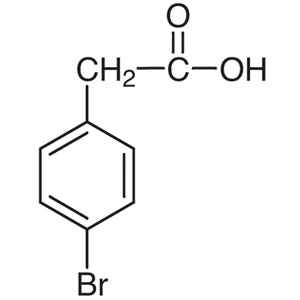
4-Bromophenylacetic Acid is a chemical compound widely used as a foundational building block in the synthesis of complex organic compounds. It plays a crucial role in laboratory settings where researchers aim to create functional molecules with specific properties. This compound is commonly utilized in the development of pharmaceuticals, industrial chemicals, and analytical reagents due to its versatility and reactivity. Its molecular structure consists of a bromo group attached to a phenyl ring, connected to an acetic acid chain, making it a valuable intermediate in various synthetic pathways.
The reactivity of 4-Bromophenylacetic Acid is largely attributed to the presence of the bromo group, which enhances its ability to participate in chemical reactions such as substitution, esterification, and nucleophilic reactions. The bromo group also contributes to the compound’s stability in oxidation and reduction processes, making it a reliable choice for synthetic applications. Additionally, its solubility in organic solvents like ethyl acetate and ethanol facilitates efficient processing and separation techniques in laboratory environments.
In Indonesian laboratories, 4-Bromophenylacetic Acid is frequently used in research and development projects involving organic synthesis. Its high purity and chemical stability make it an essential material for academic and industrial applications. It is commonly found in chemical laboratories where synthetic pathways are explored, and its role is critical in the creation of new compounds with specific functional properties.
- Organic synthesis is a key application where 4-Bromophenylacetic Acid serves as a versatile building block for creating complex molecules with specific functional groups.
- Pharmaceutical research benefits from this compound due to its ability to participate in nucleophilic substitution reactions, aiding in the development of new drug compounds.
- Industrial chemical production utilizes this material for the synthesis of various derivatives, contributing to the manufacturing of specialty chemicals.
- Analytical chemistry applications rely on its reactivity and solubility properties for the preparation of standard solutions and reagents.
- Research and development in chemical innovation often incorporates this compound to explore new synthetic pathways and functional group modifications.
| Brand | TCI |
|---|---|
| CAS number | 1878-68-8 |
| Molecular formula | — |
| Purity | — |
| Category | Chemistry > Building Blocks > Non-Heterocyclic Building Blocks |
| Pack sizes | Available in various quantities as per supplier specifications |
| Physical form | Solid, typically in crystalline or powder form |
| Storage | Store in a cool, dry place away from direct sunlight and moisture |
4-Bromophenylacetic Acid should be stored in a cool, dry environment to maintain its chemical integrity and prevent degradation. It is recommended to keep the compound in airtight containers to minimize exposure to moisture and air, which can affect its stability. Due to its reactivity, it should be handled with appropriate safety measures, such as using personal protective equipment. It is best stored in a well-ventilated area, away from incompatible substances like strong oxidizers. Regular monitoring of storage conditions ensures the compound remains suitable for use in laboratory applications. Proper labeling and secure storage are essential to prevent accidental exposure and ensure safe handling in a laboratory setting.
—
Produk Terkait
-
2-BromophenylaceticAcid TCI B1957
Regular price From Rp 1.060.500,00Regular priceRp 757.050,00Sale price From Rp 1.060.500,00 -
3-BromophenylaceticAcid TCI B1927
Regular price From Rp 1.483.650,00Regular priceRp 1.053.150,00Sale price From Rp 1.483.650,00 -
alpha-BromophenylaceticAcid TCI B0984
Regular price From Rp 848.400,00Regular priceRp 609.000,00Sale price From Rp 848.400,00


