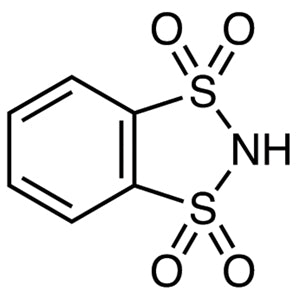
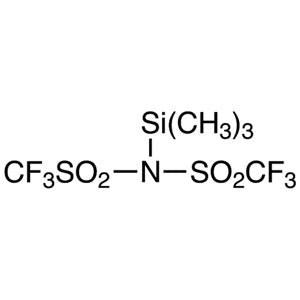
Bis(trifluoromethanesulfonyl)imide is a synthetic reagent widely used in chemical laboratories for its versatile role in various synthetic reactions. This compound is a key component in many organic and inorganic chemical processes, where it functions as both an electron donor and acceptor depending on the reaction conditions. Its unique structure, consisting of two trifluoromethanesulfonyl groups attached to a nitrogen atom, makes it highly reactive and suitable for a range of chemical transformations. In laboratory settings, it is often employed as a strong acid or base, contributing to the efficiency and selectivity of chemical reactions.
The compound is known for its high ionic strength and exceptional stability under a variety of chemical conditions. These properties make it a preferred choice for applications requiring long-term stability and consistent performance. Its non-volatile nature and resistance to decomposition further enhance its reliability in laboratory environments. Additionally, its ability to maintain structural integrity under harsh conditions ensures that it remains effective even in complex chemical systems. This combination of stability and reactivity makes it an essential tool for advanced chemical research.
In Indonesian laboratories, this reagent is commonly used in organic and inorganic chemistry research. It is frequently employed in the development of new synthetic methods and the study of chemical properties of various compounds. Many research institutions and universities in Indonesia rely on this compound for its reliability and effectiveness in a wide range of chemical applications. Its consistent performance and stability make it a valuable asset in both academic and industrial research settings.
Related TCI products
- TCI B4139 4482-01-3 1,2-Benzenedisulfonic Imide
- TCI Z0027 168106-25-0 Zinc(II) Bis(trifluoromethanesulfonyl)imide
- TCI V0145 1013027-27-4 1-Vinylimidazole Bis(trifluoromethanesulfonyl)imide
- TCI T4393 460731-17-3 Triphenylsulfonium Bis(trifluoromethanesulfonyl)imide
- TCI T2761 268536-05-6 Trimethylpropylammonium Bis(trifluoromethanesulfonyl)imide
- TCI T2679 405514-94-5 Tributylmethylammonium Bis(trifluoromethanesulfonyl)imide
- Organic synthesis reactions benefit from its ability to act as both an electron donor and acceptor, enhancing reaction efficiency and selectivity.
- Inorganic chemistry applications often utilize its strong ionic character to facilitate ion exchange and acid-base reactions.
- It is ideal for catalytic processes where high stability and reactivity are required, supporting complex reaction mechanisms.
- Its non-volatile nature makes it suitable for reactions requiring prolonged exposure to high temperatures or vacuum conditions.
- It is commonly used in the preparation of fluorinated compounds due to its ability to introduce trifluoromethanesulfonyl groups into molecular structures.
| Brand | TCI |
|---|---|
| CAS number | 82113-65-3 |
| Molecular formula | — |
| Purity | — |
| Category | Chemistry > Synthetic Reagents > Acids, Bases [Synthetic Reagents] |
| Pack sizes | Available in various quantities as per supplier specifications |
| Physical form | Solid or powder, depending on packaging |
| Storage | Store in a cool, dry place away from moisture and direct sunlight |
This compound should be stored in a cool, dry environment to maintain its stability and prevent degradation. It is recommended to use airtight containers to protect it from moisture and air exposure. Due to its chemical reactivity, it should be handled with appropriate personal protective equipment, including gloves and safety goggles. It is important to ensure good ventilation when working with this material to minimize inhalation risks. Storage should be away from incompatible substances such as strong bases or reducing agents. Regular inspection of storage conditions is advised to ensure long-term integrity and safety.
—
Produk Terkait
-
1,2-BenzenedisulfonicImide TCI B4139
Regular price Rp 6.413.400,00Regular priceRp 4.500.300,00Sale price Rp 6.413.400,00 -
Zinc(II)Bis(trifluoromethanesulfonyl)imide TCI Z0027
Regular price From Rp 1.618.050,00Regular priceRp 1.146.600,00Sale price From Rp 1.618.050,00 -
1-VinylimidazoleBis(trifluoromethanesulfonyl)imide TCI V0145
Regular price Rp 2.809.800,00Regular priceRp 1.980.300,00Sale price Rp 2.809.800,00 -
TriphenylsulfoniumBis(trifluoromethanesulfonyl)imide TCI T4393
Regular price From Rp 1.298.850,00Regular priceRp 924.000,00Sale price From Rp 1.298.850,00 -
TrimethylpropylammoniumBis(trifluoromethanesulfonyl)imide TCI T2761
Regular price From Rp 1.908.900,00Regular priceRp 1.350.300,00Sale price From Rp 1.908.900,00 -
TributylmethylammoniumBis(trifluoromethanesulfonyl)imide TCI T2679
Regular price From Rp 1.749.300,00Regular priceRp 1.239.000,00Sale price From Rp 1.749.300,00 -
N-(Trimethylsilyl)bis(trifluoromethanesulfonyl)imide TCI T2392
Regular price From Rp 2.942.100,00Regular priceRp 2.072.700,00Sale price From Rp 2.942.100,00 -
TriethylsulfoniumBis(trifluoromethanesulfonyl)imide TCI T2314
Regular price Rp 2.862.300,00Regular priceRp 2.017.050,00Sale price Rp 2.862.300,00