3-Bromothieno[3,2-b]thiophene is an organic compound widely used in material science and semiconductor research. This compound plays a crucial role in the synthesis of complex molecules, particularly in the development of optoelectronic devices and organic-based technologies. Its unique molecular structure, featuring two fused thiophene rings and a bromine substituent, makes it a valuable building block for creating materials with specific electronic and optical properties. In the laboratory, it serves as a key component in the design of advanced materials that exhibit conductivity and responsiveness to light stimuli.
The compound’s chemical properties, including its reactivity and stability, make it a preferred choice for high-precision chemical synthesis. Its bromine substituent enhances its reactivity, allowing it to participate in various chemical reactions that are essential for creating complex molecular structures. The stability of the thiophene rings ensures that the compound maintains its integrity during synthesis processes, contributing to the reliability of the final products. These characteristics are vital for applications that require precise control over molecular composition and functionality.
In Indonesian laboratories, 3-Bromothieno[3,2-b]thiophene is commonly used in semiconductor material research, especially in the development of OLEDs and optical sensors. It is also integrated into projects focused on innovative material solutions for industrial and technological applications. Its role in advancing material science makes it an essential tool for researchers working on next-generation electronic and optical technologies.
TCI brochures (PDF)
- Thiophenes 2026-06-29 · p. 13
- Building Blocks for Organic Semiconductor 2026-03-24 · p. 25
Related TCI products
- TCI B3692 25121-81-7 2-Bromothieno[2,3-b]thiophene
- TCI T2772 124638-53-5 2,3,5,6-Tetrabromothieno[3,2-b]thiophene
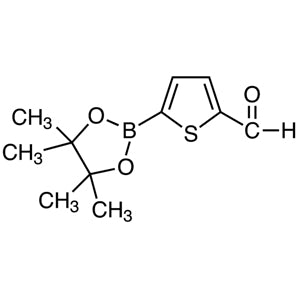
- TCI T3485 1040281-83-1 5-(4,4,5,5-Tetramethyl-1,3,2-dioxaborolan-2-yl)thiophene-2-carboxaldehyde
- TCI T3221 40985-58-8 Thieno[3,2-b]thiophene-2-carbonitrile
- TCI T3190 130995-13-0 3-(Trimethylsilylethynyl)thiophene
- TCI T3156 1723-27-9 Thieno[3,2-b]thiophene-2-carboxylic Acid
- Semiconductor material research for the development of organic light-emitting diodes (OLEDs) due to its ability to form conductive and optically responsive materials.
- Optical sensor development as it enables the creation of materials that interact with light in a controlled and predictable manner.
- Complex molecule synthesis in material science where high reactivity and stability are required for the formation of advanced compounds.
- Research into next-generation electronic devices requiring precise molecular structures and electronic properties.
- Innovation in industrial applications through the development of new materials with tailored optical and electrical characteristics.
| Brand | TCI |
|---|---|
| CAS number | 25121-83-9 |
| Molecular formula | — |
| Purity | — |
| Category | Materials Science > Material Building Blocks > Small Molecule Semiconductor Building Blocks |
| Pack sizes | Available in standard laboratory quantities |
| Physical form | Solid |
| Storage | Store in a cool, dry place away from light and moisture |
This compound should be stored in a cool, dry environment, away from direct light and moisture to maintain its chemical integrity. It is recommended to use airtight containers made of materials that are chemically inert, such as glass or stainless steel, to prevent contamination and degradation. Due to its bromine substituent, it is important to handle the compound with care, using appropriate personal protective equipment to avoid exposure. In laboratory settings, it should be kept in a designated chemical storage area that is accessible only to authorized personnel. Proper labeling and documentation are essential to ensure safe handling and compliance with laboratory safety protocols.
—
Produk Terkait
-
2-Bromothieno[2,3-b]thiophene TCI B3692
Regular price Rp 7.446.600,00Regular priceRp 5.222.700,00Sale price Rp 7.446.600,00 -
2,3,5,6-Tetrabromothieno[3,2-b]thiophene TCI T2772
Regular price Rp 9.221.100,00Regular priceRp 6.463.800,00Sale price Rp 9.221.100,00 -
5-(4,4,5,5-Tetramethyl-1,3,2-dioxaborolan-2-yl)thiophene-2-carboxaldehyde TCI T3485
Regular price Rp 2.013.900,00Regular priceRp 1.423.800,00Sale price Rp 2.013.900,00 -
Thieno[3,2-b]thiophene-2-carbonitrile TCI T3221
Regular price From Rp 2.252.250,00Regular priceRp 1.590.750,00Sale price From Rp 2.252.250,00 -
3-(Trimethylsilylethynyl)thiophene TCI T3190
Regular price From Rp 1.008.000,00Regular priceRp 720.300,00Sale price From Rp 1.008.000,00 -
Thieno[3,2-b]thiophene-2-carboxylicAcid TCI T3156
Regular price From Rp 1.776.600,00Regular priceRp 1.257.900,00Sale price From Rp 1.776.600,00 -
Thieno[3,2-b]thiophene-2-boronicAcid(containsvaryingamountsofAnhydride) TCI T2621
Regular price Rp 5.883.150,00Regular priceRp 4.129.650,00Sale price Rp 5.883.150,00 -
Thiophene-2,5-dicarbaldehyde TCI T2480
Regular price From Rp 1.696.800,00Regular priceRp 1.202.250,00Sale price From Rp 1.696.800,00