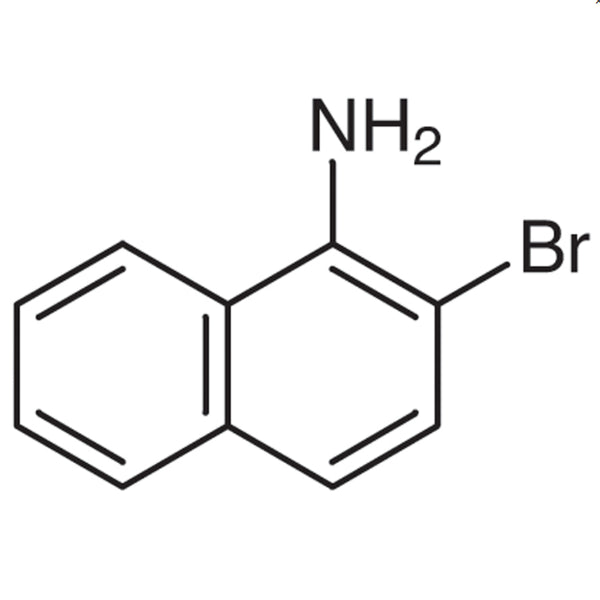
1-Amino-2-bromonaphthalene is a chemical compound widely used as a building block in the synthesis of complex molecules. Its role in the laboratory is critical for creating a variety of organic and heterocyclic compounds through substitution and electrophilic reactions. This compound is particularly valued for its structural versatility and chemical stability, making it an essential component in many synthetic pathways. Due to its unique aromatic structure and functional groups, it is frequently utilized in both academic and industrial research settings.
The compound’s chemical properties, including its controlled reactivity and stability, make it a preferred choice for chemists. Its ability to participate in various reactions with reagents such as alkali metals, acids, and oxidizing agents enhances its utility in diverse experimental conditions. The presence of both an amino and bromo group on the naphthalene ring allows for multiple reaction sites, enabling the synthesis of a wide range of derivatives. These characteristics contribute to its popularity in chemical research and development.
In Indonesian laboratories, 1-Amino-2-bromonaphthalene is commonly used in chemical synthesis and analytical studies. Its role in the creation of complex organic compounds and its compatibility with various reagents make it a key material in both teaching and research environments. The compound’s reliability in different reaction conditions ensures its continued use in scientific investigations across various disciplines.
Related TCI products
- Synthesis of Heterocyclic Compounds: This compound is ideal for creating complex ring structures due to its aromatic framework and reactive functional groups.
- Organic Reaction Testing: Its controlled reactivity allows it to be used in a variety of electrophilic substitution reactions, making it suitable for reaction mechanism studies.
- Chemical Analysis: The compound’s distinct chemical properties make it useful in analytical chemistry for identifying and quantifying specific functional groups.
- Teaching and Research in Universities: It is frequently used in academic settings to demonstrate synthetic pathways and reaction mechanisms.
- Industrial Chemical Development: Its versatility and stability make it a valuable component in the development of new chemical products and formulations.
| Brand | TCI |
|---|---|
| CAS number | 771-14-2 |
| Molecular formula | — |
| Purity | — |
| Category | Chemistry > Building Blocks > Non-Heterocyclic Building Blocks |
| Pack sizes | Available in various quantities as per supplier specifications |
| Physical form | Solid |
| Storage | Store in a cool, dry place away from light and incompatible materials |
This compound should be stored in a cool, dry environment, away from direct sunlight and sources of heat. It is recommended to keep it in a sealed container to prevent exposure to moisture and air. Due to its reactivity, it should be stored separately from strong oxidizing agents, acids, and alkalis to avoid unwanted chemical interactions. In a laboratory setting, proper personal protective equipment, including gloves and safety goggles, should always be worn when handling this material. It is important to ensure good ventilation when working with this compound to minimize inhalation risks. Always follow standard safety protocols to maintain a safe working environment.
—
Produk Terkait
-
1-Amino-4-bromonaphthalene TCI A1886
Regular price From Rp 1.565.550,00Regular priceRp 1.094.100,00Sale price From Rp 1.565.550,00 -
1-Bromonaphthalen-2-amine TCI B6991
Regular price From Rp 1.908.900,00Regular priceRp 1.334.550,00Sale price From Rp 1.908.900,00 -
4-Bromonaphthalen-1-ol TCI B5311
Regular price From Rp 2.782.500,00Regular priceRp 1.945.650,00Sale price From Rp 2.782.500,00 -
5-Amino-2-chlorotoluene-4-sulfonicAcid TCI A0287
Regular price From Rp 637.350,00Regular priceRp 445.200,00Sale price From Rp 637.350,00 -
4-Amino-4'-(N,N-dimethylamino)stilbene TCI A0291
Regular price From Rp 1.988.700,00Regular priceRp 1.405.950,00Sale price From Rp 1.988.700,00 -
2-Amino-3-hydroxyanthraquinone TCI A0315
Regular price From Rp 903.000,00Regular priceRp 631.050,00Sale price From Rp 903.000,00 -
2-Amino-4,5-dimethoxybenzonitrile TCI A3750
Regular price Rp 2.411.850,00Regular priceRp 1.702.050,00Sale price Rp 2.411.850,00 -
2-Amino-N-phenylbenzamide TCI A3723
Regular price From Rp 2.571.450,00Regular priceRp 1.813.350,00Sale price From Rp 2.571.450,00