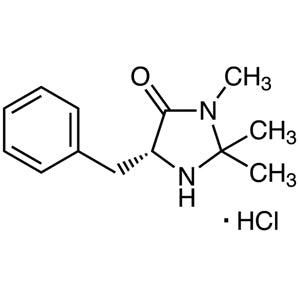
(-)-Benzotetramisole is a chemical compound widely used in catalytic reactions and organic synthesis within laboratory settings. As an organocatalyst, it plays a crucial role in accelerating chemical reactions without undergoing permanent changes. This compound is particularly valuable for its ability to enhance reaction efficiency and yield, especially in the synthesis of complex organic molecules. Its application spans various fields of chemistry, making it a versatile tool for researchers seeking to optimize synthetic pathways.
The properties that make (-)-Benzotetramisole a preferred choice include its complex molecular structure and high reactivity. These characteristics allow it to interact effectively with a wide range of substrates, enabling more selective and efficient reactions. Its stability under certain conditions also contributes to its reliability in laboratory environments. Additionally, its chemical properties can be tailored to suit specific application needs, making it adaptable for diverse experimental requirements.
In Indonesian laboratories, (-)-Benzotetramisole is commonly used in research and development projects focused on organic synthesis and catalytic processes. It is especially favored for its ability to improve reaction outcomes and support the creation of complex chemical structures. Its availability and performance make it a go-to material for scientists working in both academic and industrial settings.
TCI brochures (PDF)
- Asymmetric Organocatalysts 2025-06-12 · p. 9
- Asymmetric Synthesis 2026-03-18 · p. 5
Related TCI products
- TCI B3296 885051-07-0 (+)-Benzotetramisole
- TCI T3663 5086-74-8 Tetramisole Hydrochloride
- TCI T4195 67123-97-1 H-DL-Tic-OH
- TCI T3080 1089663-51-3 N-(2-Thiophenesulfonyl)-L-prolinamide
- TCI T2991 278173-23-2 (S)-(-)-5-Benzyl-2,2,3-trimethyl-4-imidazolidinone Hydrochloride
- TCI T2990 323196-43-6 (R)-(+)-5-Benzyl-2,2,3-trimethyl-4-imidazolidinone Hydrochloride
- Organic synthesis reactions benefit from (-)-Benzotetramisole’s ability to activate reactants and modify reaction mechanisms, leading to higher yields and selectivity.
- Catalytic processes in the production of pharmaceuticals and fine chemicals rely on its efficiency in accelerating chemical transformations without degradation.
- Research in green chemistry utilizes its stability and reactivity to develop sustainable and environmentally friendly synthetic methods.
- Analytical chemistry applications leverage its specific reactivity to enhance the detection and quantification of target compounds in complex mixtures.
- Industrial-scale chemical manufacturing employs it to improve reaction efficiency and reduce the need for harsh conditions or excessive reagents.
| Brand | TCI |
|---|---|
| CAS number | 950194-37-3 |
| Molecular formula | — |
| Purity | — |
| Category | Chemistry > Catalysis and Inorganic Chemistry > Organocatalysts [Catalysis] |
| Pack sizes | Available in various quantities as per standard laboratory supply options |
| Physical form | Solid, typically in crystalline or powder form |
| Storage | Store in a cool, dry place away from direct light and moisture |
(-)-Benzotetramisole should be stored in a cool, dry environment to maintain its chemical stability and prevent degradation. It is recommended to keep it in airtight containers to minimize exposure to moisture and air, which can affect its reactivity. Suitable storage conditions include a controlled temperature range of 15–25°C, away from sources of heat or direct sunlight. Laboratory personnel should handle the compound with appropriate personal protective equipment, such as gloves and safety goggles, to ensure safe handling. It is important to store it separately from incompatible substances to avoid any potential chemical interactions. Regular inspection of storage conditions and container integrity is advised to maintain the quality and usability of the material.
—
Produk Terkait
-
(+)-Benzotetramisole TCI B3296
Regular price From Rp 1.881.600,00Regular priceRp 1.331.400,00Sale price From Rp 1.881.600,00 -
TetramisoleHydrochloride TCI T3663
Regular price Rp 2.093.700,00Regular priceRp 1.479.450,00Sale price Rp 2.093.700,00 -
H-DL-Tic-OH TCI T4195
Regular price Rp 2.411.850,00Regular priceRp 1.702.050,00Sale price Rp 2.411.850,00 -
N-(2-Thiophenesulfonyl)-L-prolinamide TCI T3080
Regular price Rp 3.207.750,00Regular priceRp 2.258.550,00Sale price Rp 3.207.750,00 -
(S)-(-)-5-Benzyl-2,2,3-trimethyl-4-imidazolidinoneHydrochloride TCI T2991
Regular price From Rp 1.272.600,00Regular priceRp 905.100,00Sale price From Rp 1.272.600,00 -
(R)-(+)-5-Benzyl-2,2,3-trimethyl-4-imidazolidinoneHydrochloride TCI T2990
Regular price From Rp 1.140.300,00Regular priceRp 812.700,00Sale price From Rp 1.140.300,00 -
(S)-(-)-1,2,3,4-Tetrahydroisoquinoline-3-carboxylicAcid TCI T1515
Regular price From Rp 795.900,00Regular priceRp 572.250,00Sale price From Rp 795.900,00 -
LevamisoleHydrochloride TCI T1215
Regular price From Rp 1.801.800,00Regular priceRp 1.275.750,00Sale price From Rp 1.801.800,00