


Bis[(pinacolato)boryl]methane is an organoboron compound widely used in organometallic chemistry. It serves as a key reagent in various synthetic processes, particularly in coupling reactions that require precise control over reaction conditions. This compound is essential for researchers aiming to synthesize complex organic molecules with high efficiency and selectivity. Its unique structure, featuring two boryl groups attached to a central carbon atom, enables it to participate in a wide range of chemical transformations.
The compound's stability under specific conditions and its controlled reactivity make it a preferred choice for advanced chemical applications. Its ability to interact with transition metals allows it to be a versatile component in catalytic systems. This stability ensures that it remains effective even in challenging environments, making it a reliable reagent for laboratory use. Its predictable behavior also simplifies the design and execution of synthetic routes.
In Indonesian laboratories, Bis[(pinacolato)boryl]methane is commonly used in organic chemistry research. It is particularly favored in academic and research institutions where complex molecule synthesis is a focus. Its role in reactions such as Suzuki and Kumada coupling makes it a valuable tool for chemists working on drug development, materials science, and other advanced chemical projects. Its reliability and effectiveness contribute to its widespread adoption in both teaching and research settings.
TCI brochures (PDF)
- Suzuki-Miyaura Cross Coupling Reaction 2025-12-01 · p. 15
- Boron Compounds 2025-10-07 · p. 14
Related TCI products
- TCI T3896 160248-28-2 Tetrakis(4-carboxyphenyl)methane
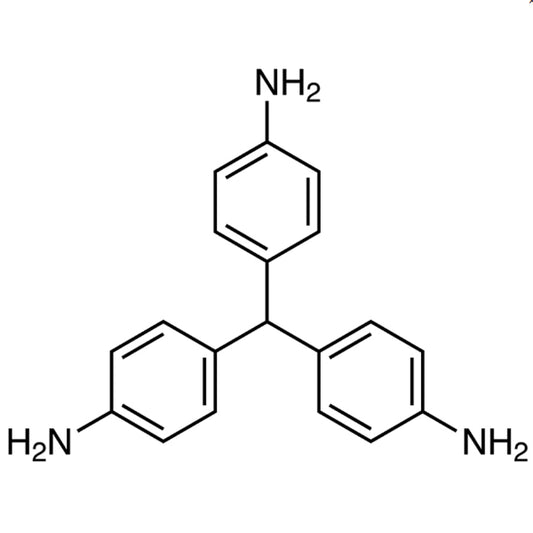
- TCI T3599 548-61-8 Tris(4-aminophenyl)methane
- TCI T3151 177991-01-4 Tetrakis(4-ethynylphenyl)methane
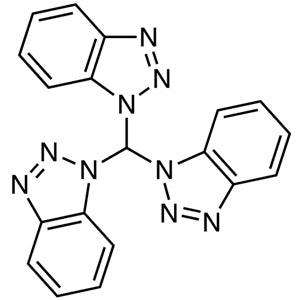
- TCI T3141 88088-95-3 Tris(1H-benzotriazol-1-yl)methane
- TCI T3026 80510-03-8 Tris(1-pyrazolyl)methane
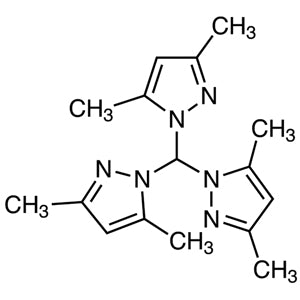
- TCI T3025 28791-97-1 Tris(3,5-dimethyl-1-pyrazolyl)methane
- Organoboron Chemistry: This compound is ideal for studying organoboron reactions due to its stable structure and predictable reactivity.
- Suzuki Coupling Reactions: Its boryl groups make it a suitable reagent for forming carbon-carbon bonds in Suzuki coupling, enhancing synthetic versatility.
- Kumada Coupling Applications: The compound's ability to interact with transition metals makes it effective in Kumada coupling, facilitating complex molecule synthesis.
- Catalytic Systems Development: Its compatibility with various metal catalysts allows it to be used in the design of efficient catalytic systems.
- Organic Synthesis Research: It is widely used in research settings for the synthesis of complex organic compounds with high precision and control.
| Brand | TCI |
|---|---|
| CAS number | 78782-17-9 |
| Molecular formula | — |
| Purity | — |
| Category | Chemistry > Organometallic Reagents > Organoboron [Organometallic Reagents] |
| Pack sizes | — |
| Physical form | — |
| Storage | Store in a cool, dry place away from moisture and direct sunlight |
This compound should be stored in a cool, dry environment to maintain its stability and prevent degradation. It is recommended to use airtight containers to minimize exposure to moisture and air, which could affect its chemical integrity. Due to its organoboron nature, it should be handled with care to avoid any potential reactivity with incompatible substances. Proper labeling and storage conditions are essential for safety and effectiveness in laboratory settings. Always ensure that the compound is kept in a secure location, away from heat sources and incompatible materials. Regular monitoring of storage conditions will help maintain the compound's quality and usability for research purposes.
—
Produk Terkait
-
Tetrakis(4-carboxyphenyl)methane TCI T3896
Regular price Rp 6.863.850,00Regular priceRp 4.799.550,00Sale price Rp 6.863.850,00 -
Tris(4-aminophenyl)methane TCI T3599
Regular price From Rp 3.710.700,00Regular priceRp 2.610.300,00Sale price From Rp 3.710.700,00 -
Tetrakis(4-ethynylphenyl)methane TCI T3151
Regular price Rp 3.976.350,00Regular priceRp 2.780.400,00Sale price Rp 3.976.350,00 -
Tris(1H-benzotriazol-1-yl)methane TCI T3141
Regular price From Rp 2.227.050,00Regular priceRp 1.572.900,00Sale price From Rp 2.227.050,00 -
Tris(1-pyrazolyl)methane TCI T3026
Regular price From Rp 4.399.500,00Regular priceRp 3.092.250,00Sale price From Rp 4.399.500,00 -
Tris(3,5-dimethyl-1-pyrazolyl)methane TCI T3025
Regular price From Rp 1.272.600,00Regular priceRp 905.100,00Sale price From Rp 1.272.600,00 -
Tetrakis(4-aminophenyl)methane TCI T2947
Regular price From Rp 1.908.900,00Regular priceRp 1.350.300,00Sale price From Rp 1.908.900,00 -
[[(4-Butyl-3,5-dimethyl-1H-pyrrol-2-yl)(4-butyl-3,5-dimethyl-2H-pyrrol-2-ylidene)methyl]methane](difluoroborane) TCI B4489
Regular price Rp 5.537.700,00Regular priceRp 3.888.150,00Sale price Rp 5.537.700,00







![151486-56-5 [[(4-Butyl-3,5-dimethyl-1H-pyrrol-2-yl)(4-butyl-3,5-dimethyl-2H-pyrrol-2-ylidene)methyl]methane](difluoroborane) - AMI Scientific](http://amiscientific.com/cdn/shop/files/TCI2510B4489.jpg?v=1768815625&width=533)