9-Benzyl-3,6-dibromocarbazole is a chemical compound widely used in organic reactions for the synthesis of complex molecules. As a heterocyclic building block, it plays a crucial role in the development of pharmaceuticals and advanced materials. Its unique structure allows for substitution reactions and other essential chemical transformations, making it a versatile reagent in synthetic chemistry. This compound is particularly valuable for its ability to participate in nucleophilic substitution and coupling reactions, which are fundamental in creating new molecular architectures.
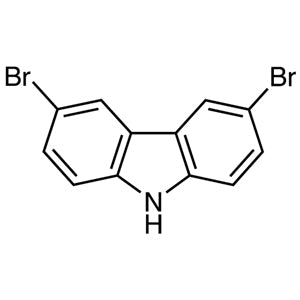
The compound’s chemical stability and reactivity under various reaction conditions make it a preferred choice for researchers. The presence of two bromo groups at positions 3 and 6 enhances its utility in substitution reactions, enabling precise molecular modifications. This reactivity, combined with its structural versatility, allows chemists to explore a wide range of synthetic pathways. Its predictable behavior in different reaction environments ensures reliable results, which is critical in both academic and industrial research settings.
In Indonesian laboratories, 9-Benzyl-3,6-dibromocarbazole is a key component in organic chemistry research, especially in pharmaceutical and material science applications. It is frequently used in projects aimed at developing new compounds with potential therapeutic or functional properties. Its role in synthesizing complex heterocyclic structures makes it an essential tool for researchers working on drug discovery and advanced material development.
TCI brochures (PDF)
- Carbazoles 2025-06-27 · p. 4
- Building Blocks for Organic Semiconductor 2026-03-24 · p. 18
- Synthesis of complex heterocyclic compounds for pharmaceutical development, as its structure allows for precise molecular modifications through substitution reactions.
- Organic chemistry research in Indonesian academic institutions, where it is used to explore new synthetic methodologies and molecular architectures.
- Development of advanced materials, where its reactivity supports the creation of functional polymers and nanomaterials.
- Drug discovery projects, as it serves as a building block for the synthesis of bioactive compounds with potential therapeutic applications.
- Chemical modification studies, where its bromo groups enable controlled substitution reactions to tailor molecular properties for specific applications.
| Brand | TCI |
|---|---|
| CAS number | 118599-27-2 |
| Molecular formula | — |
| Purity | — |
| Category | Chemistry > Building Blocks > Heterocyclic Building Blocks |
| Pack sizes | — |
| Physical form | — |
| Storage | Store in a cool, dry place away from light |
This compound should be stored in a cool, dry environment, away from direct sunlight and sources of heat. It is recommended to use airtight containers to prevent moisture absorption and contamination. Due to its bromo substituents, it may exhibit reactivity under certain conditions, so it should be handled with appropriate personal protective equipment. Proper ventilation is essential when working with this compound to minimize exposure. It is important to follow standard laboratory safety protocols to ensure safe handling and storage. Always keep the material in a secure location to prevent accidental spills or exposure.
—
Product Categories
Produk Terkait
-
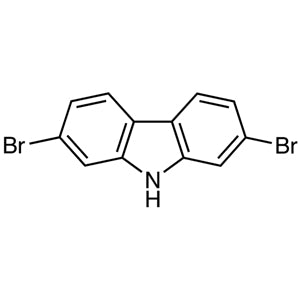
2,7-Dibromocarbazole TCI D3932
Regular price From Rp 2.227.050,00Regular priceRp 1.572.900,00Sale price From Rp 2.227.050,00 -
3,6-Dibromocarbazole TCI D2983
Regular price From Rp 530.250,00Regular priceRp 386.400,00Sale price From Rp 530.250,00 -
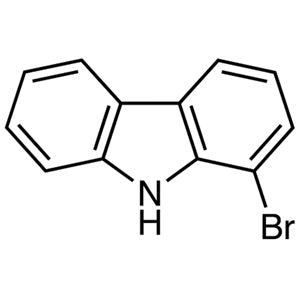
1-Bromocarbazole TCI B4816
Regular price From Rp 1.431.150,00Regular priceRp 1.016.400,00Sale price From Rp 1.431.150,00 -
4-Bromocarbazole TCI B4752
Regular price From Rp 1.510.950,00Regular priceRp 1.072.050,00Sale price From Rp 1.510.950,00 -
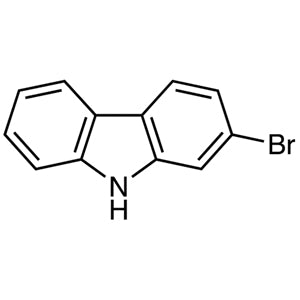
2-Bromocarbazole TCI B4381
Regular price From Rp 2.439.150,00Regular priceRp 1.720.950,00Sale price From Rp 2.439.150,00 -
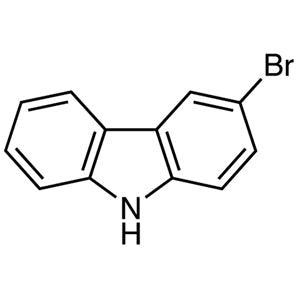
3-Bromocarbazole TCI B3458
Regular price From Rp 3.790.500,00Regular priceRp 2.665.950,00Sale price From Rp 3.790.500,00 -
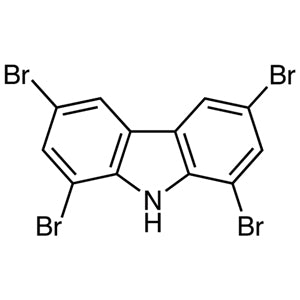
1,3,6,8-Tetrabromocarbazole TCI T2932
Regular price From Rp 2.147.250,00Regular priceRp 1.517.250,00Sale price From Rp 2.147.250,00 -
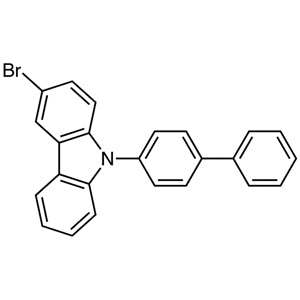
9-(4-Biphenylyl)-3-bromocarbazole TCI B4538
Regular price From Rp 1.220.100,00Regular priceRp 868.350,00Sale price From Rp 1.220.100,00