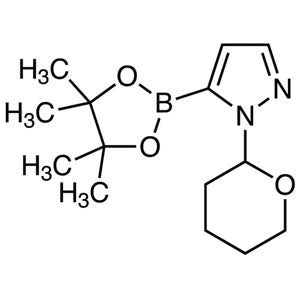
1-Benzyl-4-(4,4,5,5-tetramethyl-1,3,2-dioxaborolan-2-yl)pyrazole is a specialized organic compound widely used in laboratory settings for its unique reactivity and versatility. This organoboron reagent plays a crucial role in synthetic chemistry, particularly in the development of complex molecular structures. It is a key component in various organic reactions, especially those involving boron-based coupling mechanisms. Its presence in the chemical industry and research laboratories highlights its importance in modern synthetic methodologies.
This compound is preferred due to its high reactivity and stability under controlled conditions. The presence of the boronic acid group enhances its ability to participate in cross-coupling reactions, making it an essential tool for chemists working on heterocyclic synthesis. Its molecular structure, which combines aromatic and boron functionalities, allows for a wide range of chemical transformations. Additionally, its solubility in common organic solvents facilitates its use in various reaction conditions.
In Indonesian laboratories, this compound is commonly used in academic and industrial research settings. It is particularly valuable for the synthesis of bioactive compounds and pharmaceutical intermediates. Many research institutions and universities in Indonesia rely on this reagent for advanced chemical studies. Its availability through AMI Scientific ensures that researchers have access to high-quality materials for their experiments.
TCI brochures (PDF)
- Suzuki-Miyaura Cross Coupling Reaction 2025-12-01 · p. 17
- Boron Compounds 2025-10-07 · p. 18
Related TCI products
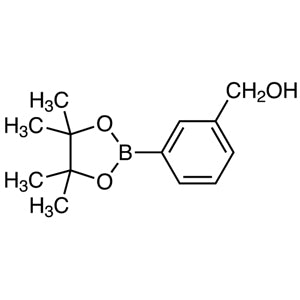
- TCI T3830 443776-76-9 3-(4,4,5,5-Tetramethyl-1,3,2-dioxaborolan-2-yl)benzyl Alcohol
- TCI T3829 844501-71-9 3-(4,4,5,5-Tetramethyl-1,3,2-dioxaborolan-2-yl)-1H-pyrazole
- TCI T3668 1040377-03-4 1-(Tetrahydro-2H-pyran-4-yl)-4-(4,4,5,5-tetramethyl-1,3,2-dioxaborolan-2-yl)-1H-pyrazole
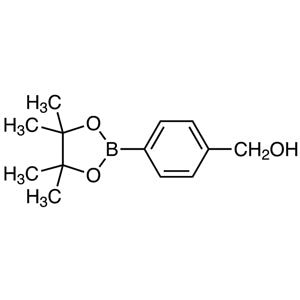
- TCI T3496 302348-51-2 4-(4,4,5,5-Tetramethyl-1,3,2-dioxaborolan-2-yl)benzyl Alcohol
- TCI T3477 364794-79-6 4-[4-(4,4,5,5-Tetramethyl-1,3,2-dioxaborolan-2-yl)benzyl]morpholine
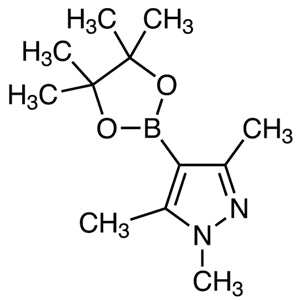
- TCI T3409 844891-04-9 1,3,5-Trimethyl-4-(4,4,5,5-tetramethyl-1,3,2-dioxaborolan-2-yl)pyrazole
- Used in Suzuki-Miyaura coupling reactions due to its reactivity and compatibility with palladium catalysts.
- Applied in the synthesis of heterocyclic compounds for pharmaceutical and agrochemical research.
- Employed in Kumada-Corriu coupling to form carbon-carbon bonds in complex organic molecules.
- Utilized in the development of bioactive compounds for drug discovery and medicinal chemistry.
- Integrated into industrial chemical processes for the production of specialty chemicals and polymers.
| Brand | TCI |
|---|---|
| CAS number | 761446-45-1 |
| Molecular formula | — |
| Purity | — |
| Category | Chemistry > Organometallic Reagents > Organoboron |
| Pack sizes | Available in various quantities as per supplier specifications |
| Physical form | Solid or liquid depending on formulation |
| Storage | Store in a cool, dry place away from moisture and direct sunlight |
This compound should be stored in a cool, dry environment to maintain its chemical integrity. It is recommended to keep it in a sealed container to prevent exposure to moisture and air. Due to its reactivity, it should be handled with care, using appropriate personal protective equipment. Storage conditions should avoid high temperatures and direct light to ensure stability. Proper labeling and safe handling practices are essential to prevent contamination and ensure safe laboratory operations. Always follow standard chemical safety protocols when working with this reagent.
—
Produk Terkait
-
3-(4,4,5,5-Tetramethyl-1,3,2-dioxaborolan-2-yl)benzylAlcohol TCI T3830
Regular price From Rp 769.650,00Regular priceRp 553.350,00Sale price From Rp 769.650,00 -
3-(4,4,5,5-Tetramethyl-1,3,2-dioxaborolan-2-yl)-1H-pyrazole TCI T3829
Regular price From Rp 1.988.700,00Regular priceRp 1.405.950,00Sale price From Rp 1.988.700,00 -
1-(Tetrahydro-2H-pyran-4-yl)-4-(4,4,5,5-tetramethyl-1,3,2-dioxaborolan-2-yl)-1H-pyrazole TCI T3668
Regular price From Rp 822.150,00Regular priceRp 590.100,00Sale price From Rp 822.150,00 -
4-(4,4,5,5-Tetramethyl-1,3,2-dioxaborolan-2-yl)benzylAlcohol TCI T3496
Regular price From Rp 1.272.600,00Regular priceRp 905.100,00Sale price From Rp 1.272.600,00 -
4-[4-(4,4,5,5-Tetramethyl-1,3,2-dioxaborolan-2-yl)benzyl]morpholine TCI T3477
Regular price From Rp 717.150,00Regular priceRp 516.600,00Sale price From Rp 717.150,00 -
1,3,5-Trimethyl-4-(4,4,5,5-tetramethyl-1,3,2-dioxaborolan-2-yl)pyrazole TCI T3409
Regular price From Rp 1.008.000,00Regular priceRp 720.300,00Sale price From Rp 1.008.000,00 -
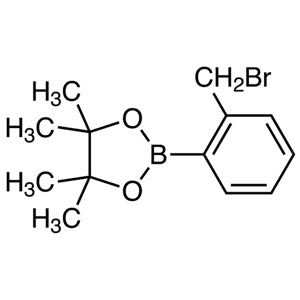
2-(4,4,5,5-Tetramethyl-1,3,2-dioxaborolan-2-yl)benzylBromide TCI T3393
Regular price From Rp 2.013.900,00Regular priceRp 1.423.800,00Sale price From Rp 2.013.900,00 -
1-(Tetrahydropyran-2-yl)-5-(4,4,5,5-tetramethyl-1,3,2-dioxaborolan-2-yl)pyrazole TCI T3215
Regular price From Rp 980.700,00Regular priceRp 701.400,00Sale price From Rp 980.700,00