6-Bromo-2H-1,4-benzoxazin-3(4H)-one is a chemical compound widely used in synthetic reactions to construct complex heterocyclic structures. This compound plays a crucial role in organic chemistry laboratories, serving as a key building block for the synthesis of bioactive compounds. Its unique molecular structure makes it an essential tool for researchers aiming to develop new pharmaceuticals and advanced materials. Due to its stability and predictable reactivity, it is frequently employed in various synthetic pathways, enabling the creation of compounds with specific functional groups and molecular architectures.
The compound's chemical properties, including its bromine substituent and heterocyclic framework, make it a preferred choice for synthetic chemists. Its ability to undergo substitution and cyclization reactions under controlled conditions ensures reliable results in laboratory settings. The stability of the molecule also allows for extended storage and use in multiple experimental protocols without significant degradation. These characteristics make it a versatile reagent suitable for both small-scale and large-scale synthesis applications.
In Indonesian laboratories, 6-Bromo-2H-1,4-benzoxazin-3(4H)-one is commonly used in scientific research and educational settings. It supports the development of new compounds with specific biological activities and is integral to projects involving complex heterocyclic structures. Its application spans across academic institutions and research facilities, contributing to the advancement of chemical sciences in the region.
Related TCI products
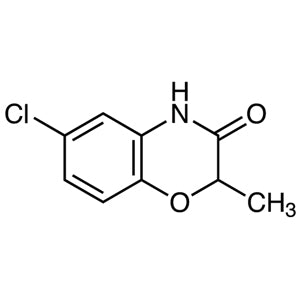
- TCI C3138 5791-00-4 6-Chloro-2-methyl-2H-1,4-benzoxazin-3(4H)-one
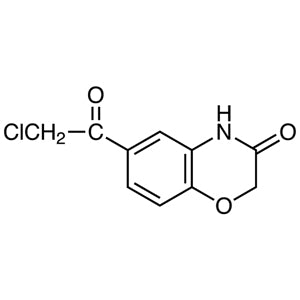
- TCI C3097 26518-76-3 6-(Chloroacetyl)-2H-1,4-benzoxazin-3(4H)-one
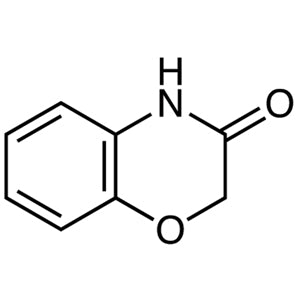
- TCI B4553 5466-88-6 2H-1,4-Benzoxazin-3(4H)-one
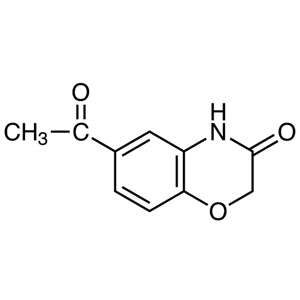
- TCI A2755 26518-71-8 6-Acetyl-2H-1,4-benzoxazin-3(4H)-one
- TCI N0999 81721-87-1 6-Nitro-2H-1,4-benzoxazin-3(4H)-one
- TCI M2572 86672-58-4 6-Methyl-2-(p-tolylamino)-4H-3,1-benzoxazin-4-one
- Organic synthesis projects benefit from this compound's ability to participate in substitution and cyclization reactions, enabling the creation of complex heterocyclic structures with high efficiency.
- Pharmaceutical research utilizes this compound as a building block for the synthesis of bioactive molecules, supporting drug discovery and development initiatives.
- Material science applications leverage its stable molecular structure for the production of advanced chemical materials with tailored properties.
- Educational institutions use it to teach synthetic chemistry techniques, providing students with hands-on experience in heterocyclic compound synthesis.
- Research laboratories incorporate it into studies focused on the development of new compounds with specific reactivity and functional group compatibility.
| Brand | TCI |
|---|---|
| CAS number | 24036-52-0 |
| Molecular formula | — |
| Purity | — |
| Category | Chemistry > Building Blocks > Heterocyclic Building Blocks |
| Pack sizes | Available in various packaging options to suit different experimental needs |
| Physical form | Solid, typically in crystalline or powder form |
| Storage | Store in a cool, dry place away from light and moisture |
This compound should be stored in a cool, dry environment, away from direct light and moisture to maintain its stability and reactivity. It is recommended to use airtight containers made of glass or high-density polyethylene to prevent contamination and degradation. In laboratory settings, proper ventilation should be ensured when handling the compound to minimize exposure. Due to its chemical nature, it should be handled with appropriate personal protective equipment, such as gloves and safety goggles. Regular monitoring of storage conditions is essential to ensure the compound remains suitable for use in synthetic reactions and research applications.
—
Produk Terkait
-
6-Chloro-2-methyl-2H-1,4-benzoxazin-3(4H)-one TCI C3138
Regular price From Rp 1.351.350,00Regular priceRp 960.750,00Sale price From Rp 1.351.350,00 -
6-(Chloroacetyl)-2H-1,4-benzoxazin-3(4H)-one TCI C3097
Regular price From Rp 822.150,00Regular priceRp 590.100,00Sale price From Rp 822.150,00 -
2H-1,4-Benzoxazin-3(4H)-one TCI B4553
Regular price From Rp 662.550,00Regular priceRp 478.800,00Sale price From Rp 662.550,00 -
6-Acetyl-2H-1,4-benzoxazin-3(4H)-one TCI A2755
Regular price From Rp 1.298.850,00Regular priceRp 924.000,00Sale price From Rp 1.298.850,00 -
6-Nitro-2H-1,4-benzoxazin-3(4H)-one TCI N0999
Regular price Rp 1.590.750,00Regular priceRp 1.127.700,00Sale price Rp 1.590.750,00 -
6-Methyl-2-(p-tolylamino)-4H-3,1-benzoxazin-4-one TCI M2572
Regular price From Rp 1.988.700,00Regular priceRp 1.405.950,00Sale price From Rp 1.988.700,00 -
2-(2-Hydroxyphenyl)-4H-1,3-benzoxazin-4-one TCI H1653
Regular price From Rp 689.850,00Regular priceRp 497.700,00Sale price From Rp 689.850,00 -
3-Phenyl-3,4-dihydro-2H-1,3-benzoxazine TCI D6133
Regular price From Rp 2.306.850,00Regular priceRp 1.628.550,00Sale price From Rp 2.306.850,00