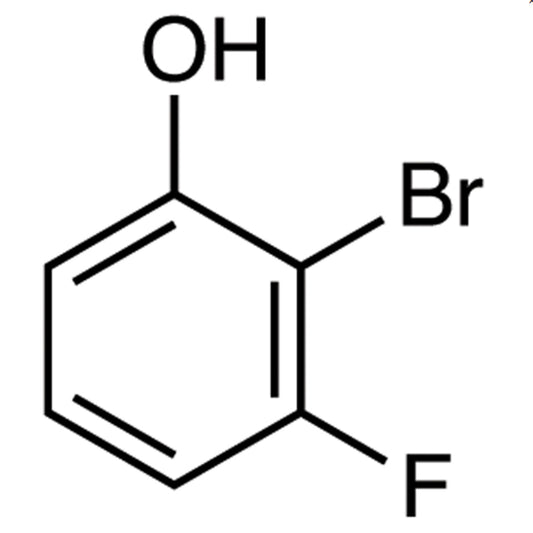
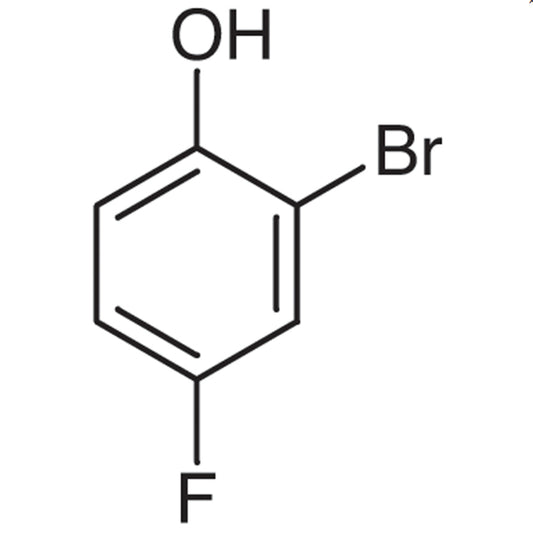
3-Bromo-4-fluorophenol is a chemical compound widely used as a building block in the synthesis of complex molecules. It belongs to the category of fluorinated building blocks and is commonly found in organic chemistry laboratories. This compound features a benzene ring with bromine and fluorine substituents, making it a versatile reagent for various chemical reactions. Its presence in laboratory settings allows researchers to explore new synthetic pathways and develop advanced materials. Due to its structural complexity, it is often employed in the creation of pharmaceuticals and functional compounds.
The unique combination of bromine and fluorine atoms imparts specific chemical properties that make 3-Bromo-4-fluorophenol a preferred choice for synthetic chemists. These atoms influence the polarity, solubility, and reactivity of the compound, enabling it to participate in a wide range of chemical transformations. Its stability under controlled conditions further enhances its utility in laboratory experiments. The reactivity of this compound is carefully managed to ensure predictable outcomes in chemical reactions, making it a valuable tool for researchers.
In Indonesian laboratories, 3-Bromo-4-fluorophenol is frequently used in scientific research across universities and research institutions. It plays a key role in projects related to organic chemistry, pharmacology, and the development of innovative materials. Its availability in the local market ensures that Indonesian researchers have access to this essential compound for their experimental needs. This compound supports the advancement of scientific knowledge and the creation of new chemical products.
TCI brochures (PDF)
- Fluorination Reagents, Fluorinated Building Blocks 2026-03-18 · p. 18
- Organic synthesis projects benefit from 3-Bromo-4-fluorophenol due to its reactivity and structural versatility, enabling the creation of complex molecules.
- Pharmaceutical research utilizes this compound as a starting material for the development of new drugs and therapeutic agents.
- Material science applications leverage its fluorinated structure to design functional and high-performance materials.
- Analytical chemistry experiments use it as a reference standard for spectroscopic and chromatographic analysis.
- Environmental studies incorporate it to investigate the behavior and degradation of fluorinated compounds in various matrices.
| Brand | TCI |
|---|---|
| CAS number | 27407-11-0 |
| Molecular formula | — |
| Purity | — |
| Category | Chemistry > Building Blocks > Fluorinated Building Blocks |
| Pack sizes | Available in various quantities as per supplier specifications |
| Physical form | Solid, crystalline appearance |
| Storage | Store in a cool, dry place away from light and moisture |
3-Bromo-4-fluorophenol should be stored in a cool, dry environment to maintain its chemical stability. It is recommended to keep the compound in a sealed container to prevent exposure to moisture and air. Due to its brominated and fluorinated nature, it is advisable to handle it with appropriate personal protective equipment, such as gloves and safety goggles. Avoid direct contact with skin and inhalation of vapors. Ensure proper ventilation in the laboratory when working with this compound. Always follow standard laboratory safety protocols to minimize risks associated with its use.
—
Produk Terkait
-
2-Bromo-3-fluorophenol TCI B5224
Regular price From Rp 1.167.600,00Regular priceRp 815.850,00Sale price From Rp 1.167.600,00 -
4-Bromo-3-fluorophenol TCI B3688
Regular price From Rp 2.597.700,00Regular priceRp 1.816.500,00Sale price From Rp 2.597.700,00 -
5-Bromo-2-fluorophenol TCI B3064
Regular price From Rp 1.458.450,00Regular priceRp 1.019.550,00Sale price From Rp 1.458.450,00 -
3-Bromo-5-fluorophenol TCI B3063
Regular price Rp 1.908.900,00Regular priceRp 1.334.550,00Sale price Rp 1.908.900,00 -
2-Bromo-5-fluorophenol TCI B2040
Regular price From Rp 1.353.450,00Regular priceRp 946.050,00Sale price From Rp 1.353.450,00 -
4-Bromo-2-fluorophenol TCI B1835
Regular price From Rp 637.350,00Regular priceRp 445.200,00Sale price From Rp 637.350,00 -
2-Bromo-4-fluorophenol TCI B1555
Regular price From Rp 717.150,00Regular priceRp 500.850,00Sale price From Rp 717.150,00 -
4-Fluorophenol TCI F0160
Regular price From Rp 1.378.650,00Regular priceRp 963.900,00Sale price From Rp 1.378.650,00