N,N-Bis(4-bromophenyl)-4-(4,4,5,5-tetramethyl-1,3,2-dioxaborolan-2-yl)aniline is a complex organic compound widely used in organometallic chemistry, particularly in the synthesis of heterocyclic and aromatic compounds. This reagent plays a crucial role in laboratory settings where advanced chemical transformations are required. Its unique molecular structure enables it to participate in various coupling reactions, making it an essential tool for synthetic chemists. Due to its functional groups, it is highly valued for its versatility in creating complex molecular architectures with specific biological activities.
The compound is preferred for its reactive boron group and bromo substituents, which contribute to its effectiveness in coupling reactions such as Suzuki-Miyaura and Kumada-Corriu. These functional groups provide the necessary reactivity and stability required for successful synthetic pathways. Its ability to maintain structural integrity under controlled conditions further enhances its utility in laboratory applications. The combination of reactivity and stability makes it a reliable choice for researchers working on intricate organic syntheses.
In Indonesian laboratories, this compound is commonly used in organic chemistry research, pharmaceutical development, and material science. Its relevance spans across academic and industrial settings, where it supports the creation of novel compounds with potential applications in drug discovery and advanced materials. Researchers in universities and research institutions rely on its properties to advance their work in chemical synthesis and functional material development.
TCI brochures (PDF)
- Boron Compounds 2025-10-07 · p. 17
- Building Blocks for Organic Semiconductor 2026-03-24 · p. 31
Related TCI products
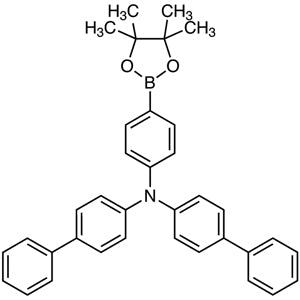
- TCI D4886 952431-30-0 N,N-Di(4-biphenylyl)-4-(4,4,5,5-tetramethyl-1,3,2-dioxaborolan-2-yl)aniline
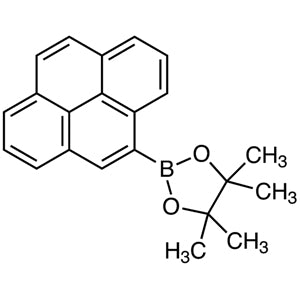
- TCI T3857 888950-09-2 4-(4,4,5,5-Tetramethyl-1,3,2-dioxaborolan-2-yl)pyrene
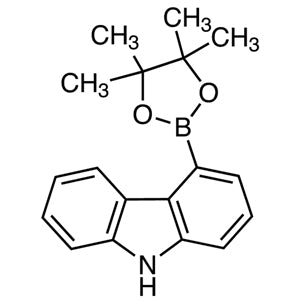
- TCI T3747 1255309-13-7 4-(4,4,5,5-Tetramethyl-1,3,2-dioxaborolan-2-yl)-9H-carbazole
- TCI T3612 1345614-94-9 3-(4,4,5,5-Tetramethyl-1,3,2-dioxaborolan-2-yl)-9-(p-tolyl)-9H-carbazole
- TCI T3515 365564-05-2 1,3,5-Tris(4,4,5,5-tetramethyl-1,3,2-dioxaborolan-2-yl)benzene
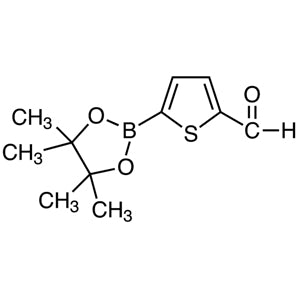
- TCI T3485 1040281-83-1 5-(4,4,5,5-Tetramethyl-1,3,2-dioxaborolan-2-yl)thiophene-2-carboxaldehyde
- Used in organic synthesis for constructing complex molecular frameworks due to its reactive boron and bromo groups.
- Applied in pharmaceutical research to develop compounds with specific biological activities through coupling reactions.
- Utilized in material science for creating advanced polymers and functional materials with tailored properties.
- Employed in heterocyclic compound synthesis to facilitate efficient and selective chemical transformations.
- Integrated into academic research projects to explore new synthetic methodologies and chemical reactivity patterns.
| Brand | TCI |
|---|---|
| CAS number | 850153-24-1 |
| Molecular formula | — |
| Purity | — |
| Category | Chemistry > Organometallic Reagents > Organoboron [Organometallic Reagents] |
| Pack sizes | 25 g, 100 g |
| Physical form | Solid |
| Storage | Store in a cool, dry place away from moisture and light |
This compound should be stored in a cool, dry place, away from moisture and direct light to maintain its chemical stability. It is recommended to use airtight containers made of glass or high-density polyethylene to prevent contamination and degradation. Due to its reactive nature, it should be handled with care using appropriate personal protective equipment, such as gloves and safety goggles. In laboratory settings, it should be stored separately from strong oxidizing agents to avoid potential chemical interactions. Proper labeling and storage conditions are essential to ensure safe handling and long-term usability.
—
Produk Terkait
-
N,N-Di(4-biphenylyl)-4-(4,4,5,5-tetramethyl-1,3,2-dioxaborolan-2-yl)aniline TCI D4886
Regular price From Rp 3.870.300,00Regular priceRp 2.721.600,00Sale price From Rp 3.870.300,00 -
4-(4,4,5,5-Tetramethyl-1,3,2-dioxaborolan-2-yl)pyrene TCI T3857
Regular price Rp 4.452.000,00Regular priceRp 3.129.000,00Sale price Rp 4.452.000,00 -
4-(4,4,5,5-Tetramethyl-1,3,2-dioxaborolan-2-yl)-9H-carbazole TCI T3747
Regular price Rp 5.246.850,00Regular priceRp 3.684.450,00Sale price Rp 5.246.850,00 -
3-(4,4,5,5-Tetramethyl-1,3,2-dioxaborolan-2-yl)-9-(p-tolyl)-9H-carbazole TCI T3612
Regular price From Rp 1.113.000,00Regular priceRp 793.800,00Sale price From Rp 1.113.000,00 -
1,3,5-Tris(4,4,5,5-tetramethyl-1,3,2-dioxaborolan-2-yl)benzene TCI T3515
Regular price From Rp 2.332.050,00Regular priceRp 1.646.400,00Sale price From Rp 2.332.050,00 -
5-(4,4,5,5-Tetramethyl-1,3,2-dioxaborolan-2-yl)thiophene-2-carboxaldehyde TCI T3485
Regular price Rp 2.013.900,00Regular priceRp 1.423.800,00Sale price Rp 2.013.900,00 -
9-[4-(4,4,5,5-Tetramethyl-1,3,2-dioxaborolan-2-yl)phenyl]-9H-carbazole TCI T3452
Regular price From Rp 1.801.800,00Regular priceRp 1.275.750,00Sale price From Rp 1.801.800,00 -
2-(4,4,5,5-Tetramethyl-1,3,2-dioxaborolan-2-yl)-9H-carbazole TCI T3441
Regular price From Rp 2.597.700,00Regular priceRp 1.832.250,00Sale price From Rp 2.597.700,00