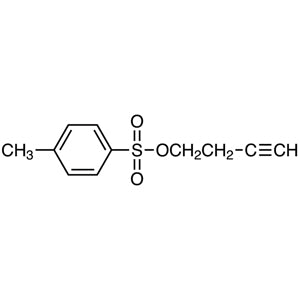
2-Butynyl p-Toluenesulfonate is a chemical compound widely used in organic laboratory reactions. It serves as a versatile reagent in the synthesis of complex molecules, particularly in reactions involving the formation of double bonds or substitution processes. Its unique molecular structure, featuring a butynyl group attached to a p-toluenesulfonate moiety, makes it a valuable tool for chemists working in both research and analytical settings. This compound is especially useful in nucleophilic substitution and coupling reactions, where its reactivity and stability contribute to the success of experimental procedures.
One of the key properties that make 2-Butynyl p-Toluenesulfonate a preferred choice is its solubility in common organic solvents such as ethyl acetate and acetone. This solubility simplifies mixing and reaction processes, enhancing efficiency in laboratory workflows. Additionally, its chemical stability under specific conditions ensures reliable performance in various experimental setups. These characteristics make it a reliable and consistent reagent for both academic and industrial research.
In Indonesian laboratories, 2-Butynyl p-Toluenesulfonate is commonly used in organic chemistry research, particularly by universities and research institutions. It plays a crucial role in the development of new compounds with applications in pharmaceutical and chemical industries. Its availability and reliability make it a standard reagent in many experimental protocols, supporting both teaching and advanced research activities.
Related TCI products
- TCI T2046 23418-85-1 3-Butynyl p-Toluenesulfonate
- TCI T3660 7182-86-7 Tetrabutylammonium p-Toluenesulfonate
- TCI T3064 40412-06-4 2-(2-Thienyl)ethyl p-Toluenesulfonate
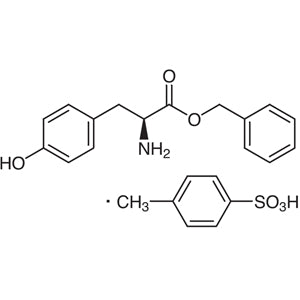
- TCI T2443 53587-11-4 L-Tyrosine Benzyl Ester p-Toluenesulfonate
- TCI T1612 70987-78-9 (2S)-(+)-Glycidyl p-Toluenesulfonate
- TCI T1611 113826-06-5 (2R)-(-)-Glycidyl p-Toluenesulfonate
- Organic synthesis reactions benefit from its reactivity in forming double bonds and substitution mechanisms.
- Nucleophilic substitution reactions utilize its ability to act as a good leaving group in synthetic pathways.
- Coupling reactions take advantage of its functional groups for efficient bond formation in complex molecules.
- Analytical chemistry applications rely on its stability and solubility for accurate sample preparation.
- Pharmaceutical research uses it in the development of new compounds with targeted biological activities.
| Brand | TCI |
|---|---|
| CAS number | 56563-37-2 |
| Molecular formula | — |
| Purity | — |
| Category | TCI |
| Pack sizes | Available in standard laboratory quantities |
| Physical form | Solid or crystalline, depending on the batch |
| Storage | Store in a cool, dry place away from direct sunlight |
This compound should be stored in a cool, dry environment, away from direct sunlight and sources of heat. It is recommended to keep it in a tightly sealed container to prevent moisture absorption and contamination. Due to its chemical nature, it should be handled with appropriate personal protective equipment, such as gloves and safety goggles, to ensure laboratory safety. It is important to store it separately from incompatible substances to avoid any potential chemical interactions. Proper ventilation should be maintained in the storage area to minimize exposure to vapors. Regular inspection of storage conditions is advised to maintain the integrity and safety of the material.
—
Produk Terkait
-
3-Butynylp-Toluenesulfonate TCI T2046
Regular price Rp 2.068.500,00Regular priceRp 1.445.850,00Sale price Rp 2.068.500,00 -
Tetrabutylammoniump-Toluenesulfonate TCI T3660
Regular price From Rp 1.405.950,00Regular priceRp 998.550,00Sale price From Rp 1.405.950,00 -
2-(2-Thienyl)ethylp-Toluenesulfonate TCI T3064
Regular price From Rp 530.250,00Regular priceRp 386.400,00Sale price From Rp 530.250,00 -
L-TyrosineBenzylEsterp-Toluenesulfonate TCI T2443
Regular price From Rp 1.670.550,00Regular priceRp 1.183.350,00Sale price From Rp 1.670.550,00 -
(2S)-(+)-Glycidylp-Toluenesulfonate TCI T1612
Regular price From Rp 1.220.100,00Regular priceRp 852.600,00Sale price From Rp 1.220.100,00 -
(2R)-(-)-Glycidylp-Toluenesulfonate TCI T1611
Regular price Rp 1.644.300,00Regular priceRp 1.149.750,00Sale price Rp 1.644.300,00 -
(S)-2-Methylbutylp-Toluenesulfonate TCI T1595
Regular price From Rp 1.458.450,00Regular priceRp 1.019.550,00Sale price From Rp 1.458.450,00 -
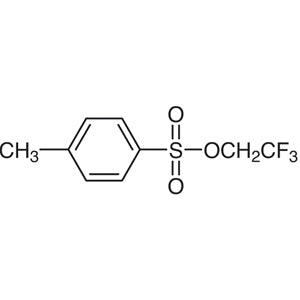
2,2,2-Trifluoroethylp-Toluenesulfonate TCI T1516
Regular price Rp 2.041.200,00Regular priceRp 1.426.950,00Sale price Rp 2.041.200,00