2,7-Bis(4,4,5,5-tetramethyl-1,3,2-dioxaborolan-2-yl)naphthalene is a versatile organoboron compound widely utilized in chemical laboratories for its unique reactivity and structural properties. This compound is a key reagent in various synthetic pathways, particularly in organic chemistry, where it plays a crucial role in facilitating carbon-carbon bond formation. Its application is especially prominent in coupling reactions such as the Suzuki-Miyaura and Kumada-Corriu reactions, which are fundamental in the synthesis of complex organic molecules. Due to its stability and reactivity, it is a valuable tool for chemists working on advanced synthetic strategies.
One of the main reasons this compound is preferred is its non-volatile nature and resistance to degradation under standard laboratory conditions. These properties ensure that it remains stable during storage and use, reducing the risk of contamination or loss of potency. Additionally, its molecular structure allows it to participate effectively in reactions involving transition metals and organic halides, making it an essential component in catalytic systems. The presence of multiple boron atoms in its structure further enhances its utility in a wide range of synthetic applications.
In Indonesian laboratories, this compound is commonly used in research focused on organic synthesis, pharmaceutical development, and materials science. Its role is particularly significant in academic and industrial settings where the creation of new compounds and materials is a priority. Researchers in Indonesia frequently rely on this reagent for its reliability and effectiveness in complex chemical processes. Its availability through AMI Scientific ensures that it remains accessible to local institutions and laboratories engaged in cutting-edge chemical research.
TCI brochures (PDF)
- Suzuki-Miyaura Cross Coupling Reaction 2025-12-01 · p. 18
- Boron Compounds 2025-10-07 · p. 17
- Building Blocks for Organic Semiconductor 2026-03-24 · p. 7
Related TCI products
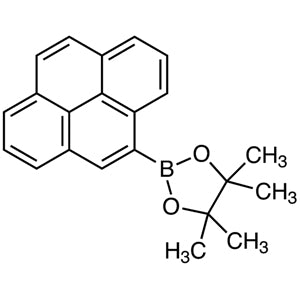
- TCI T3857 888950-09-2 4-(4,4,5,5-Tetramethyl-1,3,2-dioxaborolan-2-yl)pyrene
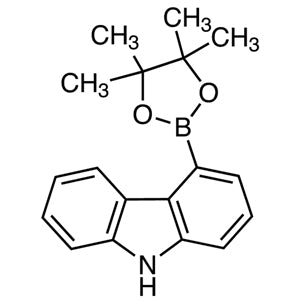
- TCI T3747 1255309-13-7 4-(4,4,5,5-Tetramethyl-1,3,2-dioxaborolan-2-yl)-9H-carbazole
- TCI T3612 1345614-94-9 3-(4,4,5,5-Tetramethyl-1,3,2-dioxaborolan-2-yl)-9-(p-tolyl)-9H-carbazole
- TCI T3515 365564-05-2 1,3,5-Tris(4,4,5,5-tetramethyl-1,3,2-dioxaborolan-2-yl)benzene
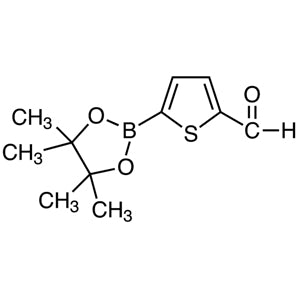
- TCI T3485 1040281-83-1 5-(4,4,5,5-Tetramethyl-1,3,2-dioxaborolan-2-yl)thiophene-2-carboxaldehyde
- TCI T3452 785051-54-9 9-[4-(4,4,5,5-Tetramethyl-1,3,2-dioxaborolan-2-yl)phenyl]-9H-carbazole
- Organic synthesis reactions benefit from this compound's ability to form stable carbon-carbon bonds through coupling reactions, making it ideal for creating complex molecular structures.
- Pharmaceutical research utilizes this reagent in the development of new drug compounds due to its role in catalytic processes that enhance molecular diversity.
- Materials science applications leverage its reactivity to synthesize advanced polymers and functional materials with tailored properties.
- Analytical chemistry laboratories use it as a reference standard for testing the efficiency of catalytic systems and reaction mechanisms.
- Industrial chemical processes incorporate this compound to improve the yield and selectivity of synthetic pathways in large-scale production.
| Brand | TCI |
|---|---|
| CAS number | 853377-10-3 |
| Molecular formula | — |
| Purity | — |
| Category | Chemistry > Organometallic Reagents > Organoboron [Organometallic Reagents] |
| Pack sizes | Available in various quantities as per supplier specifications |
| Physical form | Solid, typically in powder or crystalline form |
| Storage | Store in a cool, dry place away from moisture and direct sunlight |
This compound should be stored in a cool, dry environment to maintain its stability and prevent degradation. It is recommended to use airtight containers to minimize exposure to moisture and air, which could affect its reactivity. Due to its non-volatile nature, it does not require refrigeration but should be kept away from heat sources. In laboratory settings, it is important to handle the compound with appropriate personal protective equipment, such as gloves and safety goggles, to ensure safe handling. Regular inspection of storage conditions is advised to maintain optimal performance and safety. Proper labeling and storage practices help ensure that the compound remains effective and safe for use in research and industrial applications.
—
Produk Terkait
-
4-(4,4,5,5-Tetramethyl-1,3,2-dioxaborolan-2-yl)pyrene TCI T3857
Regular price Rp 4.452.000,00Regular priceRp 3.129.000,00Sale price Rp 4.452.000,00 -
4-(4,4,5,5-Tetramethyl-1,3,2-dioxaborolan-2-yl)-9H-carbazole TCI T3747
Regular price Rp 5.246.850,00Regular priceRp 3.684.450,00Sale price Rp 5.246.850,00 -
3-(4,4,5,5-Tetramethyl-1,3,2-dioxaborolan-2-yl)-9-(p-tolyl)-9H-carbazole TCI T3612
Regular price From Rp 1.113.000,00Regular priceRp 793.800,00Sale price From Rp 1.113.000,00 -
1,3,5-Tris(4,4,5,5-tetramethyl-1,3,2-dioxaborolan-2-yl)benzene TCI T3515
Regular price From Rp 2.332.050,00Regular priceRp 1.646.400,00Sale price From Rp 2.332.050,00 -
5-(4,4,5,5-Tetramethyl-1,3,2-dioxaborolan-2-yl)thiophene-2-carboxaldehyde TCI T3485
Regular price Rp 2.013.900,00Regular priceRp 1.423.800,00Sale price Rp 2.013.900,00 -
9-[4-(4,4,5,5-Tetramethyl-1,3,2-dioxaborolan-2-yl)phenyl]-9H-carbazole TCI T3452
Regular price From Rp 1.801.800,00Regular priceRp 1.275.750,00Sale price From Rp 1.801.800,00 -
2-(4,4,5,5-Tetramethyl-1,3,2-dioxaborolan-2-yl)-9H-carbazole TCI T3441
Regular price From Rp 2.597.700,00Regular priceRp 1.832.250,00Sale price From Rp 2.597.700,00 -
4-[4-(4,4,5,5-Tetramethyl-1,3,2-dioxaborolan-2-yl)phenyl]pyridine TCI T3400
Regular price From Rp 1.618.050,00Regular priceRp 1.146.600,00Sale price From Rp 1.618.050,00