10-(4-Bromophenyl)-9,9-dimethyl-9,10-dihydroacridine, with the CAS number 1342892-15-2, is a complex organic compound widely used in scientific research. This material plays a crucial role in materials science laboratories, particularly in the development of advanced semiconductor materials. Its unique molecular structure enables it to serve as a building block for synthesizing compounds with tailored properties for electronic and optical applications. As a small molecule semiconductor building block, it is essential in the creation of novel materials that exhibit specific conductive or luminescent behaviors.
The compound is favored for its chemical stability and controlled reactivity, making it a reliable choice for various experimental setups. Its ability to undergo chemical modifications allows researchers to tailor its properties for specific applications, enhancing its versatility in material development. Additionally, its relatively stable nature under certain conditions simplifies synthesis and handling in laboratory environments, contributing to its widespread use. These characteristics make it an indispensable tool for scientists working on cutting-edge material innovations.
In Indonesian laboratories, this compound is commonly used in research focused on material science, particularly in the development of new semiconductor materials. Its availability in various packaging options ensures that it can be used in both small-scale and large-scale experiments. Researchers in Indonesia rely on this compound to advance their studies in electronic and optical materials, supporting the growth of scientific innovation in the region.
TCI brochures (PDF)
- Building Blocks for Organic Semiconductor 2026-03-24 · p. 33
Related TCI products
- TCI D5354 717880-39-2 9,9-Dimethyl-10-phenyl-9,10-dihydroacridine
- TCI B5534 1319720-64-3 2-Bromo-9,9-dimethyl-10-phenyl-9,10-dihydroacridine
- TCI B5533 1443680-94-1 2-Bromo-9,9-dimethyl-9,10-dihydroacridine
- TCI D5332 20474-15-1 9,9-Diphenyl-9,10-dihydroacridine
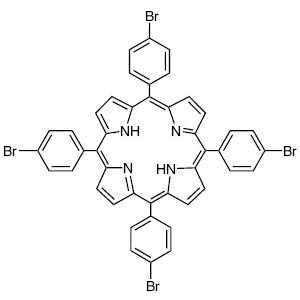
- TCI T3467 29162-73-0 5,10,15,20-Tetrakis(4-bromophenyl)porphyrin
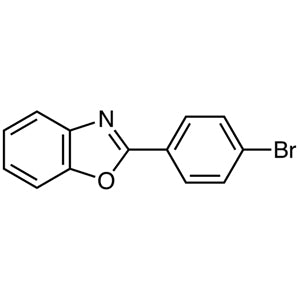
- TCI B5017 3164-13-4 2-(4-Bromophenyl)benzoxazole
- Semiconductor material synthesis: This compound is ideal for creating novel semiconductor materials due to its complex molecular structure and ability to be chemically modified.
- Organic electronics research: Its unique properties make it suitable for studying organic electronic devices, including light-emitting diodes and transistors.
- Optical material development: The compound's optical characteristics are valuable in the design of materials used in photonic applications and optical sensors.
- Chemical modification experiments: Its reactivity and structural flexibility allow it to be used in studies focused on modifying molecular structures for specific functions.
- Advanced material characterization: It is frequently used in experiments that require detailed analysis of material properties and behavior under different conditions.
| Brand | TCI |
|---|---|
| CAS number | 1342892-15-2 |
| Molecular formula | — |
| Purity | — |
| Category | Materials Science > Material Building Blocks > Small Molecule Semiconductor Building Blocks |
| Pack sizes | Available in various packaging options for different experimental needs |
| Physical form | Solid (exact form may vary depending on supplier) |
| Storage | Store in a cool, dry place away from direct sunlight and moisture |
This compound should be stored in a cool, dry environment, away from direct sunlight and moisture to maintain its chemical stability. It is recommended to use airtight containers to prevent exposure to air and humidity, which may affect its integrity. In laboratory settings, it should be handled with appropriate personal protective equipment, such as gloves and safety goggles, to ensure safe handling. Due to its chemical nature, it is advisable to store it in a well-ventilated area and avoid contact with incompatible substances. Proper labeling and storage conditions are essential to maintain its quality and ensure safe usage in research applications.
—
Produk Terkait
-
9,9-Dimethyl-10-phenyl-9,10-dihydroacridine TCI D5354
Regular price From Rp 2.254.350,00Regular price -
2-Bromo-9,9-dimethyl-10-phenyl-9,10-dihydroacridine TCI B5534
Regular price From Rp 4.584.300,00Regular price -
2-Bromo-9,9-dimethyl-9,10-dihydroacridine TCI B5533
Regular price Rp 2.491.650,00Regular price -
9,9-Diphenyl-9,10-dihydroacridine TCI D5332
Regular price From Rp 2.094.750,00Regular price -
5,10,15,20-Tetrakis(4-bromophenyl)porphyrin TCI T3467
Regular price Rp 6.070.050,00Regular price -
2-(4-Bromophenyl)benzoxazole TCI B5017
Regular price From Rp 664.650,00Regular price -
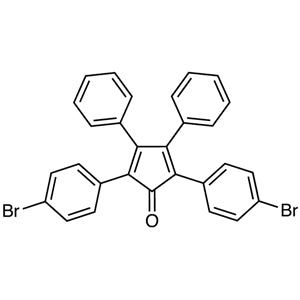
2,5-Bis(4-bromophenyl)-3,4-diphenylcyclopenta-2,4-dienone TCI B5987
Regular price From Rp 1.803.900,00Regular price