TCI B6874 is tert-Butyl 1H-Indole-1-carboxylate, more commonly known as N-Boc-indole: an indole whose nitrogen has been protected with a tert-butoxycarbonyl group. Indole is one of the most important heterocyclic frameworks in organic chemistry and natural product chemistry, serving as the core of a great many biologically active compounds. However, the weakly acidic and reactive indole nitrogen frequently interferes with the course of a reaction. By protecting that nitrogen, this compound gives researchers full control over which position on the indole ring will be functionalised, so reactions proceed more cleanly and outcomes become more predictable.
The property that makes this material so widely used is the change in reactivity brought about by the Boc group. The carbamate is electron-withdrawing, which reduces the electron-rich character of the pyrrole ring and alters the selectivity pattern of substitution reactions, while simultaneously acting as a directing group in directed metalation and C–H bond functionalisation. The Boc group also stabilises the indole against certain conditions that would normally cause polymerisation or side reactions in free indole. Once the reaction sequence is complete, the protecting group can be removed cleanly with acid.
In Indonesian laboratories, this building block is typically found in university and institutional synthetic chemistry groups, in natural product and medicinal chemistry research, and in method development work where selective functionalisation of the indole ring is required. It is used at research and small preparative scale rather than in bulk production, generally as one step within a multi-step synthetic route where the nitrogen must be masked before the ring is elaborated and then unmasked afterwards.
Related TCI products
- Directed metalation chemistry: the Boc carbamate acts as a directing group, guiding metalation to a defined ring position so that lithiation and subsequent electrophilic trapping proceed with reliable regiochemistry.
- C–H functionalisation studies: the protected nitrogen prevents competing N-attack while the carbamate directs the catalyst, making this substrate suitable for developing and benchmarking selective C–H activation methods on indole.
- Regioselective substitution work: because the electron-withdrawing Boc group lowers the electron density of the pyrrole ring, substitution patterns shift in a controlled way that researchers can exploit deliberately.
- Multi-step natural product and medicinal chemistry synthesis: the indole core is masked at nitrogen during ring elaboration, then deprotected cleanly with acid once the intended transformations have been completed.
- Reactions requiring a stabilised indole: conditions that would ordinarily promote polymerisation or side reactions with free indole become workable because the Boc group stabilises the substrate throughout.
| Brand | TCI (Tokyo Chemical Industry) |
|---|---|
| CAS number | 75400-67-8 |
| Molecular formula | — |
| Purity | — |
| Category | Chemistry > Building Blocks > Heterocyclic Building Blocks |
| Pack sizes | available in standard TCI research-scale packaging; please confirm the currently available size when ordering |
| Physical form | — |
| Storage | store in a cool, dry place in a tightly closed original container, in line with the manufacturer's stated conditions |
- Chemical name: tert-Butyl 1H-Indole-1-carboxylate (N-Boc-indole)
Store this product in its original tightly closed container in a cool, dry and well-ventilated area, away from heat, ignition sources, moisture and strong acids, since the Boc protecting group is acid-labile and may be cleaved under acidic conditions. Keep the container closed when not in use to limit exposure to atmospheric moisture. Handle in a fume hood using standard personal protective equipment, including safety goggles, a laboratory coat and chemically resistant gloves. Use clean, dry glassware and spatulas when weighing to avoid contamination. Always consult the manufacturer's Safety Data Sheet before use, and follow institutional procedures for chemical waste disposal.
—
Produk Terkait
-
MethylIndole-6-carboxylate TCI M2042
Regular price From Rp 717.150,00Regular price -
MethylIndole-4-carboxylate TCI M1773
Regular price From Rp 637.350,00Regular price -
MethylIndole-2-carboxylate TCI M1749
Regular price From Rp 1.353.450,00Regular price -
EthylIndole-2-carboxylate TCI I0585
Regular price From Rp 2.041.200,00Regular price -
MethylIndole-5-carboxylate TCI I0545
Regular price From Rp 1.115.100,00Regular price -
MethylIndole-3-carboxylate TCI I0491
Regular price From Rp 1.035.300,00Regular price -
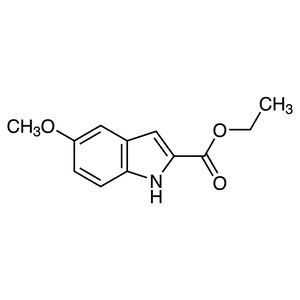
Ethyl5-Methoxy-1H-indole-2-carboxylate TCI E1534
Regular price Rp 1.167.600,00Regular price -
EthylIndole-3-carboxylate TCI E0955
Regular price From Rp 584.850,00Regular price