Methyl Indole-6-carboxylate with CAS number 50820-65-0 is an indole derivative carrying a methyl ester group at the six position of the bicyclic indole framework. Indole itself is one of the most important heterocyclic motifs in natural product chemistry and medicinal chemistry, because it is present in the amino acid tryptophan, the hormone serotonin, and thousands of alkaloid compounds. As a heterocyclic building block, this compound supplies an indole core that is already functionalised at a position which is not easily reached through direct substitution reactions, saving a considerable number of steps in the design of a synthetic route.
The added value of this compound lies in its substitution position. Electrophilic reactions on indole tend to occur at the three position, so installing a substituent on the benzene ring, particularly at the six position, normally demands lengthy and costly synthetic strategies. With the ester already present at the six position from the outset, researchers can directly modify the three position and the indole nitrogen separately, then convert the ester into an acid, an amide, an alcohol, or an aldehyde as required. This flexibility of three mutually independent modification points is what makes it a favoured starting material.
In Indonesian laboratories, this building block is typically used in university research groups and institutional laboratories working on medicinal chemistry and organic synthesis, where efficient routes to substituted indole scaffolds matter as much as the final result. It is equally relevant to laboratories preparing reference compounds and intermediates for further study, and to method development work where a pre-functionalised heterocyclic core shortens the path from planning to a usable product.
Related TCI products
- Medicinal chemistry scaffold synthesis: the indole core is present in tryptophan, serotonin, and thousands of alkaloids, making this pre-functionalised derivative a direct entry point into biologically relevant chemical space.
- Multi-step organic synthesis route design: the ester already installed at the six position removes the lengthy and costly sequences normally required to place substituents on the indole benzene ring.
- Ester functional group interconversion: the methyl ester can be converted into a carboxylic acid, amide, alcohol, or aldehyde, allowing one starting material to serve several different downstream targets.
- Selective three-position functionalisation: because electrophilic reaction on indole naturally favours the three position, chemists can elaborate that site while the six-position ester remains untouched and available.
- Indole nitrogen derivatisation studies: the nitrogen can be modified independently of both the three position and the six-position ester, giving three mutually independent handles on a single heterocyclic framework.
| Brand | TCI |
|---|---|
| CAS number | 50820-65-0 |
| Molecular formula | — |
| Purity | — |
| Category | Chemistry > Building Blocks > Heterocyclic Building Blocks |
| Pack sizes | available in standard research and synthesis pack sizes; please refer to the current product listing for options |
| Physical form | — |
| Storage | store according to the manufacturer's stated conditions on the product label and safety data sheet |
- Product code: M2042
- Chemical name: Methyl Indole-6-carboxylate
Store this building block in its original tightly closed container, kept in a cool, dry, and well ventilated area away from direct sunlight, heat sources, and incompatible materials. Glass containers with chemically resistant closures are generally appropriate for organic ester compounds of this type. Handle the material inside a fume hood, wearing safety glasses, suitable chemical resistant gloves, and a laboratory coat. Avoid generating dust, avoid contact with skin and eyes, and keep the container closed when not in use to limit moisture uptake. Always consult the manufacturer's safety data sheet before first use, and follow institutional procedures for labelling, transfer, and chemical waste disposal.
—
Produk Terkait
-
MethylIndole-4-carboxylate TCI M1773
Regular price From Rp 637.350,00Regular price -
MethylIndole-2-carboxylate TCI M1749
Regular price From Rp 1.353.450,00Regular price -
EthylIndole-2-carboxylate TCI I0585
Regular price From Rp 2.041.200,00Regular price -
MethylIndole-5-carboxylate TCI I0545
Regular price From Rp 1.115.100,00Regular price -
MethylIndole-3-carboxylate TCI I0491
Regular price From Rp 1.035.300,00Regular price -
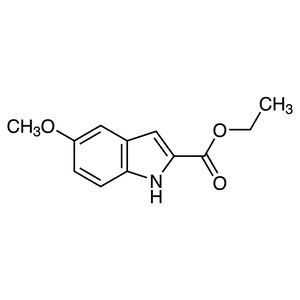
Ethyl5-Methoxy-1H-indole-2-carboxylate TCI E1534
Regular price Rp 1.167.600,00Regular price -
EthylIndole-3-carboxylate TCI E0955
Regular price From Rp 584.850,00Regular price -
tert-Butyl3-Formyl-1H-indole-1-carboxylate TCI D6036
Regular price From Rp 1.749.300,00Regular price