TCI D6036 tert-Butyl 3-Formyl-1H-indole-1-carboxylate is an indole-3-carbaldehyde whose ring nitrogen has been protected with a tert-butoxycarbonyl (Boc) group. It serves as a heterocyclic building block that carries two useful features at once: the indole skeleton as the structural core, and an aldehyde group at the 3-position as the anchor point for further reaction. In synthetic laboratories, the aldehyde is one of the most versatile functional groups available, because it can be converted into alcohols, amines, alkenes, and carboxylic acids, or used to construct entirely new rings through well-established condensation reactions.
The principal property that makes this compound a preferred choice is the Boc protecting group on the indole nitrogen. This group lowers the electron density of the ring, so the aldehyde becomes more electrophilic and more controllable, and at the same time it prevents the nitrogen from reacting with basic reagents or electrophiles. Once the synthetic sequence is complete, the Boc group can be removed again under relatively mild acidic conditions without damaging the indole framework. This protect-and-deprotect strategy gives researchers far better control over reaction order, suppresses side products, and improves overall yield.
In Indonesian laboratories, this building block is typically used in organic synthesis and medicinal chemistry work where the indole scaffold needs to be elaborated in a controlled, stepwise manner. It suits university research groups, postgraduate synthesis projects, and industrial R&D units that prepare indole derivatives and require a starting material whose reactive nitrogen is already masked, so that the aldehyde position can be addressed selectively before the protecting group is finally removed.
Related TCI products
- Heterocyclic scaffold construction: the Boc-protected indole core provides a ready-made framework that can be elaborated at the 3-position without competing reaction at the ring nitrogen.
- Medicinal chemistry intermediate synthesis: the indole skeleton is a recurring motif in bioactive molecules, and the reactive aldehyde allows rapid diversification into analogue series.
- Condensation reaction studies: the aldehyde group participates in established condensation chemistry to build new rings, making it useful for teaching and exploring cyclisation routes.
- Reductive amination and functional group interconversion: the 3-formyl group can be converted into alcohols, amines, alkenes, or carboxylic acids as a synthetic route requires.
- Protecting group strategy work: the removable Boc group makes this compound a practical model for teaching and applying protect-and-deprotect sequencing in multi-step synthesis.
| Brand | TCI (Tokyo Chemical Industry) |
|---|---|
| CAS number | 57476-50-3 |
| Molecular formula | — |
| Purity | — |
| Category | Chemistry > Building Blocks > Heterocyclic Building Blocks |
| Pack sizes | available in standard TCI research-scale packaging; please confirm the currently offered pack size when ordering |
| Physical form | — |
| Storage | store according to the conditions stated on the manufacturer label and Safety Data Sheet |
- Chemical name: tert-Butyl 3-Formyl-1H-indole-1-carboxylate
- Product code: D6036
Store this building block in its original tightly closed container, in a cool, dry, and well-ventilated area away from direct sunlight, heat sources, and incompatible reagents, following the conditions given on the manufacturer label and Safety Data Sheet. As an aldehyde-bearing organic solid, it should be kept sealed to limit exposure to air and moisture. Handle in a fume hood using appropriate personal protective equipment, including safety glasses, gloves, and a laboratory coat. Use clean, dry spatulas and glassware when weighing, reseal the container promptly after use, and consult the Safety Data Sheet before first handling and before disposal of residues.
—
Produk Terkait
-
MethylIndole-6-carboxylate TCI M2042
Regular price From Rp 717.150,00Regular price -
MethylIndole-4-carboxylate TCI M1773
Regular price From Rp 637.350,00Regular price -
MethylIndole-2-carboxylate TCI M1749
Regular price From Rp 1.353.450,00Regular price -
EthylIndole-2-carboxylate TCI I0585
Regular price From Rp 2.041.200,00Regular price -
MethylIndole-5-carboxylate TCI I0545
Regular price From Rp 1.115.100,00Regular price -
MethylIndole-3-carboxylate TCI I0491
Regular price From Rp 1.035.300,00Regular price -
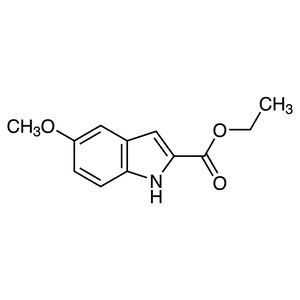
Ethyl5-Methoxy-1H-indole-2-carboxylate TCI E1534
Regular price Rp 1.167.600,00Regular price -
Ethyl2-(3-Formyl-4-hydroxyphenyl)-4-methylthiazole-5-carboxylate TCI E1394
Regular price From Rp 875.700,00Regular price