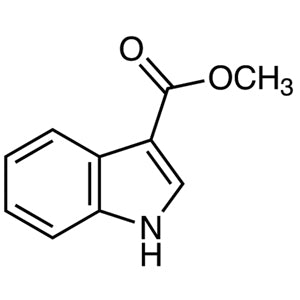
Methyl Indole-3-carboxylate is a chemical compound widely used in organic reactions for the synthesis of heterocyclic compounds. It serves as a key building block in the creation of indole-based structures, which are fundamental in both pharmaceutical and material sciences. This compound is commonly found in chemical laboratories as a raw material for the development of complex molecules with diverse applications. Its role as a precursor allows it to participate in various reactions, making it indispensable in synthetic chemistry workflows.
The stability of its chemical structure and its good reactivity make Methyl Indole-3-carboxylate a preferred choice for laboratory use. It can readily react with a variety of reagents, enabling the formation of a wide range of functional groups. This versatility allows chemists to tailor the final product according to specific research needs. Additionally, its ability to form bonds with different functional groups enhances its utility in creating structurally diverse compounds, which is crucial for drug development and material innovation.
In Indonesian laboratories, Methyl Indole-3-carboxylate is frequently used in organic chemistry research, particularly in the development of new compounds with potential medical or industrial applications. Its availability ensures that researchers can meet the demands of experiments requiring high-quality raw materials. This compound is essential for advancing chemical synthesis in both academic and industrial settings within Indonesia.
Related TCI products
- Synthesis of Heterocyclic Compounds: Methyl Indole-3-carboxylate is ideal for creating indole-based structures, which are common in pharmaceuticals and advanced materials.
- Organic Reaction Research: Its reactivity and stability make it a valuable reagent in various substitution and ring-opening reactions.
- Drug Development Studies: The compound's ability to form diverse functional groups supports the synthesis of potential therapeutic agents.
- Material Science Applications: It is used in the production of polymers and other materials with unique chemical properties.
- Academic and Industrial Research: Its widespread use in both settings highlights its importance in advancing chemical innovation.
| Brand | TCI |
|---|---|
| CAS number | 942-24-5 |
| Molecular formula | — |
| Purity | — |
| Category | Chemistry > Building Blocks > Heterocyclic Building Blocks |
| Pack sizes | Available in standard laboratory quantities |
| Physical form | Solid |
| Storage | Store in a cool, dry place away from light |
Methyl Indole-3-carboxylate should be stored in a cool, dry place away from direct light to maintain its chemical integrity. It is recommended to use airtight containers to prevent moisture absorption and contamination. As a solid compound, it is typically handled in a well-ventilated laboratory environment to ensure safe working conditions. General laboratory precautions include wearing appropriate personal protective equipment such as gloves and safety goggles. Proper labeling of storage containers is essential to avoid misidentification. This compound should be kept away from incompatible materials to prevent any potential chemical interactions.
—
Produk Terkait
-
MethylIndole-6-carboxylate TCI M2042
Regular price From Rp 717.150,00Regular price -
MethylIndole-4-carboxylate TCI M1773
Regular price From Rp 637.350,00Regular price -
MethylIndole-2-carboxylate TCI M1749
Regular price From Rp 1.353.450,00Regular price -
EthylIndole-2-carboxylate TCI I0585
Regular price From Rp 2.041.200,00Regular price -
MethylIndole-5-carboxylate TCI I0545
Regular price From Rp 1.115.100,00Regular price -
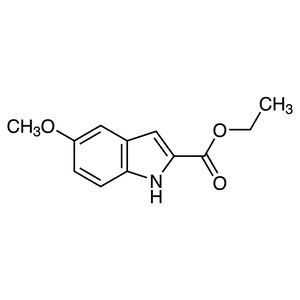
Ethyl5-Methoxy-1H-indole-2-carboxylate TCI E1534
Regular price Rp 1.167.600,00Regular price -
EthylIndole-3-carboxylate TCI E0955
Regular price From Rp 584.850,00Regular price -
tert-Butyl3-Formyl-1H-indole-1-carboxylate TCI D6036
Regular price From Rp 1.749.300,00Regular price