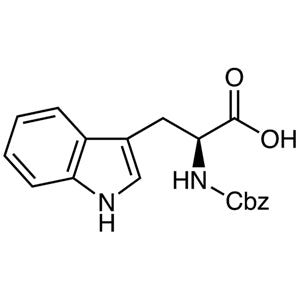
TCI C0638 N-Carbobenzoxy-L-tryptophan is a derivative of the amino acid L-tryptophan in which the alpha-amino group has been protected by a benzyloxycarbonyl group, commonly abbreviated as Cbz or Z. The material serves as a building block in stepwise peptide synthesis, both in solution phase and as a starting material for controlled coupling sequences. With the alpha-amine already protected, chemists can selectively activate the carboxyl group and join it to the next amino acid without the risk of cross-reaction or self-polymerisation. In peptide chemistry laboratories, compounds of this type form the backbone of daily work because they determine the success of the chain elongation step.
The characteristic that makes this material a preferred choice lies in the very well understood behaviour of the Z protecting group. The Z group is relatively stable towards basic conditions and weak acids, yet it can be removed cleanly by catalytic hydrogenolysis or under certain strong acid conditions, making it complementary to other protection strategies such as Boc and Fmoc. The preserved L configuration is essential because bioactive peptides demand high stereochemical purity. In addition, the indole core of the tryptophan side chain contributes the aromatic character that many target sequences depend on, so the integrity of this building block matters throughout the synthetic route.
In Indonesian laboratories, materials of this kind are typically found in university research groups, peptide and medicinal chemistry laboratories, and institutional research units working on synthetic sequences at bench scale. Its role is usually as a reference building block for coupling method development, for teaching protection and deprotection strategy, and for preparing short peptide fragments. Because the supply of specialised amino acid derivatives is not always readily available locally, research teams generally plan their requirements against the schedule of the synthetic work being carried out.
TCI brochures (PDF)
- Amino Acids and Peptide Synthesis Reagents 2025-08-14 · p. 17
- Stepwise solution-phase peptide synthesis, where the protected alpha-amine allows the carboxyl group to be activated and coupled to the next residue without competing self-condensation reactions occurring in the flask.
- Preparation of short peptide fragments containing tryptophan, since the compound supplies the intact indole-bearing side chain together with a protecting group that can be removed under well characterised conditions.
- Coupling reagent and method development studies, because a building block with predictable protection behaviour gives a reliable baseline for comparing reaction efficiency between different activation approaches.
- Teaching and training in protecting group strategy, where the complementary relationship between Z, Boc and Fmoc chemistry can be demonstrated practically on a single well documented amino acid derivative.
- Stereochemical integrity studies in peptide chemistry, as the preserved L configuration makes this material suitable for evaluating whether a chosen coupling protocol causes racemisation during chain assembly.
| Brand | TCI (Tokyo Chemical Industry) |
|---|---|
| CAS number | 7432-21-5 |
| Molecular formula | — |
| Purity | — |
| Category | Chemistry > Chemical Biology > Peptide Chemistry |
| Pack sizes | available in standard TCI research catalogue pack sizes; confirm the required quantity when ordering |
| Physical form | — |
| Storage | keep in a tightly closed container, protected from light and moisture, in accordance with the manufacturer's stated conditions |
- Chemical name: N-Carbobenzoxy-L-tryptophan, also written as Z-L-tryptophan
Store the container tightly closed in a cool, dry place away from direct sunlight and sources of moisture, following the storage conditions stated by the manufacturer on the label and the accompanying safety data sheet. Keep the material in its original container or in a clean, chemically compatible, well sealed vessel, and label any aliquots clearly. Handle the solid in a fume hood or a well ventilated area, using safety glasses, gloves and a laboratory coat, and avoid generating dust during weighing. Allow refrigerated material to reach room temperature before opening to prevent moisture condensation. Dispose of residues and contaminated consumables through the laboratory's chemical waste procedure.
—
Product Categories
Produk Terkait
-
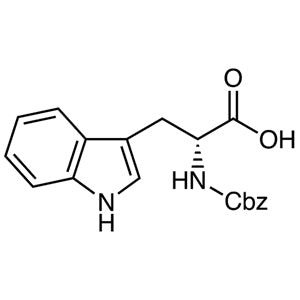
Nalpha-Carbobenzoxy-D-tryptophan TCI C2130
Regular price From Rp 477.750,00Regular price -
N-Carbobenzoxy-DL-tryptophan TCI C0641
Regular price From Rp 477.750,00Regular price -
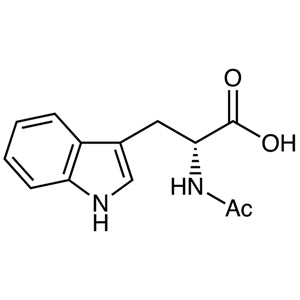
N-Acetyl-D-tryptophan TCI A0119
Regular price From Rp 769.650,00Regular price -
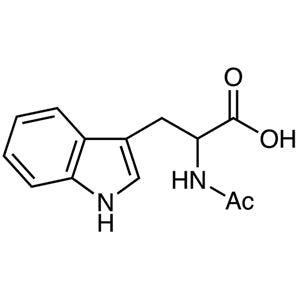
N-Acetyl-DL-tryptophan TCI A0120
Regular price From Rp 637.350,00Regular price -
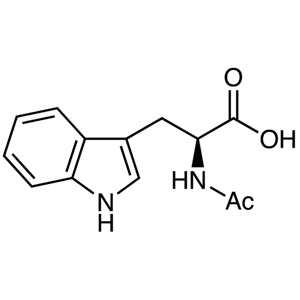
N-Acetyl-L-tryptophan TCI A0121
Regular price From Rp 477.750,00Regular price -
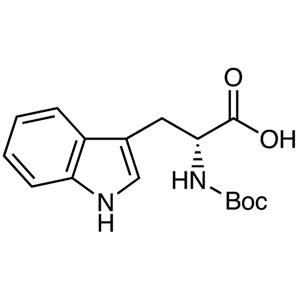
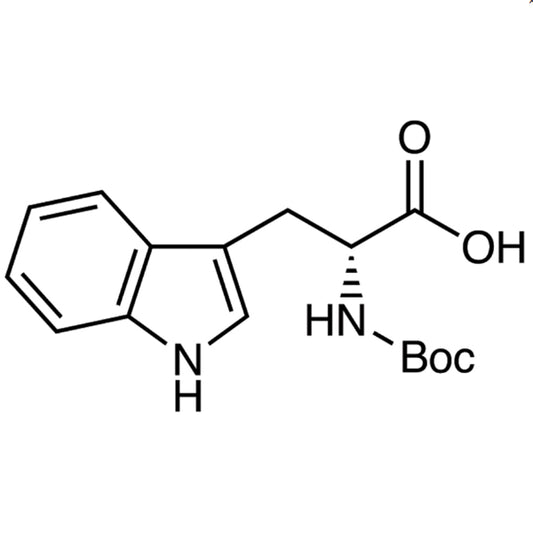
N-(tert-Butoxycarbonyl)-D-tryptophan TCI B2259
Regular price From Rp 823.200,00Regular price -
N-(tert-Butoxycarbonyl)-L-tryptophan TCI B1639
Regular price Rp 2.411.850,00Regular price -
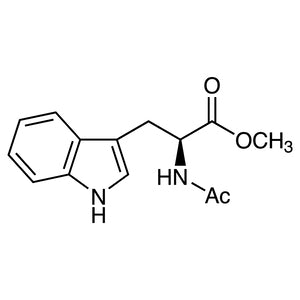
MethylN-Acetyl-L-tryptophanate TCI A3486
Regular price From Rp 1.776.600,00Regular price