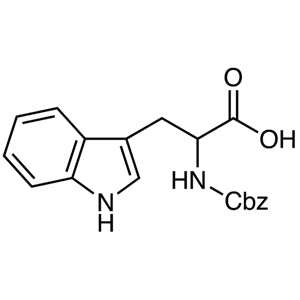
N-Carbobenzoxy-DL-tryptophan is a chemical compound widely used in chemical and biochemical experiments, particularly in peptide and protein research. This compound plays a crucial role in the synthesis of peptides due to its structural properties that facilitate efficient peptide bond formation. In laboratory settings, it is essential for constructing complex molecules that are vital in drug discovery, biotechnology, and biochemical analysis. Its unique chemical structure enables it to interact with enzymes and proteins in a specific manner, making it a valuable tool for biochemists and researchers.
The compound is known for its chemical stability and good reactivity, which are key factors in its popularity among researchers. These properties allow it to participate effectively in various chemical reactions without degrading or losing its functionality. Its ability to remain stable under different experimental conditions ensures reliable results in laboratory experiments. Additionally, its reactivity supports the formation of complex molecular structures, which is critical in the development of new pharmaceuticals and biochemical studies.
In Indonesian laboratories, N-Carbobenzoxy-DL-tryptophan is commonly used in chemical and biochemical research, especially in academic institutions and research organizations. It is an essential component in peptide synthesis experiments and molecular structure analysis. Its role in these applications highlights its importance in advancing scientific knowledge and innovation in the field of biochemistry.
TCI brochures (PDF)
- Amino Acids and Peptide Synthesis Reagents 2025-08-14 · p. 17
- Peptide Synthesis: This compound is ideal for peptide synthesis due to its ability to form stable peptide bonds efficiently, supporting the creation of complex molecular structures.
- Drug Discovery: It is frequently used in the development of new pharmaceuticals, as it helps in the synthesis of bioactive compounds that target specific biological pathways.
- Biotransformation Studies: Its reactivity allows it to be a key component in studies involving enzyme activity and protein interactions, aiding in understanding metabolic processes.
- Structural Analysis: It is used in molecular structure analysis to study the behavior of proteins and enzymes under various conditions.
- Biochemical Research: Its stability and reactivity make it a preferred choice for experiments requiring precise chemical interactions and controlled reaction environments.
| Brand | TCI |
|---|---|
| CAS number | 13058-16-7 |
| Molecular formula | — |
| Purity | — |
| Category | Chemistry > Chemical Biology > Peptide Chemistry |
| Pack sizes | Available in various quantities as per supplier specifications |
| Physical form | Solid powder |
| Storage | Store in a cool, dry place away from light |
N-Carbobenzoxy-DL-tryptophan should be stored in a cool, dry place away from direct light to maintain its chemical stability and prevent degradation. It is recommended to use airtight containers to protect the compound from moisture and contaminants. Proper labeling of containers is essential to ensure safe handling and prevent accidental exposure. In laboratory settings, it should be handled with appropriate personal protective equipment, such as gloves and safety goggles, to minimize contact with skin and eyes. Regular monitoring of storage conditions is advised to ensure the compound remains in optimal condition for use in experiments. Proper storage practices not only enhance the longevity of the compound but also contribute to the safety and efficiency of laboratory operations.
—
Product Categories
Produk Terkait
-
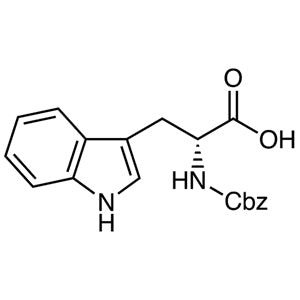
Nalpha-Carbobenzoxy-D-tryptophan TCI C2130
Regular price From Rp 477.750,00Regular price -
N-Carbobenzoxy-L-tryptophan TCI C0638
Regular price From Rp 477.750,00Regular price -
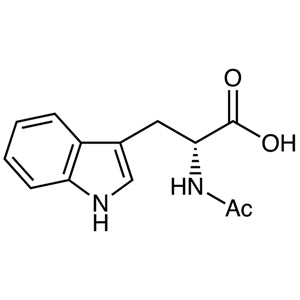
N-Acetyl-D-tryptophan TCI A0119
Regular price From Rp 769.650,00Regular price -
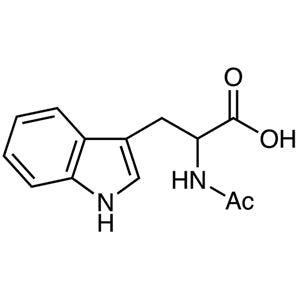
N-Acetyl-DL-tryptophan TCI A0120
Regular price From Rp 637.350,00Regular price -
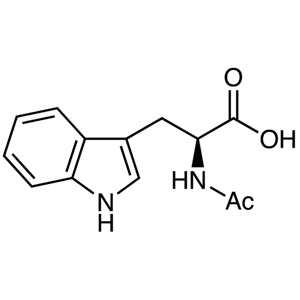
N-Acetyl-L-tryptophan TCI A0121
Regular price From Rp 477.750,00Regular price -
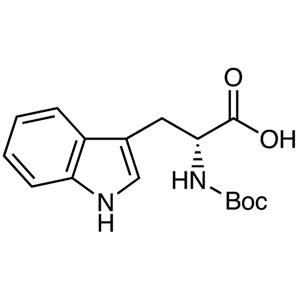
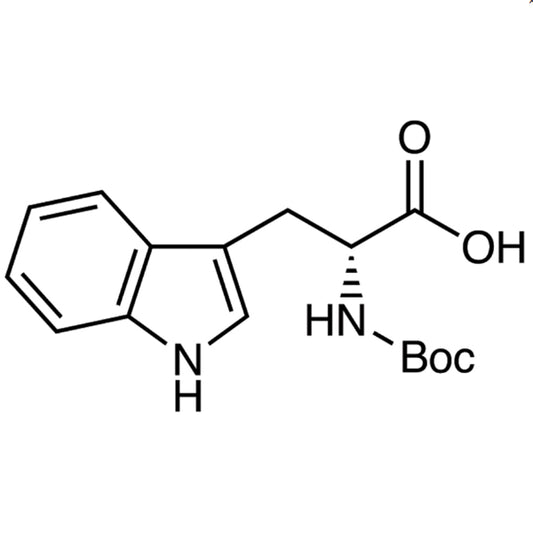
N-(tert-Butoxycarbonyl)-D-tryptophan TCI B2259
Regular price From Rp 823.200,00Regular price -
N-(tert-Butoxycarbonyl)-L-tryptophan TCI B1639
Regular price Rp 2.411.850,00Regular price -
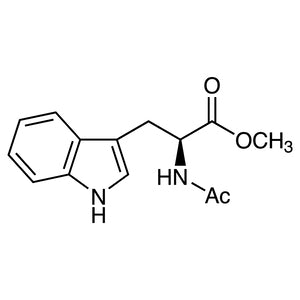
MethylN-Acetyl-L-tryptophanate TCI A3486
Regular price From Rp 1.776.600,00Regular price