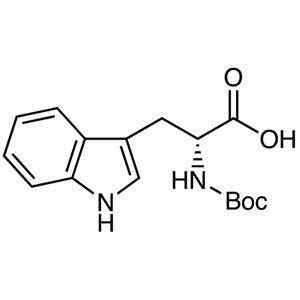
N-(tert-Butoxycarbonyl)-D-tryptophan is a chemical compound widely used in chemical and biochemical experiments, particularly in peptide synthesis. As a derivative of tryptophan, it plays a crucial role in the development of pharmaceuticals and the modification of proteins. This compound is commonly found in research laboratories focused on drug discovery, molecular structure studies, and bioactive compound development. Its unique structure allows for specific chemical reactions under controlled conditions, making it an essential reagent in advanced biochemical processes.
The compound's chemical stability under certain conditions makes it a preferred choice for laboratory use. The presence of the tert-butoxycarbonyl (Boc) group provides high chemical stability, minimizing degradation during storage and use. Additionally, its good solubility in organic solvents facilitates purification and reaction processes. These properties ensure that it remains a reliable and efficient material for a variety of scientific applications.
In Indonesian laboratories, N-(tert-Butoxycarbonyl)-D-tryptophan is often utilized in academic and industrial research settings. It is particularly favored in institutions engaged in pharmaceutical development, biotechnology, and molecular biology. Its role in synthesizing bioactive compounds aligns with the growing demand for high-precision chemical tools in the region’s scientific community.
TCI brochures (PDF)
- Amino Acids and Peptide Synthesis Reagents 2025-08-14 · p. 13
Related TCI products
- TCI B1639 13139-14-5 N-(tert-Butoxycarbonyl)-L-tryptophan
- TCI F0507 143824-78-6 Nalpha-[(9H-Fluoren-9-ylmethoxy)carbonyl]-N1-tert-butoxycarbonyl-L-tryptophan
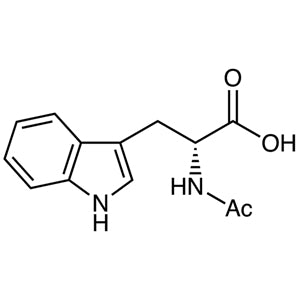
- TCI A0119 2280-01-5 N-Acetyl-D-tryptophan
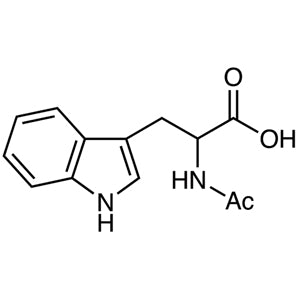
- TCI A0120 87-32-1 N-Acetyl-DL-tryptophan
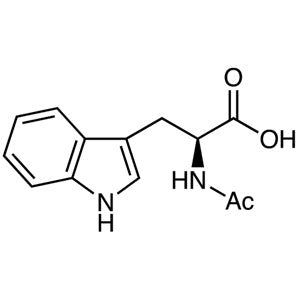
- TCI A0121 1218-34-4 N-Acetyl-L-tryptophan
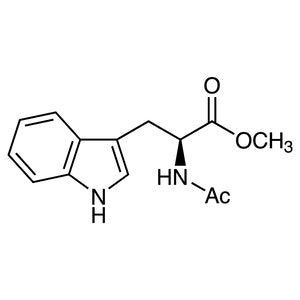
- TCI A3486 2824-57-9 Methyl N-Acetyl-L-tryptophanate
- Peptide Synthesis: This compound is essential for the synthesis of peptides, as it serves as a protected amino acid building block, enabling controlled and efficient peptide chain formation.
- Drug Discovery: It is commonly used in pharmaceutical research to develop new drugs, especially those targeting specific biological pathways or receptors.
- Protein Modification: Its structure allows for the modification of proteins, aiding in the study of protein function and behavior in various biological systems.
- Molecular Structure Studies: The compound is valuable in research focused on understanding molecular interactions and structural properties of biomolecules.
- Bioactive Compound Development: It plays a key role in the creation of bioactive compounds with potential therapeutic applications in medicine and biotechnology.
| Brand | TCI |
|---|---|
| CAS number | 5241-64-5 |
| Molecular formula | — |
| Purity | — |
| Category | Chemistry > Chemical Biology > Peptide Chemistry |
| Pack sizes | Available in various quantities as per standard laboratory supply |
| Physical form | Solid powder |
| Storage | Store in a cool, dry place away from moisture and light |
This compound should be stored in a cool, dry environment, away from direct sunlight and moisture. It is recommended to use airtight containers to prevent exposure to humidity, which may affect its stability. Proper labeling of containers is essential for safe handling and identification. Due to its chemical nature, it should be handled with appropriate personal protective equipment, such as gloves and safety goggles. In laboratory settings, it should be stored in a designated chemical storage area that is accessible only to authorized personnel. Regular monitoring of storage conditions ensures the compound remains in optimal condition for use in experiments.
—
Product Categories
Produk Terkait
-
N-(tert-Butoxycarbonyl)-L-tryptophan TCI B1639
Regular price Rp 2.464.350,00Regular priceRp 1.738.800,00Sale price Rp 2.464.350,00 -
Nalpha-[(9H-Fluoren-9-ylmethoxy)carbonyl]-N1-tert-butoxycarbonyl-L-tryptophan TCI F0507
Regular price From Rp 2.227.050,00Regular priceRp 1.572.900,00Sale price From Rp 2.227.050,00 -
N-Acetyl-D-tryptophan TCI A0119
Regular price From Rp 822.150,00Regular priceRp 590.100,00Sale price From Rp 822.150,00 -
N-Acetyl-DL-tryptophan TCI A0120
Regular price From Rp 689.850,00Regular priceRp 497.700,00Sale price From Rp 689.850,00 -
N-Acetyl-L-tryptophan TCI A0121
Regular price From Rp 530.250,00Regular priceRp 386.400,00Sale price From Rp 530.250,00 -
MethylN-Acetyl-L-tryptophanate TCI A3486
Regular price From Rp 1.829.100,00Regular priceRp 1.294.650,00Sale price From Rp 1.829.100,00 -
N-Acetyl-L-tryptophanEthylEster TCI A0122
Regular price Rp 1.192.800,00Regular priceRp 849.450,00Sale price Rp 1.192.800,00 -
Nalpha-[(9H-Fluoren-9-ylmethoxy)carbonyl]-D-tryptophan TCI F0609
Regular price From Rp 769.650,00Regular priceRp 553.350,00Sale price From Rp 769.650,00