TCI C1202 1-(2-Chloroethyl)pyrrolidine Hydrochloride is an alkylating reagent that carries a pyrrolidinoethyl group, supplied as the hydrochloride salt so that it is more stable and easier to handle as a solid. The compound serves as a reagent for attaching a tertiary amine side chain to a target molecule through substitution at a nucleophilic atom such as a phenolic oxygen, an amide nitrogen, or an activated carbon. Side chains of this kind appear very frequently in drug molecules, which makes this reagent a practical tool for medicinal chemists who are assembling structural analogues.
The property that makes this material valuable is its distinctive reactivity. When the hydrochloride salt is neutralised with base, the free amine that forms can close the ring temporarily to give a highly reactive aziridinium intermediate, and it is this intermediate that accelerates nucleophilic attack. For that reason the reagent is normally liberated from its salt in situ and reacted immediately, rather than being stored as the free base. The solid salt form offers the practical advantages of straightforward weighing and safer storage. The cyclic amine character of the pyrrolidine ring also contributes to the behaviour of the resulting side chain.
In Indonesian laboratories this reagent is typically used in synthetic and medicinal chemistry work, where a tertiary amine side chain needs to be introduced onto a scaffold under controlled conditions. It suits university research groups, pharmaceutical development laboratories, and contract synthesis facilities carrying out analogue preparation on a small to moderate scale. Because it is delivered as a solid salt, it fits well into routine bench practice where reagents are weighed out, freed from the salt with base, and used directly in the reaction vessel.
Related TCI products
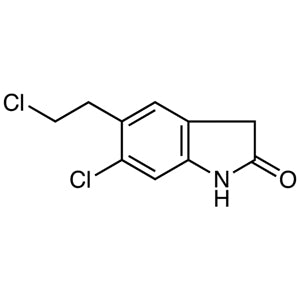
- TCI C2651 118289-55-7 6-Chloro-5-(2-chloroethyl)oxindole
- TCI C2433 63234-80-0 3-(2-Chloroethyl)-6,7,8,9-tetrahydro-2-methyl-4H-pyrido[1,2-a]pyrimidin-4-one
- TCI C2379 26487-67-2 1-(2-Chloroethyl)-1H-hexahydroazepine Hydrochloride
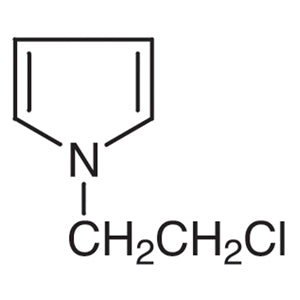
- TCI C1347 77200-24-9 1-(2-Chloroethyl)pyrrole
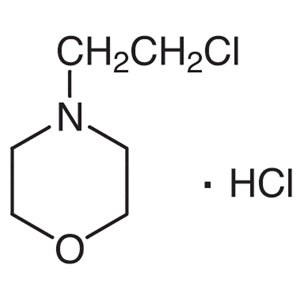
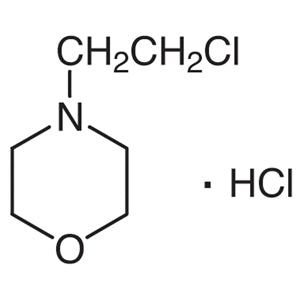
- TCI C1106 3647-69-6 4-(2-Chloroethyl)morpholine Hydrochloride
- TCI B5307 90892-09-4 1-(Bromoacetyl)pyrrolidine
- Introduction of pyrrolidinoethyl side chains onto phenolic oxygen atoms, allowing chemists to convert a free phenol into a basic ether linkage that is common in pharmaceutical scaffolds.
- N-alkylation of amide nitrogen atoms, where the reagent delivers the tertiary amine chain directly onto the nitrogen and builds the basic centre required in many target structures.
- Alkylation at activated carbon positions, giving synthetic chemists a route to attach the pyrrolidinoethyl fragment to carbon nucleophiles generated under basic conditions.
- Preparation of structural analogues in medicinal chemistry programmes, since the pyrrolidinoethyl motif recurs across drug molecules and can be installed consistently with a single reagent.
- In situ free-base generation followed by immediate coupling, a workflow that exploits the reactive aziridinium intermediate formed once the hydrochloride salt is neutralised with base.
| Brand | TCI |
|---|---|
| CAS number | 7250-67-1 |
| Molecular formula | — |
| Purity | — |
| Category | Chemistry > Building Blocks > Heterocyclic Building Blocks |
| Pack sizes | available in the standard catalogue pack sizes offered by TCI |
| Physical form | solid, supplied as the hydrochloride salt |
| Storage | — |
- Chemical name: 1-(2-Chloroethyl)pyrrolidine Hydrochloride
Store the reagent in its original tightly closed container, kept in a cool, dry place and protected from moisture, since the hydrochloride salt is handled as a solid and benefits from a dry environment. Keep the container closed when not in use and reseal it promptly after weighing. Handle the material in a fume hood, wearing a laboratory coat, safety glasses, and chemical-resistant gloves, as alkylating reagents require careful handling and should not contact skin or eyes. Because the free base formed on neutralisation is reactive, prepare it in situ and use it immediately rather than storing it. Follow your institution's standard procedures for chemical waste disposal.
—
Produk Terkait
-
6-Chloro-5-(2-chloroethyl)oxindole TCI C2651
Regular price Rp 3.498.600,00Regular price -
3-(2-Chloroethyl)-6,7,8,9-tetrahydro-2-methyl-4H-pyrido[1,2-a]pyrimidin-4-one TCI C2433
Regular price From Rp 1.510.950,00Regular price -
1-(2-Chloroethyl)-1H-hexahydroazepineHydrochloride TCI C2379
Regular price From Rp 584.850,00Regular price -
1-(2-Chloroethyl)pyrrole TCI C1347
Regular price Rp 4.028.850,00Regular price -
4-(2-Chloroethyl)morpholineHydrochloride TCI C1106
Regular price Rp 1.060.500,00Regular price -
1-(Bromoacetyl)pyrrolidine TCI B5307
Regular price From Rp 928.200,00Regular price -
1-(4-Bromophenyl)pyrrolidine TCI B3900
Regular price From Rp 1.829.100,00Regular price -
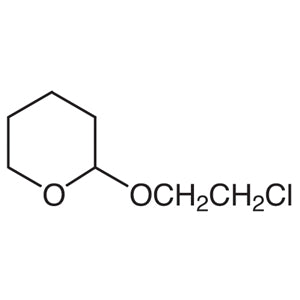
2-(2-Chloroethoxy)tetrahydro-2H-pyran TCI C1678
Regular price Rp 3.817.800,00Regular price
![3-(2-Chloroethyl)-6,7,8,9-tetrahydro-2-methyl-4H-pyrido[1,2-a]pyrimidin-4-one (CAS 63234-80-0) - TCI C2433 - AMI Scientific](http://amiscientific.com/cdn/shop/files/TCI2510C2433.jpg?v=1767098327&width=533)