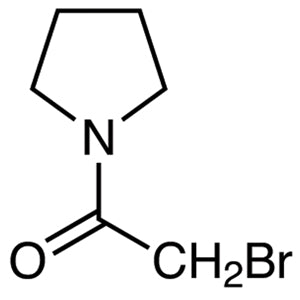
1-(Bromoacetyl)pyrrolidine is a chemical compound widely used in organic synthesis reactions, particularly in the formation of heterocyclic compounds. This compound is derived from the pyrrolidine ring with a bromoacetyl group attached, making it a key building block for the synthesis of complex molecules. In the laboratory, it serves as a versatile reagent that enables the creation of compounds with specific pharmacological or biochemical properties. Its structural simplicity and functional group versatility make it a valuable tool for chemists working in various research fields.
The compound exhibits chemical stability under certain conditions but is highly reactive towards bases, acids, and high temperatures. This reactivity makes it an ideal candidate for substitution and condensation reactions. The presence of the bromo group on the acrylate chain further enhances its reactivity, allowing for a wide range of substitution reactions. These characteristics make it a preferred choice for researchers aiming to develop new compounds with medicinal or biological applications.
In Indonesian laboratories, 1-(Bromoacetyl)pyrrolidine is commonly used in pharmacology, organic chemistry, and biochemistry research. Local researchers frequently utilize this compound in the development of new therapeutic agents. Its availability in the local market supports ongoing scientific investigations and contributes to the advancement of chemical research in Indonesia.
Related TCI products
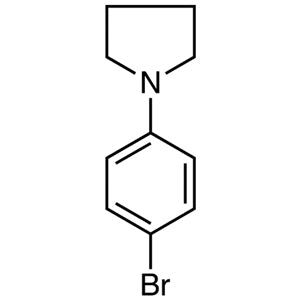
- TCI B3900 22090-26-2 1-(4-Bromophenyl)pyrrolidine
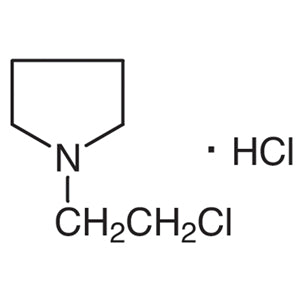
- TCI C1202 7250-67-1 1-(2-Chloroethyl)pyrrolidine Hydrochloride
- TCI B5383 10531-41-6 2-(Bromoacetyl)thiophene
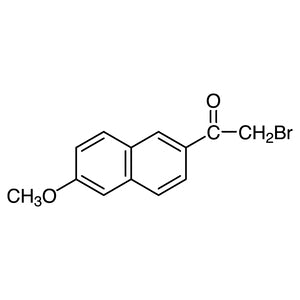
- TCI B3496 10262-65-4 2-(Bromoacetyl)-6-methoxynaphthalene
- TCI B1259 613-54-7 2-Bromoacetylnaphthalene
- TCI T4405 1239488-58-4 Tetrahydrofuran-2-yl Pyrrolidine-1-carbodithioate
- Organic synthesis is a primary application where this compound is used to construct complex heterocyclic structures due to its reactive bromoacetyl group.
- Pharmacological research benefits from its ability to generate compounds with specific biological activities, aiding in drug discovery and development.
- Biochemical studies often employ this reagent to synthesize molecules that interact with biological systems, supporting enzyme and receptor studies.
- Heterocyclic compound synthesis relies on its structural framework, enabling the creation of a wide range of functional derivatives.
- Academic research in chemistry utilizes it as a fundamental building block for teaching and experimental purposes in undergraduate and graduate programs.
| Brand | TCI |
|---|---|
| CAS number | 90892-09-4 |
| Molecular formula | — |
| Purity | — |
| Category | Chemistry > Building Blocks > Heterocyclic Building Blocks |
| Pack sizes | Available in standard laboratory quantities |
| Physical form | Liquid |
| Storage | Store in a cool, dry place away from light and incompatible materials |
This compound should be stored in a cool, dry environment, away from direct light and incompatible substances such as strong bases or acids. It is recommended to use airtight containers made of glass or high-density polyethylene to prevent contamination and maintain chemical integrity. Due to its reactivity, it should be handled in a well-ventilated area, preferably under a fume hood, to minimize exposure. Proper personal protective equipment, including gloves, goggles, and lab coats, should be worn at all times. Avoid contact with skin and eyes, and ensure that spill containment procedures are in place for safe laboratory operations.
—
Produk Terkait
-
1-(4-Bromophenyl)pyrrolidine TCI B3900
Regular price From Rp 1.881.600,00Regular priceRp 1.331.400,00Sale price From Rp 1.881.600,00 -
1-(2-Chloroethyl)pyrrolidineHydrochloride TCI C1202
Regular price Rp 1.326.150,00Regular priceRp 942.900,00Sale price Rp 1.326.150,00 -
2-(Bromoacetyl)thiophene TCI B5383
Regular price From Rp 1.538.250,00Regular priceRp 1.090.950,00Sale price From Rp 1.538.250,00 -
2-(Bromoacetyl)-6-methoxynaphthalene TCI B3496
Regular price From Rp 2.332.050,00Regular priceRp 1.646.400,00Sale price From Rp 2.332.050,00 -
2-Bromoacetylnaphthalene TCI B1259
Regular price From Rp 1.670.550,00Regular priceRp 1.183.350,00Sale price From Rp 1.670.550,00 -
Tetrahydrofuran-2-ylPyrrolidine-1-carbodithioate TCI T4405
Regular price From Rp 2.041.200,00Regular priceRp 1.442.700,00Sale price From Rp 2.041.200,00