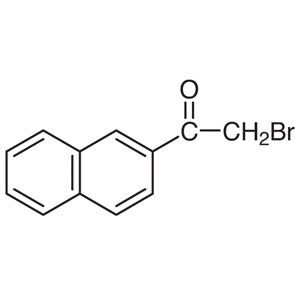
2-Bromoacetylnaphthalene is a chemical compound widely used as a building block in the synthesis of complex molecules. It plays a crucial role in organic chemistry laboratories, where it serves as a versatile reagent for various chemical reactions. Its unique structure, consisting of a naphthalene core with a bromoacetyl group, allows it to participate in multiple reaction mechanisms, making it an essential tool for researchers. This compound is particularly valuable in the development of new materials and pharmaceutical compounds due to its reactivity and structural versatility.
The compound's chemical properties, including its stability and controlled reactivity, make it a preferred choice for laboratory use. Its ability to undergo substitution and electrophilic reactions enables chemists to create a wide range of derivatives. The presence of both aromatic and bromoacetyl functionalities enhances its utility in synthetic pathways. Additionally, its relatively stable nature under certain conditions ensures that it can be safely stored and used in various experimental settings without significant degradation.
In Indonesian laboratories, 2-Bromoacetylnaphthalene is commonly used in organic chemistry research, especially in pharmaceutical and materials science applications. Its role in the synthesis of complex organic compounds makes it a valuable resource for academic and industrial research. The compound is frequently employed in studies aimed at developing new drugs and advanced materials, contributing to the advancement of scientific knowledge and innovation.
- Organic synthesis: This compound is widely used in the synthesis of complex organic molecules due to its reactivity and structural versatility.
- Pharmaceutical research: It serves as a key building block in the development of new drug compounds, particularly in the synthesis of heterocyclic structures.
- Material science: The compound is utilized in the creation of advanced materials, where its chemical properties enable the formation of functional polymers and coatings.
- Reaction intermediates: Its ability to participate in substitution and electrophilic reactions makes it ideal for use as an intermediate in various synthetic pathways.
- Academic research: It is frequently employed in academic laboratories for teaching and experimental purposes, supporting the study of chemical reactivity and synthesis techniques.
| Brand | TCI |
|---|---|
| CAS number | 613-54-7 |
| Molecular formula | — |
| Purity | — |
| Category | Chemistry > Building Blocks > Non-Heterocyclic Building Blocks |
| Pack sizes | Available in various quantities as per standard laboratory supply |
| Physical form | Solid |
| Storage | Store in a cool, dry place away from direct sunlight |
This compound should be stored in a cool, dry environment to maintain its chemical stability. It is recommended to keep it in a tightly sealed container to prevent exposure to moisture and air. Due to its reactivity, it should be handled in a well-ventilated area, preferably under a fume hood. Avoid contact with incompatible substances such as strong oxidizing agents. Proper personal protective equipment, including gloves and safety goggles, should be worn during handling to ensure laboratory safety. The compound is not flammable but should be stored away from heat sources to prevent any potential hazards.
—
Produk Terkait
-
BromoacetylChloride TCI B0900
Regular price Rp 1.988.700,00Regular priceRp 1.405.950,00Sale price Rp 1.988.700,00 -
BromoacetylBromide TCI B0539
Regular price Rp 822.150,00Regular priceRp 590.100,00Sale price Rp 822.150,00 -
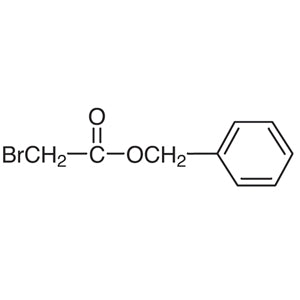
BenzylBromoacetate TCI B1674
Regular price Rp 769.650,00Regular priceRp 553.350,00Sale price Rp 769.650,00 -
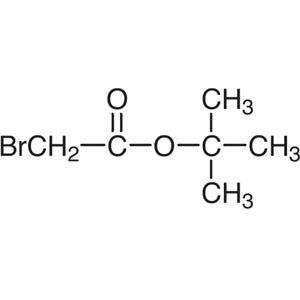
tert-ButylBromoacetate TCI B1473
Regular price Rp 1.829.100,00Regular priceRp 1.294.650,00Sale price Rp 1.829.100,00 -
2'-Bromoacetophenone TCI B0538
Regular price Rp 1.087.800,00Regular priceRp 775.950,00Sale price Rp 1.087.800,00 -
4'-Bromoacetophenone TCI B0537
Regular price Rp 822.150,00Regular priceRp 590.100,00Sale price Rp 822.150,00 -
3'-Bromoacetophenone TCI B0536
Regular price Rp 557.550,00Regular priceRp 405.300,00Sale price Rp 557.550,00 -
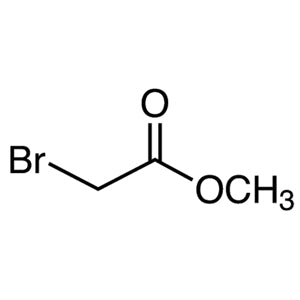
MethylBromoacetate TCI B0533
Regular price Rp 662.550,00Regular priceRp 478.800,00Sale price Rp 662.550,00