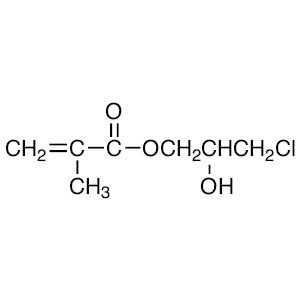
TCI C2105 3-Chloro-2-hydroxypropyl Methacrylate is a functional methacrylate monomer that carries both a chloro group and a hydroxyl group on its propyl chain, and it is supplied in a stabilized state with hydroquinone acting as a polymerization inhibitor. The compound serves as a building block in polymer chemistry as well as in organic synthesis, because it offers two distinct kinds of reactivity at once: a methacrylate double bond capable of radical polymerization, and a chlorohydrin group that can be modified further. This combination makes it especially useful for preparing polymers that carry specific functional groups along their side chains.
The property that makes this monomer a preferred choice is its chemical versatility. The hydroxyl group contributes polarity and hydrogen-bonding capability, so the resulting polymers interact more readily with polar surfaces and with aqueous media. The chlorine atom, positioned adjacent to the hydroxyl, can be displaced by nucleophiles or converted into an epoxide ring under basic conditions, opening a route toward further modification such as the grafting of amine or thiol groups. The presence of hydroquinone keeps the monomer in a liquid, non-self-polymerizing state throughout storage, provided that storage conditions are respected.
In Indonesian laboratories, this material is typically found in university polymer chemistry groups, materials research centres, and synthetic organic laboratories that prepare functionalized resins and coatings. It is normally purchased in small research quantities for exploratory work rather than for production scale, and is handled within a broader workflow of monomer synthesis, copolymerization trials, and subsequent surface or side-chain modification steps. Its dual reactivity makes it a practical starting point for research projects that require tailored polymer functionality.
Related TCI products
- TCI M0512 27813-02-1 Hydroxypropyl Methacrylate (mixture of 2-Hydroxypropyl and 2-Hydroxy-1-methylethyl Methacrylate) (stabilized with MEHQ)
- TCI A0744 25584-83-2 Hydroxypropyl Acrylate (mixture of 2-Hydroxypropyl and 2-Hydroxy-1-methylethyl Acrylate) (stabilized with MEHQ)
- TCI B5371 2998-18-7 sec-Butyl Methacrylate (stabilized with MEHQ)
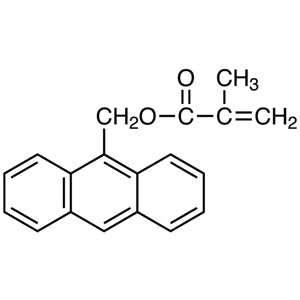
- TCI A2645 31645-35-9 9-Anthrylmethyl Methacrylate
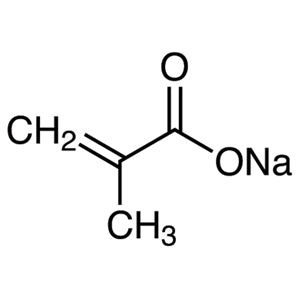
- TCI S0987 5536-61-8 Sodium Methacrylate (stabilized with MEHQ)
- TCI P2714 3683-12-3 2-Phenylethyl Methacrylate (stabilized with HQ)
- Radical copolymerization studies: the methacrylate double bond participates readily in free-radical polymerization, allowing researchers to incorporate chloro and hydroxyl functionality directly into a growing polymer backbone.
- Functional polymer side-chain engineering: the pendant chlorohydrin group survives polymerization and can be modified afterwards, giving a convenient handle for introducing tailored chemistry onto finished chains.
- Epoxide precursor chemistry: treatment under basic conditions converts the adjacent chloro and hydroxyl pair into an epoxide ring, providing a reactive intermediate for ring-opening reactions in synthetic work.
- Nucleophilic substitution and grafting work: the chlorine atom can be displaced by nucleophiles such as amines or thiols, letting laboratories graft targeted functional groups onto polymers or small molecules.
- Polar surface and aqueous interaction studies: the hydroxyl group contributes polarity and hydrogen bonding, so derived polymers are suitable for research involving polar substrates and water-based media.
| Brand | TCI |
|---|---|
| CAS number | 13159-52-9 |
| Molecular formula | — |
| Purity | — |
| Category | Chemistry > Building Blocks > Non-Heterocyclic Building Blocks |
| Pack sizes | available in standard TCI research packaging; please confirm the size options when ordering |
| Physical form | liquid monomer, stabilized with hydroquinone (HQ) as a polymerization inhibitor |
| Storage | keep sealed and stored under conditions that preserve inhibitor effectiveness and prevent premature polymerization |
Store the monomer in its original tightly closed container, kept cool and away from direct sunlight, heat sources, and ignition sources, since elevated temperature can promote unwanted polymerization. Amber glass or the supplier's original packaging is suitable, and the container should be resealed promptly after each use so that the hydroquinone inhibitor remains effective. Handle in a well-ventilated area or fume hood, wearing gloves, safety glasses, and a laboratory coat, and avoid contact with skin and eyes. Do not transfer the material into containers that have held strong bases or nucleophiles, as the chlorohydrin group is reactive under such conditions. Keep records of opening dates so that inhibitor condition can be monitored over time.
—
Produk Terkait
-
HydroxypropylMethacrylate(mixtureof2-Hydroxypropyland2-Hydroxy-1-methylethylMethacrylate)(stabilizedwithMEHQ) TCI M0512
Regular price From Rp 505.050,00Regular price -
HydroxypropylAcrylate(mixtureof2-Hydroxypropyland2-Hydroxy-1-methylethylAcrylate)(stabilizedwithMEHQ) TCI A0744
Regular price From Rp 477.750,00Regular price -
sec-ButylMethacrylate(stabilizedwithMEHQ) TCI B5371
Regular price From Rp 2.730.000,00Regular price -
9-AnthrylmethylMethacrylate TCI A2645
Regular price Rp 4.771.200,00Regular price -
SodiumMethacrylate(stabilizedwithMEHQ) TCI S0987
Regular price From Rp 1.644.300,00Regular price -
2-PhenylethylMethacrylate(stabilizedwithHQ) TCI P2714
Regular price From Rp 1.298.850,00Regular price -
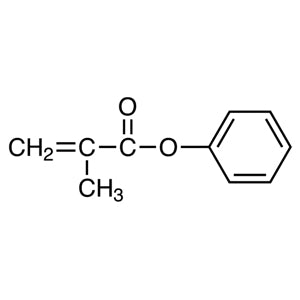
PhenylMethacrylate(stabilizedwithBHT) TCI P2134
Regular price From Rp 1.749.300,00Regular price -
1-MethylcyclopentylMethacrylate(stabilizedwithMEHQ) TCI M3228
Regular price Rp 1.378.650,00Regular price