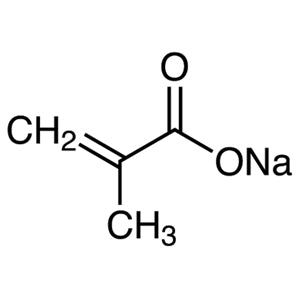
Sodium Methacrylate (stabilized with MEHQ), with CAS number 5536-61-8, is a chemical compound widely used as a building block in organic synthesis. It serves as a key reagent in polymerization reactions and molecular modification processes due to its ability to form bonds with various functional groups. In laboratory settings, it plays a crucial role in the development of polymers, resins, and other chemical compounds that require active chemical reactions. Its versatility makes it an essential component in both academic and industrial research environments.
This material is preferred for its chemical stability and reactivity, particularly in uncontaminated environments. The stabilization with MEHQ significantly enhances its shelf life and reduces the risk of degradation during storage. These properties ensure consistent performance and reliability, making it a trusted choice for laboratories requiring high-quality, stable reagents. Its chemical profile allows for broad application in synthetic processes without compromising the integrity of the final product.
In Indonesian laboratories, Sodium Methacrylate is extensively used in chemical research, especially in polymer science, pharmaceutical development, and material engineering. It is commonly found in industrial chemical production processes that demand high reactivity and long-term stability. Its role in creating advanced materials and compounds underscores its importance in both academic and applied research settings.
TCI brochures (PDF)
- Biomaterials Research Reagents 2025-02-19 · p. 10
- Monomers 2025-05-28 · p. 8
Related TCI products
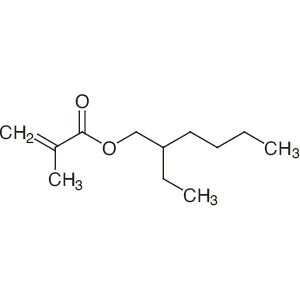
- TCI M0591 688-84-6 2-Ethylhexyl Methacrylate (stabilized with MEHQ)
- TCI M0512 27813-02-1 Hydroxypropyl Methacrylate (mixture of 2-Hydroxypropyl and 2-Hydroxy-1-methylethyl Methacrylate) (stabilized with MEHQ)
- TCI M0326 585-07-9 tert-Butyl Methacrylate Monomer (stabilized with MEHQ)
- TCI M0132 97-86-9 Isobutyl Methacrylate (stabilized with HQ)
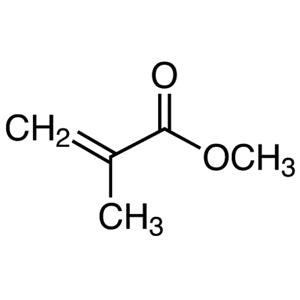
- TCI M0087 80-62-6 Methyl Methacrylate (stabilized with 6-tert-Butyl-2,4-xylenol)
- TCI M0085 868-77-9 2-Hydroxyethyl Methacrylate (stabilized with MEHQ)
- Polymer synthesis where Sodium Methacrylate serves as a monomer for creating various polymer structures due to its reactive functional groups.
- Pharmaceutical research applications where it is used in the development of drug molecules and delivery systems requiring chemical modifications.
- Material science experiments involving the formulation of resins and coatings that require controlled cross-linking and polymerization reactions.
- Industrial chemical production processes that rely on its reactivity and stability for manufacturing high-performance materials.
- Organic synthesis projects where it acts as a versatile building block for constructing complex organic compounds with desired properties.
| Brand | TCI |
|---|---|
| CAS number | 5536-61-8 |
| Molecular formula | — |
| Purity | — |
| Category | Chemistry > Building Blocks > Non-Heterocyclic Building Blocks |
| Pack sizes | Available in various quantities as per standard laboratory supply requirements |
| Physical form | Solid powder |
| Storage | Store in a cool, dry place away from light and moisture |
Sodium Methacrylate should be stored in a cool, dry environment, away from direct sunlight and moisture to maintain its chemical stability. It is recommended to use airtight containers to prevent exposure to air and humidity, which can lead to degradation. Due to its reactivity, it should be handled with care, using appropriate personal protective equipment such as gloves and safety goggles. It is important to keep the material in a well-ventilated area to avoid any potential inhalation risks. Proper labeling of storage containers is essential to ensure safe handling and prevent accidental use. Regular inspection of storage conditions is advised to ensure the material remains in optimal condition for laboratory use.
—
Product Categories
Produk Terkait
-
2-EthylhexylMethacrylate(stabilizedwithMEHQ) TCI M0591
Regular price From Rp 505.050,00Regular price -
HydroxypropylMethacrylate(mixtureof2-Hydroxypropyland2-Hydroxy-1-methylethylMethacrylate)(stabilizedwithMEHQ) TCI M0512
Regular price From Rp 505.050,00Regular price -
tert-ButylMethacrylateMonomer(stabilizedwithMEHQ) TCI M0326
Regular price From Rp 505.050,00Regular price -
IsobutylMethacrylate(stabilizedwithHQ) TCI M0132
Regular price From Rp 477.750,00Regular price -
MethylMethacrylate(stabilizedwith6-tert-Butyl-2,4-xylenol) TCI M0087
Regular price From Rp 452.550,00Regular price -
2-HydroxyethylMethacrylate(stabilizedwithMEHQ) TCI M0085
Regular price From Rp 505.050,00Regular price -
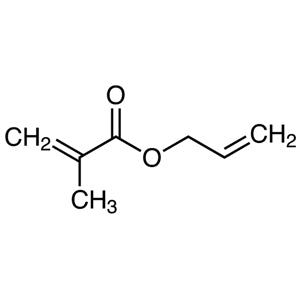
AllylMethacrylate(stabilizedwithMEHQ) TCI M0075
Regular price From Rp 477.750,00Regular price -
2-IsocyanatoethylMethacrylate(stabilizedwithBHT) TCI I1111
Regular price From Rp 2.359.350,00Regular price