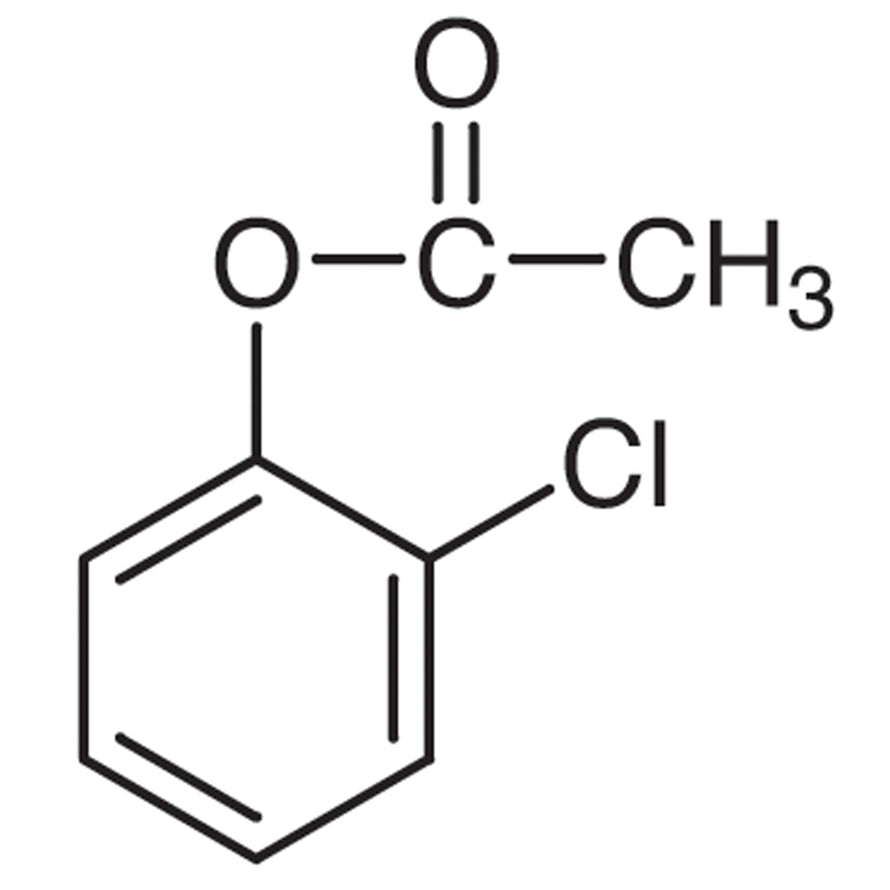
TCI C2120 2-Chlorophenyl Acetate is an aryl ester formed from 2-chlorophenol and acetic acid, supplied by TCI and classified within Chemistry > Building Blocks > Non-Heterocyclic Building Blocks. In laboratory work, this compound serves two principal roles: as a synthetic intermediate and as a protected form of a phenol group. Capping a phenol as an acetate ester is a common strategy for preventing the hydroxyl group from participating in reactions during selected steps, after which it can be released again through straightforward hydrolysis when the free phenol is required. Aryl esters of this type are also classic starting materials for rearrangement reactions that deliver hydroxyacetophenone derivatives.
The characteristic that makes this material widely used is the controlled reactivity of its ester linkage. An aryl ester bond is more readily hydrolysed than an ordinary alkyl ester, so removal of the protecting group can be carried out under relatively mild conditions without damaging other parts of the molecule. In the Fries rearrangement with a Lewis acid catalyst, the acetyl group migrates from oxygen to the aromatic ring and forms a chlorinated hydroxyacetophenone directly. The chlorine atom in the ortho position exerts a distinctive steric and electronic influence on the direction of that rearrangement, giving chemists a useful handle for controlling the outcome.
In Indonesian laboratories, this reagent fits naturally into organic synthesis and research work at universities, government research institutes, and industrial R&D units. Its liquid form makes measurement and transfer convenient, allowing it to be dispensed by syringe or pipette and added to reaction mixtures without a prior dissolution step. It is typically used at bench scale for method development, teaching demonstrations of protecting-group chemistry, and the preparation of intermediates that feed into longer synthetic routes.
Related TCI products
- Phenol protection chemistry: the acetate cap masks the hydroxyl group during reaction steps where a free phenol would interfere, and is removed cleanly by simple hydrolysis afterwards.
- Fries rearrangement studies: under Lewis acid catalysis the acetyl group migrates from oxygen onto the aromatic ring, producing chlorinated hydroxyacetophenone derivatives in a single, direct transformation.
- Synthetic intermediate preparation: the compound functions as a building block feeding into longer multi-step routes where a chlorinated aromatic core is required by the target structure.
- Reactivity and mechanism investigation: the ortho chlorine substituent provides distinctive steric and electronic effects, making this ester a useful substrate for studying substituent influence on rearrangement direction.
- Teaching and method development work: its liquid form and predictable ester hydrolysis behaviour make it suitable for demonstrating protecting-group strategy and for developing new laboratory procedures.
| Brand | TCI |
|---|---|
| CAS number | 4525-75-1 |
| Molecular formula | — |
| Purity | — |
| Category | Chemistry > Building Blocks > Non-Heterocyclic Building Blocks |
| Pack sizes | available in standard TCI catalogue packaging; please confirm the pack size when ordering |
| Physical form | liquid |
| Storage | keep tightly closed in the original container, away from heat and moisture |
Store the container tightly closed in a cool, dry, well-ventilated area away from heat sources, open flames, and direct sunlight. Keep the material in its original supplier container or in a chemically compatible glass vessel with a secure closure, since ester compounds are susceptible to gradual hydrolysis when exposed to atmospheric moisture. All handling, measuring, and transfer operations should be carried out inside a fume hood using appropriate personal protective equipment, including safety glasses, chemical-resistant gloves, and a laboratory coat. Avoid contact with skin and eyes and avoid inhaling vapours. Segregate the material from strong bases, strong oxidising agents, and strong acids during storage. Always consult the manufacturer's safety data sheet before first use, and dispose of residues and contaminated materials in accordance with applicable chemical waste regulations.
—
Produk Terkait
-
4-ChlorophenylAcetate TCI A3593
Regular price From Rp 3.949.050,00Regular price -
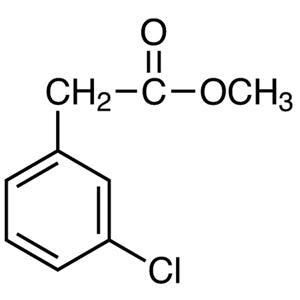
Methyl(3-Chlorophenyl)acetate TCI M2142
Regular price From Rp 1.298.850,00Regular price -
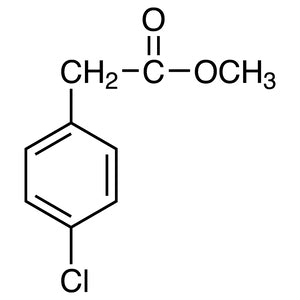
Methyl(4-Chlorophenyl)acetate TCI M2039
Regular price From Rp 769.650,00Regular price -
Ethyl2-(4-Chlorophenyl)acetate TCI C3925
Regular price From Rp 1.035.300,00Regular price -
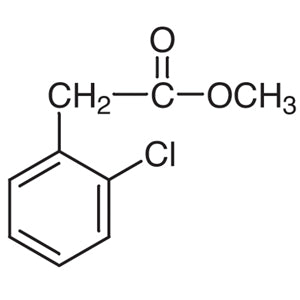
Methyl(2-Chlorophenyl)acetate TCI C1740
Regular price From Rp 1.696.800,00Regular price -
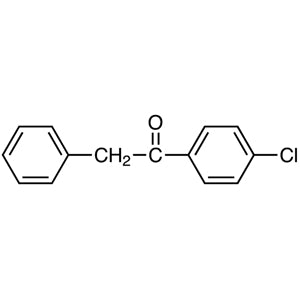
Benzyl4-ChlorophenylKetone TCI B4704
Regular price From Rp 848.400,00Regular price -
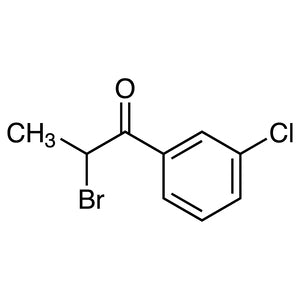
2-Bromo-1-(3-chlorophenyl)propan-1-one TCI B2932
Regular price From Rp 1.881.600,00Regular price -
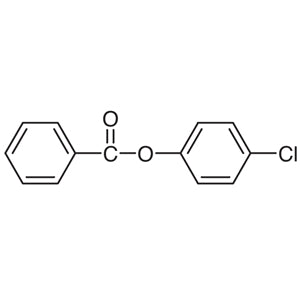
4-ChlorophenylBenzoate TCI B0063
Regular price Rp 2.174.550,00Regular price