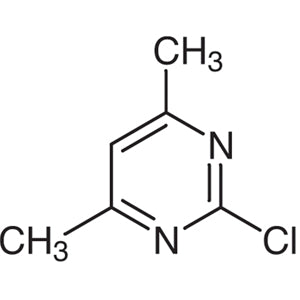
2-Chloro-4,6-dimethylpyrimidine is a chemical compound widely used as a foundational building block in the synthesis of heterocyclic compounds. In laboratory settings, it plays a crucial role in organic chemistry research, particularly in the development of complex molecular structures. This compound is essential for creating pyrimidine-based molecules, which are fundamental components of nucleotides and various pharmaceuticals. Its versatility makes it a valuable resource for chemists working on synthetic pathways that require precise structural modifications.
The compound exhibits stable chemical properties and moderate reactivity, which enable it to participate effectively in substitution and ring-opening reactions. These characteristics make it a preferred choice for researchers aiming to modify molecular frameworks or develop new compounds with specific functional groups. Its ability to react under diverse conditions, whether in solution or in dry media, enhances its applicability across a range of synthetic strategies. This adaptability ensures that it remains a key reagent in modern chemical synthesis.
In Indonesian laboratories, 2-Chloro-4,6-dimethylpyymidine is extensively utilized in organic chemistry research, especially in the synthesis of heterocyclic compounds. It is commonly employed by research institutions and universities to develop new materials, pharmaceuticals, and chemical compounds with potential applications in various scientific fields. Its reliability and effectiveness have made it a staple in both academic and industrial research environments.
Related TCI products
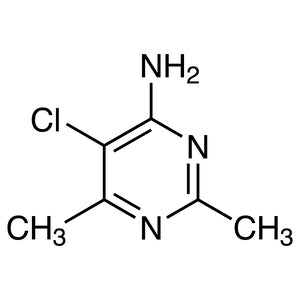
- TCI A1901 2858-20-0 4-Amino-5-chloro-2,6-dimethylpyrimidine
- TCI B5266 7752-78-5 5-Bromo-2-methylpyrimidine
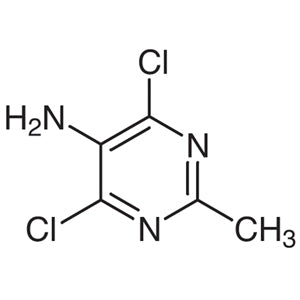
- TCI A1946 39906-04-2 5-Amino-4,6-dichloro-2-methylpyrimidine
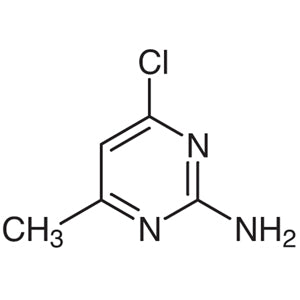
- TCI A1088 5600-21-5 2-Amino-4-chloro-6-methylpyrimidine
- TCI D4091 4316-97-6 4,6-Dichloro-5-methylpyrimidine
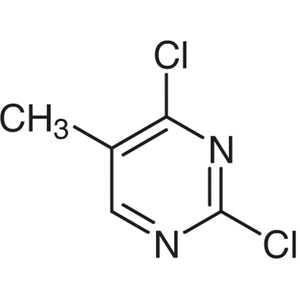
- TCI D3613 1780-31-0 2,4-Dichloro-5-methylpyrimidine
- Organic synthesis of heterocyclic compounds due to its structural versatility and reactivity in ring-opening and substitution reactions.
- Development of pharmaceuticals and bioactive molecules as a key intermediate in pyrimidine-based compound synthesis.
- Research in material science for the creation of novel polymers and functional materials with specific chemical properties.
- Chemical education and training in Indonesian universities for teaching advanced synthetic techniques and molecular design.
- Industrial applications in chemical manufacturing processes requiring stable and reactive building blocks for compound development.
| Brand | TCI |
|---|---|
| CAS number | 4472-44-0 |
| Molecular formula | — |
| Purity | — |
| Category | Chemistry > Building Blocks > Heterocyclic Building Blocks |
| Pack sizes | Available in various quantities as per standard chemical supply specifications |
| Physical form | Solid, crystalline appearance |
| Storage | Store in a cool, dry place away from direct sunlight and moisture |
This compound should be stored in a cool, dry environment to maintain its chemical stability and prevent degradation. It is recommended to use airtight containers to protect it from moisture and contaminants. Due to its reactivity, it should be handled in a well-ventilated area, and appropriate personal protective equipment should be worn when working with it. Avoid exposure to heat or direct sunlight, as these conditions can affect its integrity. For long-term storage, keep it in a sealed container in a controlled temperature environment to ensure optimal performance in laboratory applications.
—
Produk Terkait
-
4-Amino-5-chloro-2,6-dimethylpyrimidine TCI A1901
Regular price From Rp 1.008.000,00Regular price -
5-Bromo-2-methylpyrimidine TCI B5266
Regular price From Rp 823.200,00Regular price -
5-Amino-4,6-dichloro-2-methylpyrimidine TCI A1946
Regular price From Rp 2.439.150,00Regular price -
2-Amino-4-chloro-6-methylpyrimidine TCI A1088
Regular price From Rp 584.850,00Regular price -
4,6-Dichloro-5-methylpyrimidine TCI D4091
Regular price From Rp 2.147.250,00Regular price -
2,4-Dichloro-5-methylpyrimidine TCI D3613
Regular price From Rp 505.050,00Regular price -
4,6-Dichloro-2-methylpyrimidine TCI D3558
Regular price From Rp 769.650,00Regular price -
2,4-Dichloro-6-methylpyrimidine TCI D2958
Regular price From Rp 769.650,00Regular price