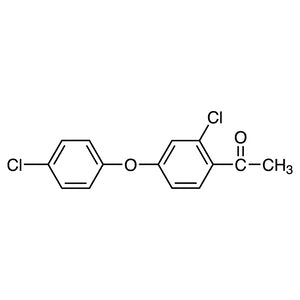
2'-Chloro-4'-(4-chlorophenoxy)acetophenone is a chemical compound widely used in organic synthesis reactions within laboratory settings. It serves as a key building block in the creation of complex organic molecules, particularly those involving aromatic and heterocyclic structures. This compound is commonly utilized in chemical research and industrial applications due to its versatility and reactivity. Its presence in the laboratory allows chemists to explore various synthetic pathways and develop new compounds with specific functional groups.
The compound’s unique chemical properties, including the presence of chloro and phenoxy groups, make it a preferred choice for synthetic chemists. These functional groups contribute to its high reactivity, enabling it to participate in substitution and other critical reactions. Its chemical stability under normal conditions ensures reliability in laboratory experiments, while its reactivity under specific conditions allows for precise control over reaction outcomes. This combination of stability and reactivity makes it a valuable tool in the synthesis of pharmaceuticals, materials, and other complex compounds.
In Indonesian laboratories, 2'-Chloro-4'-(4-chlorophenoxy)acetophenone is extensively used in organic chemistry research, pharmaceutical development, and material science. It is a common component in academic and industrial settings, supporting both basic research and applied projects. Its role in synthesizing compounds with specific structural features makes it indispensable for researchers aiming to expand their understanding of chemical synthesis and molecular design.
Related TCI products
- Organic synthesis applications benefit from this compound's reactivity and structural versatility, enabling the creation of complex aromatic and heterocyclic molecules.
- Pharmaceutical research utilizes its functional groups to develop new drug candidates with targeted molecular structures and biological activities.
- Material science experiments leverage its chemical properties to synthesize advanced polymers and functional materials with tailored characteristics.
- Academic research in chemical education uses it as a key reagent to teach students about synthetic pathways and reaction mechanisms.
- Industrial chemical processes incorporate it as a building block for the production of specialty chemicals and intermediates in various industries.
| Brand | TCI |
|---|---|
| CAS number | 119851-28-4 |
| Molecular formula | — |
| Purity | — |
| Category | Chemistry > Building Blocks > Non-Heterocyclic Building Blocks |
| Pack sizes | Available in various quantities as per supplier specifications |
| Physical form | Solid (exact form may vary depending on supplier) |
| Storage | Store in a cool, dry place away from light and moisture |
This compound should be stored in a cool, dry environment, away from direct sunlight and sources of heat. It is recommended to keep it in a sealed container to prevent exposure to moisture and air. Due to its reactivity, it should be handled with care, using appropriate personal protective equipment such as gloves and safety goggles. It is advisable to store it in a well-ventilated area to minimize any potential risks associated with its chemical properties. Proper labeling of containers is essential to ensure safe handling and prevent accidental exposure. Always follow standard laboratory safety protocols when working with reactive chemicals.
—
Produk Terkait
-
2,4,6-TrichlorophenoxyaceticAcid TCI T1063
Regular price From Rp 3.232.950,00Regular price -
4-NitrophenoxyaceticAcid TCI N0226
Regular price From Rp 1.115.100,00Regular price -
2-NitrophenoxyaceticAcid TCI N0225
Regular price From Rp 1.035.300,00Regular price -
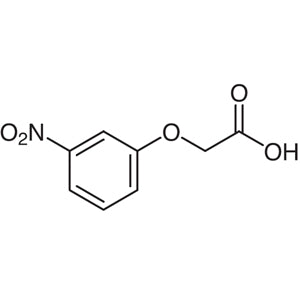
3-NitrophenoxyaceticAcid TCI N0224
Regular price From Rp 1.565.550,00Regular price -
2-(3,4-Dichlorophenoxy)aceticAcid TCI D6455
Regular price From Rp 1.696.800,00Regular price -
Methyl(2,4-Dichlorophenoxy)acetate TCI D6084
Regular price From Rp 2.306.850,00Regular price -
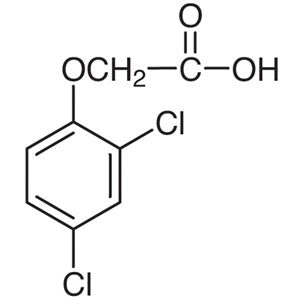
2,4-DichlorophenoxyaceticAcid TCI D0396
Regular price From Rp 664.650,00Regular price -
2-(4-Chlorophenoxy)propanoicAcid TCI C3880
Regular price Rp 2.359.350,00Regular price