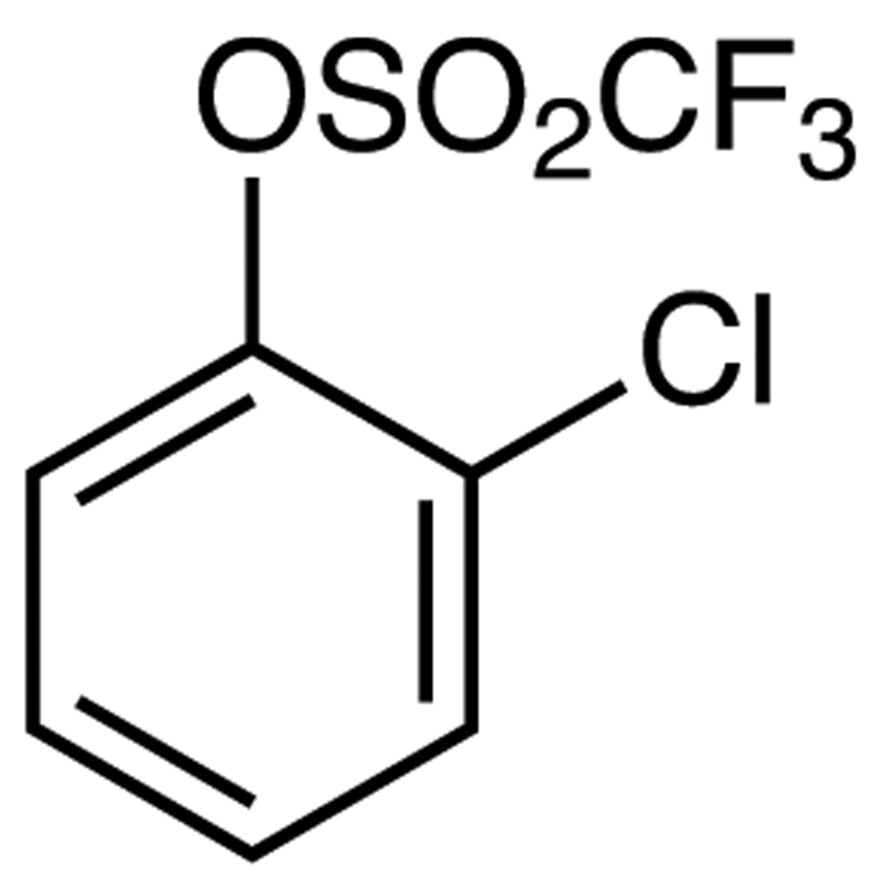
2-Chlorophenyl Trifluoromethanesulfonate is a chemical compound widely used as a building block in the synthesis of organofluorine compounds. This reagent plays a crucial role in laboratory settings where the introduction of trifluoromethanesulfonate groups is required. Its unique chemical structure enables it to participate in various substitution and bond-forming reactions, making it an essential component in organic and pharmaceutical research. Due to its reactivity and stability, it is frequently utilized in the development of new compounds with specialized properties.
The compound’s high reactivity and ability to engage in multiple chemical transformations make it a preferred choice for researchers. Its stability under controlled conditions ensures reliable results in experimental processes. The presence of fluorine atoms in its structure contributes to its unique chemical behavior, which is highly valued in the synthesis of bioactive molecules. These properties make it an ideal candidate for applications requiring precise chemical modifications.
In Indonesian laboratories, 2-Chlorophenyl Trifluoromethanesulfonate is commonly used in scientific research and chemical product development. It is particularly relevant in academic and research institutions focused on the synthesis of complex compounds. Its role in advancing chemical innovation aligns with the goals of many laboratories in Indonesia, supporting both educational and industrial applications.
Related TCI products
- TCI Z0057-5G 54010-75-2 Zinc(II) Trifluoromethanesulfonate [for Electrolyte]
- TCI T2606 29540-83-8 p-Tolyl Trifluoromethanesulfonate
- TCI T1709 109613-00-5 4-Acetylphenyl Trifluoromethanesulfonate
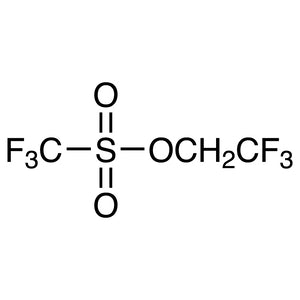
- TCI T1604 6226-25-1 2,2,2-Trifluoroethyl Trifluoromethanesulfonate
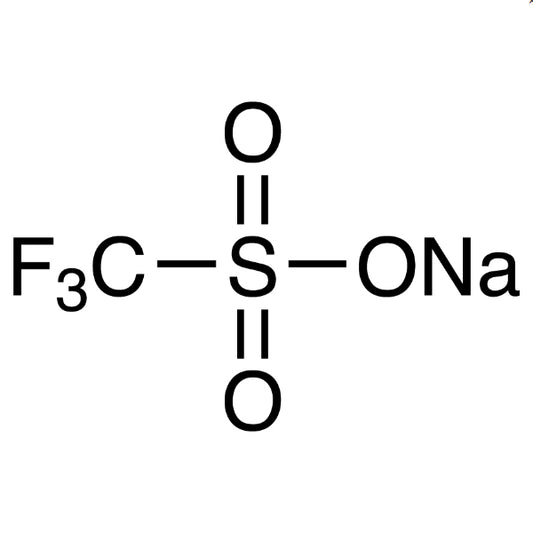
- TCI T1550 2926-30-9 Sodium Trifluoromethanesulfonate
- TCI T1549 2926-27-4 Potassium Trifluoromethanesulfonate
- Organofluorine Synthesis: This compound is ideal for creating fluorinated molecules due to its reactive trifluoromethanesulfonate group, which facilitates efficient chemical modifications.
- Pharmaceutical Research: Its ability to participate in substitution reactions makes it valuable in the development of new drug compounds with enhanced stability and bioavailability.
- Organic Chemistry Studies: It is widely used in academic settings for teaching and research in synthetic organic chemistry, where its reactivity is essential for complex molecule construction.
- Industrial Chemical Development: Its stability and reactivity support the creation of specialized chemical products for various industrial applications.
- Fluorinated Compound Testing: It is used in testing the properties of fluorinated compounds, aiding in the evaluation of their chemical behavior and potential applications.
| Brand | TCI |
|---|---|
| CAS number | 66107-36-6 |
| Molecular formula | — |
| Purity | — |
| Category | Chemistry > Building Blocks > Fluorinated Building Blocks |
| Pack sizes | Available in various quantities as per standard laboratory supply |
| Physical form | Solid or liquid, depending on the specific product variant |
| Storage | Store in a cool, dry place away from moisture and direct sunlight |
This compound should be stored in a cool, dry environment to maintain its chemical integrity. It is recommended to use airtight containers to prevent exposure to moisture and air, which may affect its stability. Due to its reactivity, it should be handled with appropriate personal protective equipment, such as gloves and safety goggles. Avoid contact with incompatible materials to ensure safe laboratory practices. Proper labeling and storage conditions are essential to maintain its effectiveness and ensure safe handling in laboratory settings.
—
Produk Terkait
-
Zinc(II)Trifluoromethanesulfonate[forElectrolyte] TCI Z0057-5G
Regular price Rp 1.326.150,00Regular price -
p-TolylTrifluoromethanesulfonate TCI T2606
Regular price Rp 2.491.650,00Regular price -
4-AcetylphenylTrifluoromethanesulfonate TCI T1709
Regular price Rp 2.041.200,00Regular price -
2,2,2-TrifluoroethylTrifluoromethanesulfonate TCI T1604
Regular price From Rp 3.232.950,00Regular price -
SodiumTrifluoromethanesulfonate TCI T1550
Regular price From Rp 637.350,00Regular price -
PotassiumTrifluoromethanesulfonate TCI T1549
Regular price Rp 1.644.300,00Regular price -
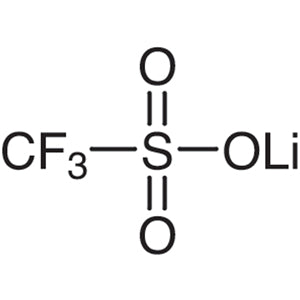
LithiumTrifluoromethanesulfonate TCI T1548
Regular price Rp 1.485.750,00Regular price -
MagnesiumTrifluoromethanesulfonate TCI T1304
Regular price From Rp 1.246.350,00Regular price
![54010-75-2 Zinc(II) Trifluoromethanesulfonate [for Electrolyte] - AMI Scientific](http://amiscientific.com/cdn/shop/files/TCI2510Z0057_9ad4d559-5f76-4c77-b1e0-21de52a28b66.jpg?v=1769181390&width=533)