

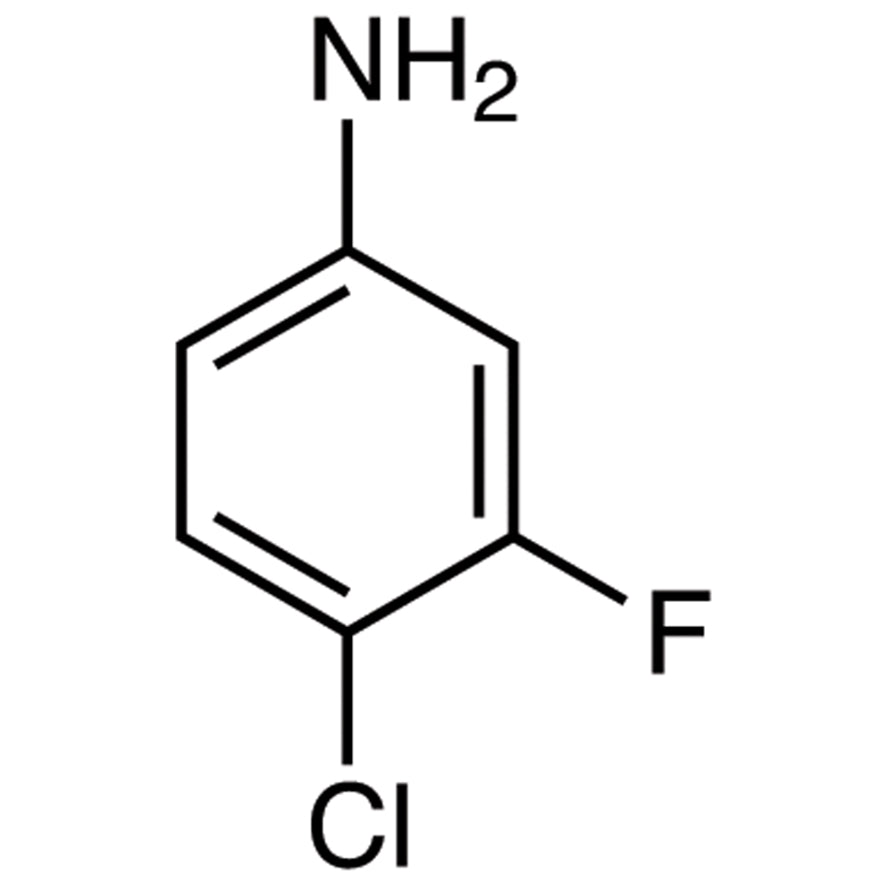
4-Chloro-3-fluoroaniline is a chemical compound widely used as a building block in the synthesis of complex organic compounds. It serves as a key intermediate in various chemical reactions, particularly in the development of pharmaceuticals and industrial chemicals. This compound is characterized by its aniline backbone with specific chloro and fluoro substituents, which significantly influence its reactivity and functional versatility. Its unique structure allows it to participate in a wide range of chemical transformations, making it a valuable resource for chemists working in both academic and industrial settings.
The compound's reactivity is enhanced by the presence of both chlorine and fluorine atoms, which contribute to its ability to engage in substitution and coupling reactions. These substituents also affect its solubility and interaction with other functional groups, making it a preferred choice for synthetic chemists. The combination of these functional groups provides a high degree of chemical versatility, enabling the synthesis of a variety of target molecules. Its chemical stability under controlled conditions further supports its use in laboratory environments where precision and consistency are essential.
In Indonesian laboratories, 4-Chloro-3-fluoroaniline is commonly utilized in organic chemistry research, especially in academic institutions and research centers. It plays a crucial role in the development of bioactive compounds and other specialized chemical products. Its availability and chemical properties make it a popular choice for researchers working on drug discovery and chemical synthesis projects. The compound's unique properties ensure its continued relevance in both fundamental and applied chemical research.
TCI brochures (PDF)
- Fluorination Reagents, Fluorinated Building Blocks 2026-03-18 · p. 21
Related TCI products
- Organic synthesis projects benefit from 4-Chloro-3-fluoroaniline due to its reactivity and ability to participate in substitution and coupling reactions.
- Pharmaceutical research utilizes this compound as a building block for the synthesis of bioactive molecules and drug candidates.
- Industrial chemical development leverages its unique functional groups for the creation of specialized chemical products.
- Academic research in chemistry often incorporates this compound for teaching and experimental purposes in synthetic chemistry courses.
- Environmental studies may use it to investigate the behavior of fluorinated compounds in various chemical systems and reaction mechanisms.
| Brand | TCI |
|---|---|
| CAS number | 367-22-6 |
| Molecular formula | — |
| Purity | — |
| Category | Chemistry > Building Blocks > Fluorinated Building Blocks |
| Pack sizes | Available in various quantities as per supplier specifications |
| Physical form | Solid, typically in crystalline or powder form |
| Storage | Store in a cool, dry place away from light and moisture |
4-Chloro-3-fluoroaniline should be stored in a cool, dry environment, away from direct sunlight and sources of heat. It is recommended to keep the compound in a sealed container to prevent exposure to moisture and air. Due to its reactivity, it should be handled with care, using appropriate personal protective equipment such as gloves and safety goggles. In laboratory settings, it is important to ensure proper ventilation to minimize inhalation risks. The compound is sensitive to UV light and high temperatures, so storage conditions must be strictly controlled to maintain its chemical integrity. Always follow standard chemical safety protocols when working with this substance to ensure a safe and efficient laboratory environment.
—
Produk Terkait
-
2-Bromo-6-chloro-4-fluoroaniline TCI B3681
Regular price Rp 1.485.750,00Regular price -
2-Bromo-4-chloro-6-fluoroaniline TCI B2723
Regular price Rp 1.696.800,00Regular price -
3-Chloro-5-fluoroaniline TCI C3052
Regular price From Rp 980.700,00Regular price -
2-Chloro-6-fluoroaniline TCI C2126
Regular price From Rp 1.326.150,00Regular price -
3-Chloro-2-fluoroaniline TCI C1659
Regular price From Rp 980.700,00Regular price -
5-Chloro-2-fluoroaniline TCI C1596
Regular price From Rp 505.050,00Regular price -
4-Chloro-2-fluoroaniline TCI C1169
Regular price From Rp 1.167.600,00Regular price -
2-Chloro-4-fluoroaniline TCI C1161
Regular price Rp 1.881.600,00Regular price


