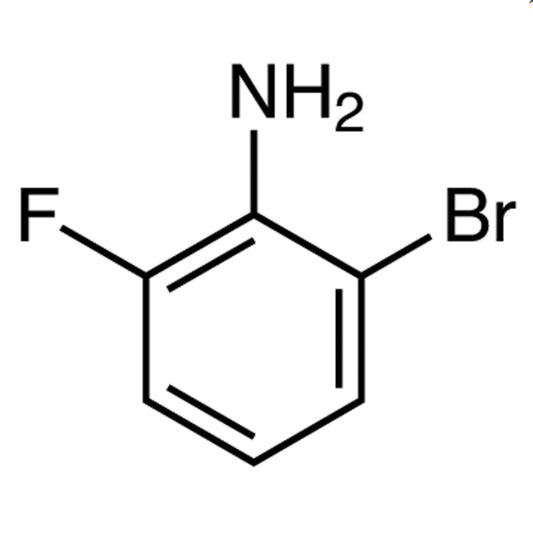
2-Bromo-6-chloro-4-fluoroaniline is a versatile organic compound widely used in laboratory settings for the synthesis of complex organic molecules. This compound plays a crucial role in chemical research, particularly in the development of pharmaceuticals and industrial chemicals. Its unique molecular structure enables it to participate in a variety of chemical reactions, making it an essential building block for chemists. Due to its reactivity and functional group compatibility, it is frequently utilized in synthetic pathways that require precise molecular modifications.
The compound is valued for its high reactivity and ability to form stable intermediates in various chemical transformations. Its fluorinated and halogenated groups contribute to its chemical versatility, allowing it to be involved in substitution, reduction, and coupling reactions. These properties make it a preferred choice for researchers aiming to design and synthesize new compounds with specific functional characteristics. Its reliability and consistent performance in laboratory conditions further enhance its appeal among scientists.
In Indonesian laboratories, 2-Bromo-6-chloro-4-fluoroaniline is commonly used in research institutions and universities. It is particularly favored in organic chemistry, pharmaceutical sciences, and materials technology. Local researchers rely on this compound for the development of new compounds with potential applications in medicine, agriculture, and industry. Its availability and chemical properties make it a valuable resource for scientific innovation in the region.
TCI brochures (PDF)
- Fluorination Reagents, Fluorinated Building Blocks 2026-03-18 · p. 27
- Organic synthesis of heterocyclic compounds due to its reactive halogen and fluorine atoms, enabling efficient functional group modification.
- Pharmaceutical research for the development of new drug molecules, as its structure can be modified to target specific biological pathways.
- Industrial chemical production where halogenated and fluorinated compounds are needed for the creation of specialty chemicals.
- Materials science applications in the synthesis of advanced polymers and functional materials with tailored properties.
- Analytical chemistry for use as a standard in chromatographic and spectroscopic analyses due to its distinct molecular signature.
| Brand | TCI |
|---|---|
| CAS number | 201849-14-1 |
| Molecular formula | — |
| Purity | — |
| Category | Chemistry > Building Blocks > Fluorinated Building Blocks |
| Pack sizes | Available in various quantities as per supplier specifications |
| Physical form | Solid or liquid, depending on the specific formulation |
| Storage | Store in a cool, dry place away from light and incompatible substances |
This compound should be stored in a cool, dry environment, away from direct sunlight and sources of heat. It is recommended to keep it in a tightly sealed container to prevent moisture absorption and contamination. Due to its halogenated and fluorinated nature, it should be stored separately from strong oxidizing agents and incompatible materials. Proper ventilation is essential when handling this compound to minimize exposure to vapors. Laboratory personnel should wear appropriate personal protective equipment, including gloves, goggles, and a lab coat, to ensure safety during handling and use.
—
Produk Terkait
-
2-Bromo-6-fluoroaniline TCI B4803
Regular price From Rp 1.724.100,00Regular priceRp 1.205.400,00Sale price From Rp 1.724.100,00 -
3-Bromo-4-fluoroaniline TCI B2957
Regular price Rp 1.936.200,00Regular priceRp 1.353.450,00Sale price Rp 1.936.200,00 -
2-Bromo-4-chloro-6-fluoroaniline TCI B2723
Regular price Rp 1.696.800,00Regular priceRp 1.186.500,00Sale price Rp 1.696.800,00 -
2-Bromo-5-fluoroaniline TCI B2163
Regular price From Rp 1.485.750,00Regular priceRp 1.038.450,00Sale price From Rp 1.485.750,00 -
4-Bromo-3-fluoroaniline TCI B2102
Regular price From Rp 477.750,00Regular priceRp 333.900,00Sale price From Rp 477.750,00 -
2-Bromo-4-fluoroaniline TCI B1829
Regular price From Rp 505.050,00Regular priceRp 352.800,00Sale price From Rp 505.050,00 -
4-Bromo-2-fluoroaniline TCI B1314
Regular price Rp 1.776.600,00Regular priceRp 1.242.150,00Sale price Rp 1.776.600,00 -
3-Chloro-5-fluoroaniline TCI C3052
Regular price From Rp 980.700,00Regular priceRp 685.650,00Sale price From Rp 980.700,00