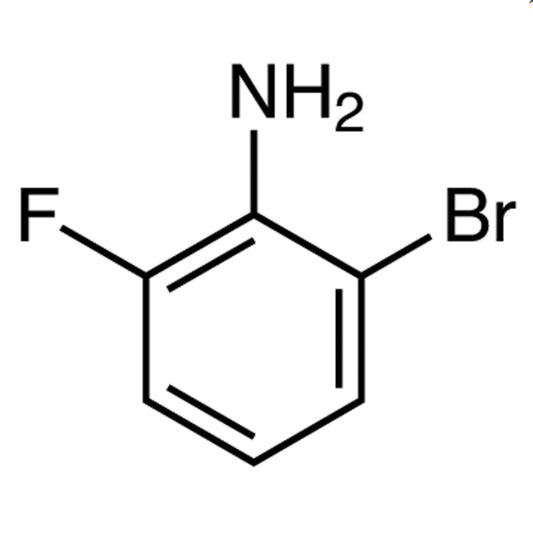
2-Bromo-4-fluoroaniline is a chemical compound widely used as a foundational building block in the synthesis of complex organic molecules. It plays a crucial role in laboratory settings, particularly in organic chemistry research, where it serves as a versatile intermediate for various chemical transformations. This compound is commonly employed in reactions involving halogen substitution and amino group replacement, making it an essential tool for chemists seeking to develop new compounds. Its presence in both academic and industrial research environments highlights its importance in the advancement of chemical science.
The unique combination of bromo and fluoro groups in 2-Bromo-4-fluoroaniline contributes to its reactivity and specificity, making it a preferred choice for researchers. These functional groups enable the compound to participate in a range of chemical reactions, including nucleophilic substitution, coupling reactions, and electrophilic attacks. The compound's ability to undergo multiple reaction pathways allows it to be tailored for specific synthetic goals, enhancing its utility in the development of pharmaceuticals, industrial chemicals, and specialty materials. Its stability under controlled conditions further supports its reliability in laboratory applications.
In Indonesian laboratories, 2-Bromo-4-fluoroaniline is extensively used in organic chemistry research, particularly in universities and research institutions. Its availability and consistent quality make it a go-to compound for experimental work and compound development. The compound's role in both teaching and research underscores its significance in the Indonesian scientific community, supporting the growth of chemical innovation and education.
TCI brochures (PDF)
- Fluorination Reagents, Fluorinated Building Blocks 2026-03-18 · p. 24
- Organic synthesis is a key application where 2-Bromo-4-fluoroaniline is used due to its reactivity and ability to undergo substitution reactions, making it ideal for creating complex organic molecules.
- Pharmaceutical research benefits from this compound as it is often used in the development of new drugs, leveraging its halogen and amino groups for targeted chemical modifications.
- Industrial chemical production utilizes this compound as a building block for manufacturing specialty chemicals and materials, thanks to its versatile functional groups.
- Academic research in universities relies on this compound for teaching and experimental purposes, supporting both undergraduate and graduate studies in organic chemistry.
- Material science applications take advantage of its chemical properties to develop new polymers and functional materials, enhancing the performance of various chemical products.
| Brand | TCI |
|---|---|
| CAS number | 1003-98-1 |
| Molecular formula | — |
| Purity | — |
| Category | Chemistry > Building Blocks > Fluorinated Building Blocks |
| Pack sizes | Available in various quantities to meet different research needs |
| Physical form | Solid, typically in crystalline or powder form |
| Storage | Store in a cool, dry place away from light and moisture |
This compound should be stored in a cool, dry location, away from direct light and moisture to maintain its chemical integrity. It is recommended to use airtight containers made of glass or high-density polyethylene to prevent contamination and degradation. Due to its reactivity, it should be handled with care, using appropriate personal protective equipment such as gloves and safety goggles. In laboratory settings, it is important to ensure proper ventilation and to avoid exposure to incompatible substances. Proper storage and handling practices help ensure the compound's effectiveness and safety in research applications.
—
Produk Terkait
-
2-Bromo-6-fluoroaniline TCI B4803
Regular price From Rp 1.724.100,00Regular priceRp 1.205.400,00Sale price From Rp 1.724.100,00 -
2-Bromo-6-chloro-4-fluoroaniline TCI B3681
Regular price Rp 1.485.750,00Regular priceRp 1.038.450,00Sale price Rp 1.485.750,00 -
3-Bromo-4-fluoroaniline TCI B2957
Regular price Rp 1.936.200,00Regular priceRp 1.353.450,00Sale price Rp 1.936.200,00 -
2-Bromo-4-chloro-6-fluoroaniline TCI B2723
Regular price Rp 1.696.800,00Regular priceRp 1.186.500,00Sale price Rp 1.696.800,00 -
2-Bromo-5-fluoroaniline TCI B2163
Regular price From Rp 1.485.750,00Regular priceRp 1.038.450,00Sale price From Rp 1.485.750,00 -
4-Bromo-3-fluoroaniline TCI B2102
Regular price From Rp 477.750,00Regular priceRp 333.900,00Sale price From Rp 477.750,00 -
4-Bromo-2-fluoroaniline TCI B1314
Regular price Rp 1.776.600,00Regular priceRp 1.242.150,00Sale price Rp 1.776.600,00 -
4-Bromo-2-chloro-6-fluoroaniline TCI B6879
Regular price From Rp 2.650.200,00Regular priceRp 1.853.250,00Sale price From Rp 2.650.200,00