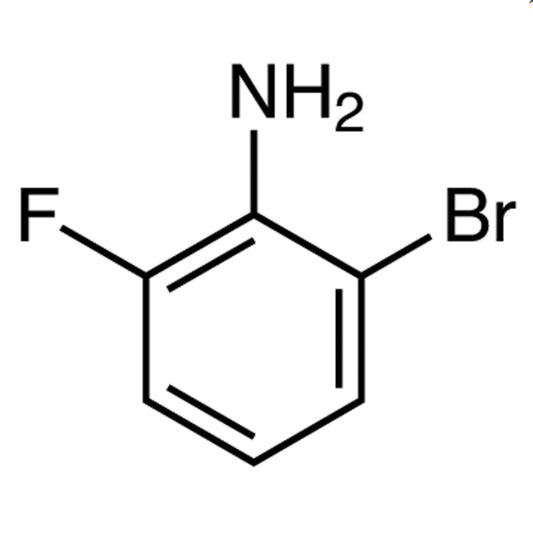
4-Bromo-3-fluoroaniline is a chemical compound widely used as a foundational building block in the synthesis of complex molecules. It plays a crucial role in organic chemistry laboratories, particularly in the development of pharmaceuticals, industrial chemicals, and other organic compounds. This compound is valued for its structural versatility and reactivity, making it a key reagent in various synthetic pathways. Its presence in laboratory workflows allows researchers to explore new chemical transformations and functional group modifications with greater precision.
The unique combination of bromo and fluoro groups in 4-Bromo-3-fluoroaniline contributes to its high reactivity and polarity. These functional groups enhance the compound’s ability to participate in substitution and condensation reactions, offering greater control over reaction outcomes. The fluorine atom also increases the compound’s stability under certain conditions, making it suitable for a range of experimental applications. Its chemical properties make it a reliable and efficient reagent for both academic and industrial research settings.
In Indonesian laboratories, 4-Bromo-3-fluoroaniline is extensively used in organic chemistry research, especially in pharmaceutical and industrial chemical development. It is particularly relevant for studies involving the synthesis of bioactive compounds and the creation of new chemical products. Its availability and chemical characteristics make it a preferred choice for researchers aiming to advance their work in these fields.
TCI brochures (PDF)
- Fluorination Reagents, Fluorinated Building Blocks 2026-03-18 · p. 20
Related TCI products
- Pharmaceutical research utilizes 4-Bromo-3-fluoroaniline for the synthesis of bioactive compounds due to its reactivity and structural versatility.
- Industrial chemical development benefits from this compound as it enables the creation of specialized organic materials with enhanced functional properties.
- Organic synthesis projects often incorporate this reagent for its ability to participate in substitution and condensation reactions efficiently.
- Drug discovery initiatives rely on its chemical stability and reactivity to design and test new molecular structures.
- Research in chemical engineering uses this compound to explore new synthetic pathways and functional group modifications.
| Brand | TCI |
|---|---|
| CAS number | 656-65-5 |
| Molecular formula | — |
| Purity | — |
| Category | Chemistry > Building Blocks > Fluorinated Building Blocks |
| Pack sizes | Available in various quantities as per standard laboratory supply |
| Physical form | Solid |
| Storage | Store in a cool, dry place away from light and moisture |
4-Bromo-3-fluoroaniline should be stored in a cool, dry environment, away from direct light and moisture. It is recommended to keep the compound in a tightly sealed container to prevent exposure to air and humidity. Due to its chemical reactivity, it should be handled with appropriate personal protective equipment, including gloves and safety goggles. The compound is generally stable under normal laboratory conditions but should be stored in a well-ventilated area to minimize any potential risks. Proper storage ensures the compound remains effective for use in chemical synthesis and research applications.
—
Produk Terkait
-
2-Bromo-6-fluoroaniline TCI B4803
Regular price From Rp 1.724.100,00Regular priceRp 1.205.400,00Sale price From Rp 1.724.100,00 -
2-Bromo-6-chloro-4-fluoroaniline TCI B3681
Regular price Rp 1.485.750,00Regular priceRp 1.038.450,00Sale price Rp 1.485.750,00 -
3-Bromo-4-fluoroaniline TCI B2957
Regular price Rp 1.936.200,00Regular priceRp 1.353.450,00Sale price Rp 1.936.200,00 -
2-Bromo-4-chloro-6-fluoroaniline TCI B2723
Regular price Rp 1.696.800,00Regular priceRp 1.186.500,00Sale price Rp 1.696.800,00 -
2-Bromo-5-fluoroaniline TCI B2163
Regular price From Rp 1.485.750,00Regular priceRp 1.038.450,00Sale price From Rp 1.485.750,00 -
2-Bromo-4-fluoroaniline TCI B1829
Regular price From Rp 505.050,00Regular priceRp 352.800,00Sale price From Rp 505.050,00 -
4-Bromo-2-fluoroaniline TCI B1314
Regular price Rp 1.776.600,00Regular priceRp 1.242.150,00Sale price Rp 1.776.600,00 -
4-Bromo-2-chloro-6-fluoroaniline TCI B6879
Regular price From Rp 2.650.200,00Regular priceRp 1.853.250,00Sale price From Rp 2.650.200,00