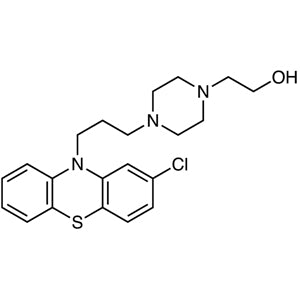
TCI C2547 Clozapine is a pharmaceutical research reagent belonging to the dibenzodiazepine class of compounds, supplied specifically for laboratory experimental purposes and not for human use or as a medicinal preparation. The compound is widely recognised in the pharmacological literature as a reference atypical antipsychotic that displays a very broad pattern of interaction with a range of central nervous system receptors. Because its pharmacological profile has been extensively studied and documented, this material is frequently employed as a comparator substance or positive control in fundamental neuropharmacology research as well as in the development of analytical methods.
The characteristic that makes this compound important for research is the breadth of its activity across many receptor types simultaneously, covering dopamine, serotonin, muscarinic, histamine, and adrenergic receptors. This multireceptor behaviour makes it a useful tool for testing the selectivity of a receptor binding assay, validating cell-based test systems, or calibrating screening methods. In the analytical field, the availability of a pure compound with a clearly established identity allows researchers to construct calibration curves and to verify high performance liquid chromatography methods with a reference material whose behaviour is already well characterised in published work.
In Indonesian laboratories, this reagent is typically used within university research groups, pharmacy and pharmacology faculties, and analytical method development units that require a documented reference compound. It supports work where a well-characterised standard is needed to benchmark instrument response or to interpret assay results against an established pharmacological profile. All handling remains confined to the experimental setting, with the material reserved for research and method verification rather than any application involving human subjects.
TCI brochures (PDF)
- Neurotransmission Research Reagents 2026-07-17 · p. 2
- Pharmaceutical Ingredients for Research and Experimental Use 2026-03-09 · p. 25
- Receptor binding assay selectivity testing, where its documented interaction across dopamine, serotonin, muscarinic, histamine, and adrenergic receptors reveals whether an assay truly discriminates between receptor subtypes.
- Positive control in fundamental neuropharmacology research, because its extensively documented pharmacological profile gives investigators a dependable benchmark response against which experimental compounds can be compared.
- Validation of cell-based test systems, since a compound with broad and predictable multireceptor activity confirms that the biological test platform responds as expected before unknown samples are introduced.
- Calibration of screening methods, where a reference atypical antipsychotic with well-established literature behaviour allows screening cascades to be tuned and their sensitivity confirmed prior to routine use.
- Construction of calibration curves and verification of high performance liquid chromatography methods, as a pure compound of clearly defined identity supports reliable quantitation and analytical method confirmation.
| Brand | TCI |
|---|---|
| CAS number | 5786-21-0 |
| Molecular formula | — |
| Purity | — |
| Category | Life Science > Biochemicals and Reagents > Pharmaceutical Research Reagents (for Experimental Use) |
| Pack sizes | available in standard TCI research packaging; please refer to the catalogue entry for the sizes currently listed |
| Physical form | supplied as a solid research chemical |
| Storage | store according to the conditions stated on the product label and accompanying documentation |
Store this reagent in its original tightly closed container, kept in a cool, dry, and well ventilated area away from direct sunlight, moisture, and incompatible materials, following the storage conditions indicated on the product label and safety data sheet. Amber glass or the supplied original packaging is suitable for protecting the material during storage. Handle only in a properly equipped laboratory by trained personnel, using gloves, safety glasses, a laboratory coat, and adequate ventilation such as a fume hood when weighing or transferring the solid. Avoid the generation of dust, prevent inhalation and skin contact, and keep containers clearly labelled. This material is intended strictly for experimental laboratory use and must not be used on humans or as a medicinal preparation; dispose of residues and contaminated materials in accordance with applicable laboratory waste procedures.
—
Product Categories
- Biochemicals and ReagentsPharmaceutical Research Reagents (for Experimental Use)Neurotransmitter Agent Ingredients (for Research and Experimental Use)
- Biochemicals and Reagents
- Pharmaceutical Development and Drug Discovery ResearchPharmaceutical Research Reagents (for Experimental Use)Neurotransmitter Agent Ingredients (for Research and Experimental Use)
Produk Terkait
-
Zotepine TCI Z0054
Regular price Rp 6.756.750,00Regular priceRp 4.740.750,00Sale price Rp 6.756.750,00 -
ThioridazineHydrochloride TCI T3102
Regular price Rp 2.730.000,00Regular priceRp 1.924.650,00Sale price Rp 2.730.000,00 -
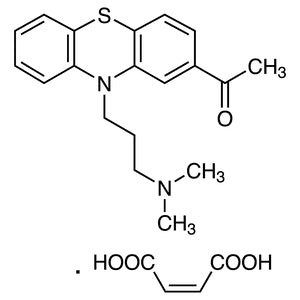
AcepromazineMaleate TCI A3502
Regular price Rp 6.386.100,00Regular priceRp 4.481.400,00Sale price Rp 6.386.100,00 -
Aripiprazole TCI A2496
Regular price Rp 1.723.050,00Regular priceRp 1.220.100,00Sale price Rp 1.723.050,00 -
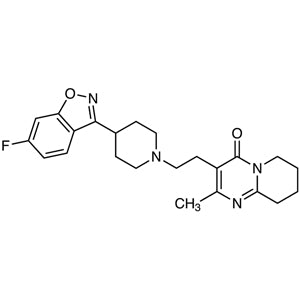
Risperidone TCI R0087
Regular price Rp 2.147.250,00Regular priceRp 1.517.250,00Sale price Rp 2.147.250,00 -
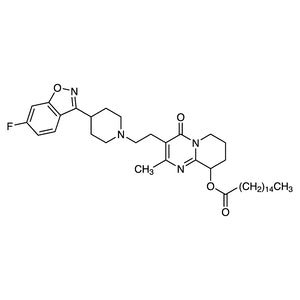
PaliperidonePalmitate TCI P2967
Regular price Rp 1.696.800,00Regular priceRp 1.202.250,00Sale price Rp 1.696.800,00 -
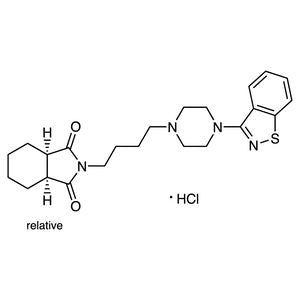
PerospironeHydrochloride TCI P2944
Regular price Rp 3.683.400,00Regular priceRp 2.591.400,00Sale price Rp 3.683.400,00 -
Perphenazine TCI P1970
Regular price Rp 2.623.950,00Regular priceRp 1.850.100,00Sale price Rp 2.623.950,00