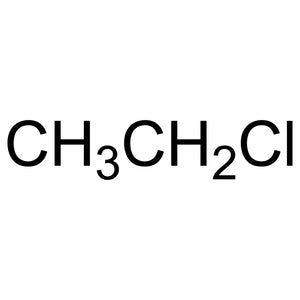
TCI Chloroethane (ca. 15% in Tetrahydrofuran, ca. 2.0mol/L) is a solution of chloroethane, also known as ethyl chloride, in tetrahydrofuran (THF). Pure chloroethane is a gas at room temperature, which makes it hard to measure accurately in a typical laboratory. TCI supplies it as a solution of defined approximate concentration. Researchers can then use chloroethane as an ethyl group source in alkylation reactions and organic synthesis without special gas-handling equipment. In the laboratory, it serves as a simple, ready-to-use building block for adding ethyl groups to target molecules.
The main advantage of this product is how practical it is to use. The solution can be drawn with a syringe or cannula, so the amount of reagent can be calculated from volume, using the approximate concentration stated in the product name. THF is a cyclic ether that is very widely used in organometallic chemistry, including the preparation of Grignard reagents. As a result, the solution can go straight into many synthetic procedures without a solvent exchange. Chloroethane acts as a simple electrophile that attaches an ethyl group to nucleophiles such as amines, alkoxides, thiolates, or carbanions.
In Indonesia, this product suits synthetic organic chemistry laboratories at universities, research institutions, and industrial research and development facilities. Teams working on small-molecule synthesis, method development, or intermediate preparation can use this solution when they need ethylation reactions handled safely and reproducibly. Because it is supplied in solution, laboratories without gas cylinders, gas manifolds, or condensation setups can still work with chloroethane in routine bench-scale synthesis, research projects, and student thesis work.
TCI brochures (PDF)
- Safely Handleable Volatile Solutions 2024-05-02 · p. 2
- DualSeal ― Airtight-Double-Cap Bottled Reagents 2024-08-13 · p. 4
Related TCI products
- TCI C4176 75-00-3 Chloroethane (ca. 15% in N,N-Dimethylformamide, ca. 2 mol/L)
- TCI C2882 75-00-3 Chloroethane (ca. 17% in Ethyl Ether, ca. 2.0mol/L)
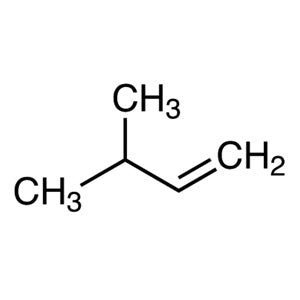
- TCI M2565 563-45-1 3-Methyl-1-butene (ca 125% in Tetrahydrofuran, ca 15mol/L)
- TCI B6535 106-98-9 1-Butene (ca. 8% in Tetrahydrofuran, ca. 1.3 mol/L)
- TCI I0911 115-11-7 Isobutene (ca. 15% in Tetrahydrofuran)
- TCI V0127 593-60-2 Vinyl Bromide (ca. 12% in Tetrahydrofuran, ca. 1.0mol/L)
- N-ethylation of amines: chloroethane acts as a simple electrophile that transfers an ethyl group to amine nucleophiles, and the THF solution allows accurate dosing by volume.
- O-ethylation of alkoxides and phenoxides: the solution can be added directly to alkoxide reaction mixtures in THF to form ethyl ethers without switching solvents or handling gaseous reagent.
- S-ethylation of thiolates: chloroethane reacts with thiolate nucleophiles to install ethyl groups, and syringe transfer of the solution keeps the reagent amount controlled and reproducible.
- Carbanion alkylation: the reagent serves as an ethyl electrophile for carbanions generated in THF, which fits common organometallic workflows that already use this cyclic ether solvent.
- Grignard-related organometallic chemistry: because THF is the standard solvent for Grignard reagent preparation, this solution fits procedures where an ethyl halide in THF is needed.
| Brand | TCI (product code C2883) |
|---|---|
| CAS number | 75-00-3 |
| Molecular formula | — |
| Purity | — |
| Category | Chemistry > Building Blocks > Non-Heterocyclic Building Blocks |
| Pack sizes | please refer to the available options on the product page |
| Physical form | solution of chloroethane, ca. 15% in tetrahydrofuran, ca. 2.0mol/L |
| Storage | keep tightly closed in a cool, well-ventilated area away from ignition sources; follow the TCI Safety Data Sheet |
Store this solution in its original, tightly sealed container in a cool, dry, well-ventilated area, away from heat, sparks, open flames, and oxidizing agents. Both chloroethane and the THF solvent are volatile and flammable, so keep containers closed when not in use to limit evaporation and changes in concentration. Transfer the solution with a dry syringe or cannula, ideally under an inert atmosphere, and work inside a fume hood. Wear safety glasses, chemical-resistant gloves, and a laboratory coat. THF-containing products should be checked regularly, as ethers can form peroxides over time. Always consult the TCI Safety Data Sheet for detailed storage conditions, hazards, and disposal guidance.
—
Produk Terkait
-
Chloroethane(ca.15%inN,N-Dimethylformamide,ca.2mol/L) TCI C4176
Regular price Rp 1.803.900,00Regular priceRp 1.261.050,00Sale price Rp 1.803.900,00 -
Chloroethane(ca.17%inEthylEther,ca.2.0mol/L) TCI C2882
Regular price From Rp 1.803.900,00Regular priceRp 1.261.050,00Sale price From Rp 1.803.900,00 -
3-Methyl-1-butene(ca125%inTetrahydrofuran,ca15mol/L) TCI M2565
Regular price From Rp 1.538.250,00Regular priceRp 1.075.200,00Sale price From Rp 1.538.250,00 -
1-Butene(ca.8%inTetrahydrofuran,ca.1.3mol/L) TCI B6535
Regular price From Rp 980.700,00Regular priceRp 685.650,00Sale price From Rp 980.700,00 -
Isobutene(ca.15%inTetrahydrofuran) TCI I0911
Regular price From Rp 903.000,00Regular priceRp 631.050,00Sale price From Rp 903.000,00 -
VinylBromide(ca.12%inTetrahydrofuran,ca.1.0mol/L) TCI V0127
Regular price Rp 2.545.200,00Regular priceRp 1.779.750,00Sale price Rp 2.545.200,00 -
SulfurDioxide(ca8%inTetrahydrofuran,ca12mol/L) TCI U0147
Regular price From Rp 1.458.450,00Regular priceRp 1.019.550,00Sale price From Rp 1.458.450,00 -
Allene(ca.2%inTetrahydrofuran,ca.0.4mol/L) TCI P2847
Regular price From Rp 1.298.850,00Regular priceRp 908.250,00Sale price From Rp 1.298.850,00