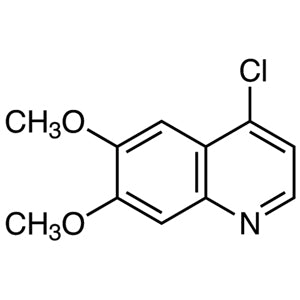
4-Chloro-6,7-dimethoxyquinoline is a chemical compound classified under heterocyclic building blocks, with a quinoline core modified by chloro and methoxy groups. This compound plays a crucial role in laboratory settings as a foundational element for the synthesis of complex molecules. Its presence in chemical research allows scientists to explore new structures and functionalities, making it an essential tool for organic chemists and pharmacologists. Due to its structural versatility, it is widely used in the development of pharmaceuticals and industrial chemicals.
The compound's stability and controlled reactivity make it a preferred choice for various chemical reactions. Its ability to undergo substitution and electrophilic reactions enables it to be transformed into a wide range of derivatives. The presence of both chloro and methoxy groups adds to its chemical uniqueness, offering opportunities for functional group manipulation. These properties make it highly valuable in the design of bioactive molecules, especially in drug discovery and development.
In Indonesian laboratories, 4-Chloro-6,7-dimethoxyquinoline is commonly used by researchers and academic institutions. It is particularly favored in pharmacological and organic chemistry studies due to its potential in creating compounds with biological activity. Its role in synthetic pathways and its compatibility with various reaction conditions make it a go-to compound for many scientific applications.
Related TCI products
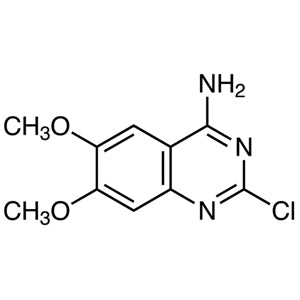
- TCI A2151 23680-84-4 4-Amino-2-chloro-6,7-dimethoxyquinazoline
- TCI D3746 27631-29-4 2,4-Dichloro-6,7-dimethoxyquinazoline
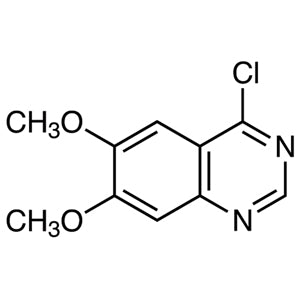
- TCI C2574 13790-39-1 4-Chloro-6,7-dimethoxyquinazoline
- TCI M3456 90-52-8 6-Methoxyquinolin-8-amine
- TCI M2999 6563-13-9 6-Methoxyquinoline N-Oxide
- TCI M2751 86-68-0 6-Methoxyquinoline-4-carboxylic Acid
- Organic synthesis applications benefit from its structural versatility and reactivity, enabling the creation of complex molecules with desired biological activities.
- Pharmaceutical research utilizes this compound for the development of new drugs, leveraging its ability to form bioactive derivatives through chemical modifications.
- Heterocyclic compound studies rely on its quinoline core, making it ideal for exploring the properties and reactivity of such molecular frameworks.
- Industrial chemical production incorporates it as a building block for synthesizing specialty chemicals with specific functional groups.
- Academic research in chemistry and pharmacology frequently uses it as a key reagent in experimental setups aimed at discovering new compounds with therapeutic potential.
| Brand | TCI |
|---|---|
| CAS number | 35654-56-9 |
| Molecular formula | — |
| Purity | — |
| Category | Chemistry > Building Blocks > Heterocyclic Building Blocks |
| Pack sizes | Available in various quantities as per standard laboratory supply |
| Physical form | Solid, crystalline or powder, depending on the batch |
| Storage | Store in a cool, dry place away from light and moisture |
This compound should be stored in a cool, dry environment, away from direct light and moisture to maintain its chemical integrity. It is recommended to use airtight containers made of glass or high-density polyethylene to prevent contamination and degradation. Due to its reactivity, it should be handled with care, using appropriate personal protective equipment such as gloves and safety goggles. In laboratory settings, it is important to ensure proper ventilation and to avoid contact with incompatible substances. Regular monitoring of storage conditions ensures the compound remains stable and suitable for use in chemical reactions and research applications.
—
Produk Terkait
-
4-Amino-2-chloro-6,7-dimethoxyquinazoline TCI A2151
Regular price From Rp 664.650,00Regular price -
2,4-Dichloro-6,7-dimethoxyquinazoline TCI D3746
Regular price Rp 3.738.000,00Regular price -
4-Chloro-6,7-dimethoxyquinazoline TCI C2574
Regular price From Rp 1.565.550,00Regular price -
6-Methoxyquinolin-8-amine TCI M3456
Regular price From Rp 1.458.450,00Regular price -
6-MethoxyquinolineN-Oxide TCI M2999
Regular price From Rp 1.565.550,00Regular price -
6-Methoxyquinoline-4-carboxylicAcid TCI M2751
Regular price Rp 5.883.150,00Regular price -
8-Methoxyquinoline TCI M2718
Regular price Rp 1.749.300,00Regular price -
6-Methoxyquinoline TCI M0891
Regular price From Rp 980.700,00Regular price