

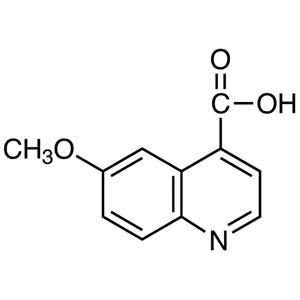
6-Methoxyquinoline-4-carboxylic Acid is a chemical compound widely used in organic synthesis reactions within laboratory settings. It belongs to the category of heterocyclic compounds, which are essential in the development of various chemical structures with aromatic ring systems. This compound serves as a fundamental building block for the synthesis of more complex molecules, including pharmaceuticals, pesticides, and industrial chemicals. Its unique molecular structure makes it a valuable resource for researchers aiming to explore new chemical pathways and functional group transformations.
The compound's reactivity is primarily attributed to the presence of both methoxy and carboxyl functional groups. These groups contribute to its polarity and reactivity, allowing it to participate in a range of chemical reactions such as substitution, reduction, and condensation. The methoxy group enhances chemical stability, while the carboxyl group enables interactions with various reagents, including acids, bases, and metals. These properties make it a versatile and reliable choice for controlled chemical reactions in research environments.
In Indonesian laboratories, 6-Methoxyquinoline-4-carboxylic Acid is commonly used in organic chemistry research, especially in the development of new compounds with medical or industrial applications. Its availability and chemical properties make it a preferred material for synthetic chemists working on drug discovery, pesticide formulation, and other advanced chemical projects. This compound plays a crucial role in supporting scientific innovation and experimentation in the region.
- Organic synthesis is a key application where this compound is used to build complex molecular structures due to its reactivity and functional groups.
- Pharmaceutical research benefits from its ability to participate in various chemical transformations, aiding in the development of new drug candidates.
- Pesticide formulation utilizes its chemical properties to create compounds with specific biological activities against target organisms.
- Industrial chemical production leverages its stability and reactivity for the synthesis of specialized chemical intermediates.
- Academic research in Indonesian universities employs it as a foundational material for exploring new synthetic methodologies and chemical reactivity.
| Brand | TCI |
|---|---|
| CAS number | 86-68-0 |
| Molecular formula | — |
| Purity | — |
| Category | Chemistry > Building Blocks > Heterocyclic Building Blocks |
| Pack sizes | Available in standard laboratory quantities as per supplier specifications |
| Physical form | Solid powder |
| Storage | Store in a cool, dry place away from direct sunlight and moisture |
This compound should be stored in a cool, dry environment, away from direct sunlight and moisture to maintain its chemical integrity. It is recommended to use airtight containers made of glass or high-density polyethylene to prevent contamination and degradation. Due to its polar nature, it is important to handle it with appropriate personal protective equipment, such as gloves and safety goggles, to ensure laboratory safety. Avoid exposure to strong acids or bases to prevent unwanted chemical reactions. Regular monitoring of storage conditions is advised to ensure the compound remains stable and suitable for use in research applications. Proper labeling of containers is essential for safe handling and identification in a laboratory setting.
—
Produk Terkait
-
6-MethoxyquinolineN-Oxide TCI M2999
Regular price From Rp 1.565.550,00Regular price -
8-Methoxyquinoline TCI M2718
Regular price Rp 1.749.300,00Regular price -
6-Methoxyquinoline TCI M0891
Regular price From Rp 980.700,00Regular price -
6-Methoxyquinolin-8-amine TCI M3456
Regular price From Rp 1.458.450,00Regular price -
8-Ethoxyquinoline-5-sulfonicAcid TCI E0339
Regular price From Rp 717.150,00Regular price -
Sodium8-Ethoxyquinoline-5-sulfonate TCI E0338
Regular price From Rp 1.060.500,00Regular price -
4-[(6,7-Dimethoxyquinolin-4-yl)oxy]aniline TCI D5070
Regular price From Rp 769.650,00Regular price -
Xanthene-9-carboxylicAcid TCI X0031
Regular price From Rp 1.008.000,00Regular price


![4-[(6,7-Dimethoxyquinolin-4-yl)oxy]aniline (CAS 190728-25-7) - TCI D5070 - AMI Scientific](http://amiscientific.com/cdn/shop/files/TCI2510D5070.jpg?v=1767108359&width=533)
