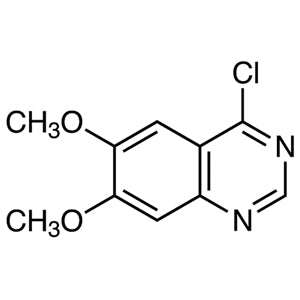
4-Chloro-6,7-dimethoxyquinazoline is a versatile organic compound widely used in synthetic chemistry, particularly in the construction of complex heterocyclic structures. As a building block, it plays a crucial role in the development of new compounds with specific pharmacological activities. This compound is essential in research settings where the synthesis of bioactive molecules is required. Its unique chemical structure enables it to participate in various chemical reactions, making it a valuable tool for chemists and researchers.
The compound is known for its chemical stability and reactivity, which can be controlled through substitution or electrophilic reactions. These properties make it a preferred choice for laboratories aiming to modify molecular frameworks selectively. Its ability to undergo diverse chemical transformations allows it to be used in the synthesis of a wide range of compounds, including pharmaceuticals and industrial chemicals. This adaptability is a key factor in its popularity among researchers.
In Indonesian laboratories, 4-Chloro-6,7-dimethoxyquinazoline is commonly used in scientific research and educational settings. It is a fundamental reagent in the synthesis of bioactive compounds, including those with potential applications in medicine and industry. Many research institutions and universities utilize this compound as a starting material for experiments aimed at developing new drugs and chemical products. Its presence in academic and industrial laboratories underscores its importance in the field of organic chemistry.
Related TCI products
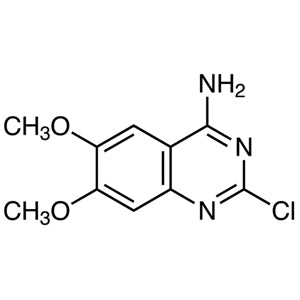
- TCI A2151 23680-84-4 4-Amino-2-chloro-6,7-dimethoxyquinazoline
- TCI D3746 27631-29-4 2,4-Dichloro-6,7-dimethoxyquinazoline
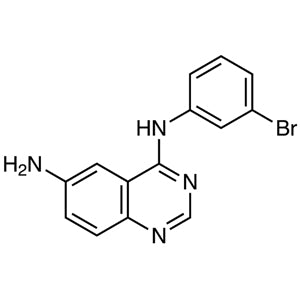
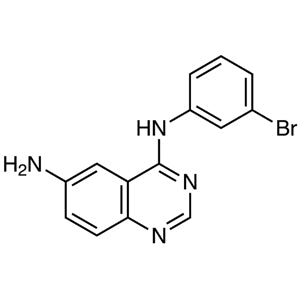
- TCI B5416 169205-78-1 N4-(3-Bromophenyl)quinazoline-4,6-diamine
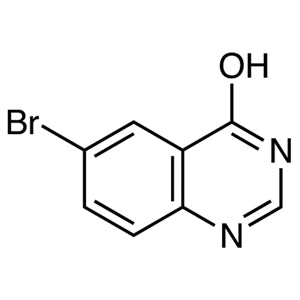
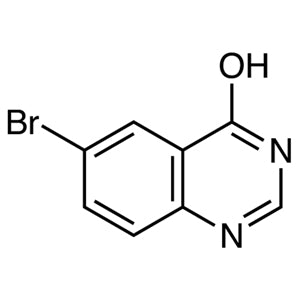
- TCI B4328 32084-59-6 6-Bromo-4-hydroxyquinazoline
- TCI I0832 16064-08-7 6-Iodo-4-hydroxyquinazoline
- TCI C2332 53449-14-2 7-Chloro-6-nitro-4-hydroxyquinazoline
- Organic synthesis research benefits from this compound's ability to form complex heterocyclic structures, making it ideal for creating new bioactive compounds.
- Pharmaceutical development relies on its chemical stability and reactivity, allowing for the synthesis of drug candidates with targeted pharmacological effects.
- Educational institutions use it as a teaching tool to demonstrate the principles of heterocyclic chemistry and synthetic pathways in undergraduate and graduate courses.
- Industrial laboratories incorporate it into the production of specialty chemicals, leveraging its structural versatility for custom compound development.
- Bioactive molecule research utilizes its reactivity to explore new synthetic routes for compounds with potential therapeutic applications.
| Brand | TCI |
|---|---|
| CAS number | 13790-39-1 |
| Molecular formula | — |
| Purity | — |
| Category | Chemistry > Building Blocks > Heterocyclic Building Blocks |
| Pack sizes | Available in various quantities as per standard laboratory supply options |
| Physical form | Solid, crystalline |
| Storage | Store in a cool, dry place away from direct sunlight and moisture |
This compound should be stored in a cool, dry environment to maintain its chemical stability. It is recommended to keep it in a sealed container to prevent exposure to moisture and air. Due to its reactivity, it should be handled in a well-ventilated area, ideally under a fume hood, to ensure safety. Avoid contact with incompatible substances such as strong acids or bases. Proper personal protective equipment, including gloves and safety goggles, should be worn when handling this material. Regular inspection of storage conditions is advised to ensure long-term integrity of the compound.
—
Produk Terkait
-
4-Amino-2-chloro-6,7-dimethoxyquinazoline TCI A2151
Regular price From Rp 664.650,00Regular price -
2,4-Dichloro-6,7-dimethoxyquinazoline TCI D3746
Regular price Rp 3.738.000,00Regular price -
N4-(3-Bromophenyl)quinazoline-4,6-diamine TCI B5416
Regular price From Rp 823.200,00Regular price -
6-Bromo-4-hydroxyquinazoline TCI B4328
Regular price From Rp 1.405.950,00Regular price -
6-Iodo-4-hydroxyquinazoline TCI I0832
Regular price Rp 1.988.700,00Regular price -
7-Chloro-6-nitro-4-hydroxyquinazoline TCI C2332
Regular price From Rp 769.650,00Regular price -
6,7-Dimethoxyquinazoline-2,4-dione TCI D1839
Regular price From Rp 584.850,00Regular price -
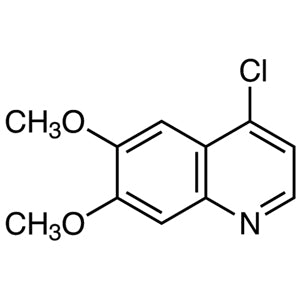
4-Chloro-6,7-dimethoxyquinoline TCI C2938
Regular price From Rp 2.809.800,00Regular price