TCI C2332 7-Chloro-6-nitro-4-hydroxyquinazoline is an organic synthesis raw material from the quinazolinone family, widely used as a starting scaffold in the construction of nitrogen-containing heterocyclic molecules. The compound carries three functional groups at once on a single bicyclic framework: a chlorine atom, a nitro group, and a hydroxy group at the four position that exists in tautomeric equilibrium with the 4-oxo form. This combination makes it a practical point of departure for medicinal chemists and synthesis researchers who need to assemble more complex quinazoline derivatives in the research laboratory.
The characteristic that makes this material a preferred choice lies in the diversity of reactions that can be run from it without first having to modify the core framework. The 4-hydroxy/4-oxo group can be converted into a reactive leaving group, opening the way to nucleophilic aromatic substitution with a wide range of amines. The nitro group at the six position can be reduced to an aromatic amine, which may subsequently be acylated, sulfonylated, or used as a handle for coupling. Meanwhile, the chlorine atom at the seven position offers the possibility of metal-catalysed cross-coupling, so that three independent points of diversification are available on one scaffold.
In Indonesian laboratories, this building block is typically used in university and institutional research groups working on organic synthesis and medicinal chemistry, as well as in industrial research units developing heterocyclic compound libraries. It is generally handled at bench scale for multi-step route development, method exploration, and the preparation of intermediates that are subsequently characterised in-house. Ordering it as a ready-made scaffold saves the working time that would otherwise be spent building the quinazolinone core from simpler precursors.
Related TCI products
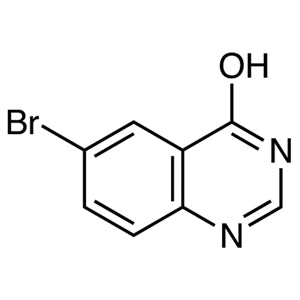
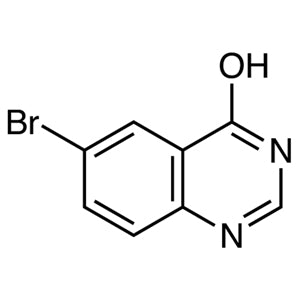
- TCI B4328 32084-59-6 6-Bromo-4-hydroxyquinazoline
- TCI I0832 16064-08-7 6-Iodo-4-hydroxyquinazoline
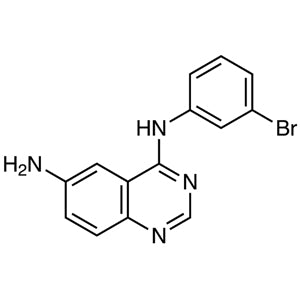
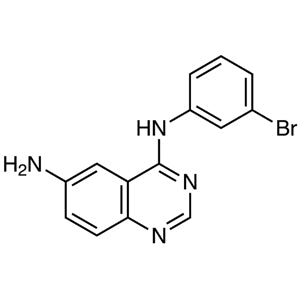
- TCI B5416 169205-78-1 N4-(3-Bromophenyl)quinazoline-4,6-diamine
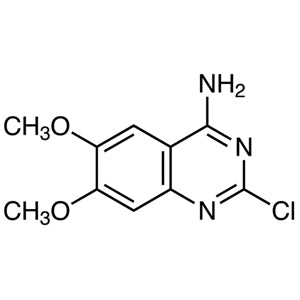
- TCI A2151 23680-84-4 4-Amino-2-chloro-6,7-dimethoxyquinazoline
- TCI D3746 27631-29-4 2,4-Dichloro-6,7-dimethoxyquinazoline
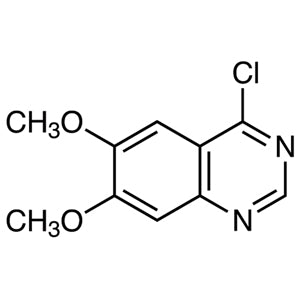
- TCI C2574 13790-39-1 4-Chloro-6,7-dimethoxyquinazoline
- Medicinal chemistry scaffold development, where the three orthogonal functional handles allow a research team to generate structurally varied quinazoline analogues from a single common starting material.
- Nucleophilic aromatic substitution studies, since the 4-oxo position can be activated into a leaving group and then displaced by a broad selection of amine nucleophiles under laboratory conditions.
- Nitro group reduction chemistry, in which the six position nitro function is converted to an aromatic amine that serves as a versatile anchor for acylation or sulfonylation.
- Metal-catalysed cross-coupling research, because the chlorine substituent at the seven position provides a defined site for carbon–carbon and carbon–heteroatom bond formation experiments.
- Heterocyclic compound library preparation, where a single well-defined quinazolinone core shortens multi-step synthetic routes and improves consistency between parallel reaction batches in the laboratory.
| Brand | TCI (Tokyo Chemical Industry) |
|---|---|
| CAS number | 53449-14-2 |
| Molecular formula | — |
| Purity | — |
| Category | Chemistry > Building Blocks > Heterocyclic Building Blocks |
| Pack sizes | available in standard TCI research-scale packaging; please confirm the pack size when ordering |
| Physical form | — |
| Storage | keep in a tightly closed container, away from light and moisture, according to the manufacturer's label and safety data sheet |
- Product code: C2332
Store this material in its original tightly closed container in a cool, dry, well-ventilated chemical store, protected from light, moisture, and sources of ignition. Amber glass or the supplier's original packaging is suitable; re-close the container promptly after each use to limit moisture uptake. Handle the solid in a fume hood using safety glasses, gloves, and a laboratory coat, and avoid generating dust during weighing and transfer. Keep the compound separated from strong oxidising and reducing agents, label all secondary containers clearly, and dispose of residues and contaminated consumables as chemical waste in line with institutional procedures. Always consult the manufacturer's safety data sheet before first use.
—
Produk Terkait
-
6-Bromo-4-hydroxyquinazoline TCI B4328
Regular price From Rp 1.405.950,00Regular price -
6-Iodo-4-hydroxyquinazoline TCI I0832
Regular price Rp 1.988.700,00Regular price -
N4-(3-Bromophenyl)quinazoline-4,6-diamine TCI B5416
Regular price From Rp 823.200,00Regular price -
4-Amino-2-chloro-6,7-dimethoxyquinazoline TCI A2151
Regular price From Rp 664.650,00Regular price -
2,4-Dichloro-6,7-dimethoxyquinazoline TCI D3746
Regular price Rp 3.738.000,00Regular price -
4-Chloro-6,7-dimethoxyquinazoline TCI C2574
Regular price From Rp 1.565.550,00Regular price -
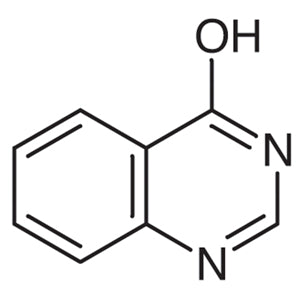
4-Hydroxyquinazoline TCI H0803
Regular price From Rp 769.650,00Regular price -
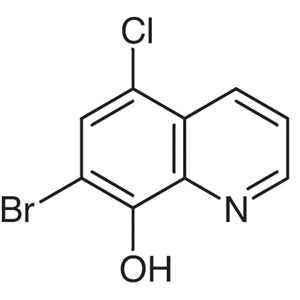
7-Bromo-5-chloro-8-hydroxyquinoline TCI B1190
Regular price From Rp 1.353.450,00Regular price