

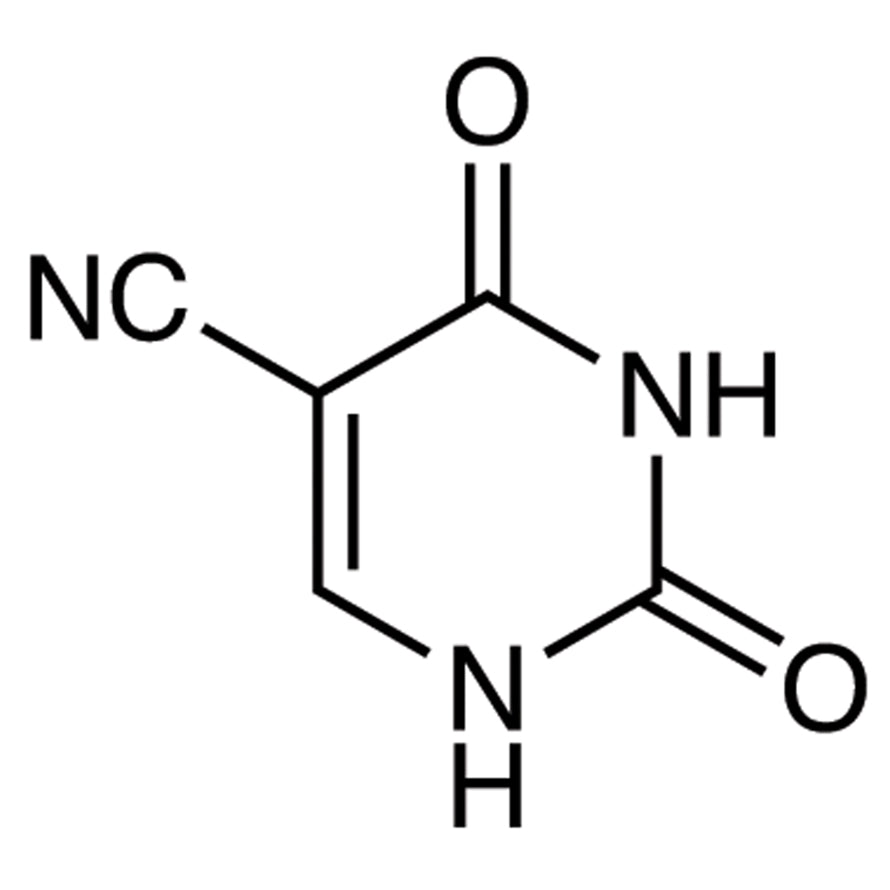
5-Cyanouracil is a chemical compound widely used in laboratory settings for the synthesis of heterocyclic compounds. It serves as a key building block in organic chemistry, enabling the creation of complex molecules with diverse applications. This compound is commonly found in chemical laboratories as a foundational material for the development of pharmaceuticals, industrial chemicals, and other organic substances. Its role in substitution and cyclization reactions makes it an essential component in the synthesis of various functional compounds.
The chemical and physical properties of 5-Cyanouracil make it a preferred choice for researchers. Its stable molecular structure and high reactivity allow it to participate effectively in a range of chemical reactions without significant degradation. These characteristics ensure consistency in experimental results, making it a reliable material for scientific investigations. Additionally, its ability to maintain stability under various reaction conditions enhances its utility in laboratory processes.
In Indonesian laboratories, 5-Cyanouracil is extensively used in chemical research, particularly in the fields of pharmacy, organic chemistry, and the analysis of complex compounds. It is a fundamental requirement in scientific research conducted at educational and research institutions across the country. Its versatility and reliability make it a popular choice among researchers working on innovative chemical projects.
Related TCI products
- Pharmaceutical research utilizes 5-Cyanouracil for the synthesis of novel drug compounds due to its reactivity and structural versatility.
- Organic chemistry experiments benefit from 5-Cyanouracil as a building block for creating complex heterocyclic molecules.
- Industrial chemical development incorporates 5-Cyanouracil in the production of specialty chemicals and functional materials.
- Analytical chemistry applications rely on 5-Cyanouracil for the characterization of complex organic compounds through various analytical techniques.
- Academic research in Indonesian universities frequently uses 5-Cyanouracil in the development of new chemical methodologies and compounds.
| Brand | TCI |
|---|---|
| CAS number | 4425-56-3 |
| Molecular formula | — |
| Purity | — |
| Category | Chemistry > Building Blocks > Heterocyclic Building Blocks |
| Pack sizes | Available in standard laboratory quantities |
| Physical form | Solid powder |
| Storage | Store in a cool, dry place away from direct light |
5-Cyanouracil should be stored in a cool, dry environment to maintain its chemical stability. It is recommended to keep the compound in a sealed container to prevent moisture absorption and contamination. Due to its reactivity, it should be handled in a well-ventilated area, and appropriate personal protective equipment should be worn. Avoid exposure to strong acids or bases to prevent unintended chemical reactions. The compound should not be stored near incompatible materials such as oxidizers or reducing agents. Regular inspection of storage conditions ensures the integrity of the material remains intact for laboratory use.
—
Produk Terkait
-
5-Aminouracil TCI A0898
Regular price From Rp 1.618.050,00Regular price -
6-Aminouracil TCI A0658
Regular price From Rp 664.650,00Regular price

